Table of contents
Handwriting instruction in kindergarten is most effective when children are given structured, repeated opportunities to practice letter formation. These worksheets are designed to support tracing letter e through clear models, guided repetition, and meaningful visual connections. By combining uppercase and lowercase practice with a familiar word and image, students strengthen fine motor skills, improve letter recognition, and build confidence in early writing. Each worksheet plays a specific role in helping young learners progress from tracing to independent writing, making tracing letter e an essential part of early literacy instruction.
Tracing Uppercase and Lowercase E
This worksheet focuses on tracing letter e in both its uppercase (E) and lowercase (e) forms using clearly defined boxes and consistent practice spaces. Kindergarten students learn correct stroke order, letter size, and direction while improving pencil control and hand–eye coordination. Repeated tracing helps build muscle memory, which is critical for accurate handwriting. This worksheet is especially important because it introduces straight and curved strokes in a controlled way, preparing children for writing other letters with similar shapes.
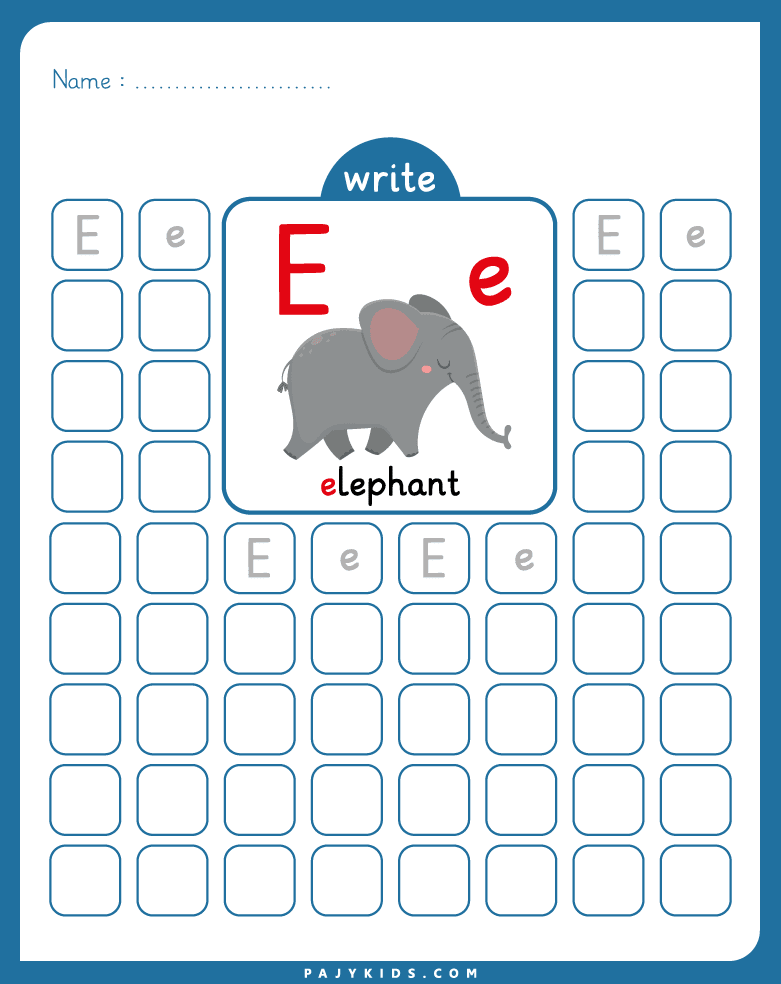
Tracing Letter E with the Word “Elephant”
The second worksheet extends tracing letter e by connecting the letter to a meaningful word and image. Students trace dotted versions of the letter E and then practice writing the word “elephant,” reinforcing the letter’s sound within a real vocabulary context. This activity supports phonemic awareness and helps children understand how letters work together to form words. By combining letter tracing with word practice, tracing letter e becomes more engaging and supports both early reading and writing development.

S is for Snake: Tracing and Writing Practice
Together, these worksheets provide a structured and developmentally appropriate approach to teaching the letter E in kindergarten. Through consistent tracing letter e, students strengthen fine motor skills, improve handwriting accuracy, and develop confidence in letter formation. Regular practice with tracing letter e also reinforces phonics skills and prepares children for independent writing tasks. This balanced approach ensures young learners build a strong foundation for long-term literacy success.