Table of contents
Arabic learning activities play a vital role in early childhood education, especially when they are presented through engaging visuals and hands-on tasks. These carefully designed arabic worksheets help kindergarten children connect language learning with creativity, observation, and fine motor practice. By combining tracing, coloring, and visual recognition, children are encouraged to explore Arabic vocabulary in a fun and meaningful way that supports their overall development.
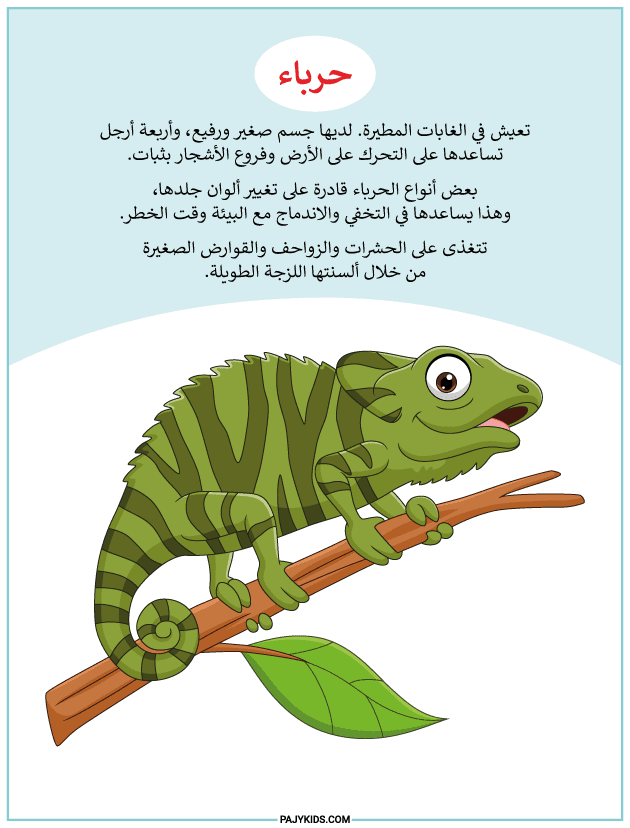
Chameleon Arabic Worksheet
This worksheet introduces children to the chameleon using a clear illustration and simple Arabic vocabulary. The activity helps children recognize animal names while tracing and coloring the picture, which strengthens fine motor skills and hand–eye coordination. As part of structured arabic worksheets, this activity supports early language exposure and builds confidence in recognizing Arabic words through repetition and visual cues.
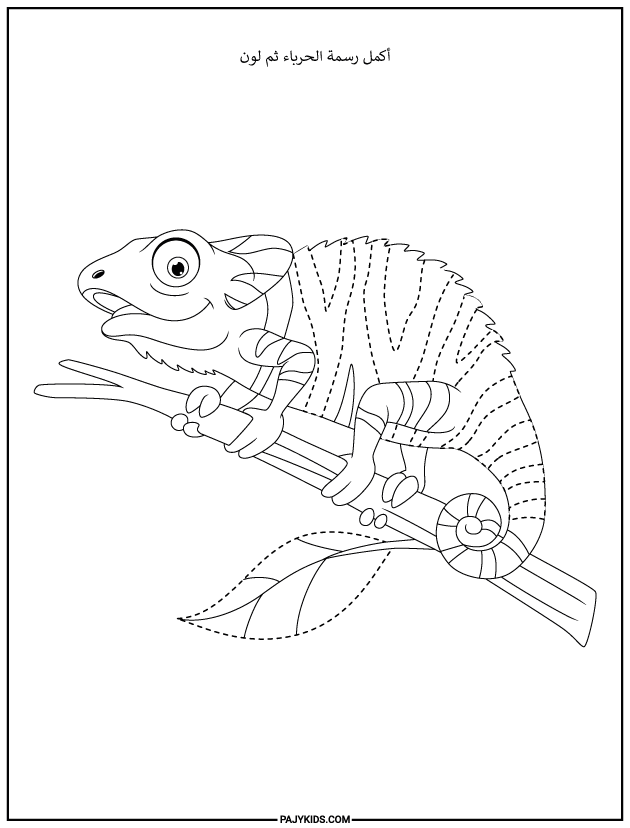
Chameleon Tracing and Coloring Worksheet
In this worksheet, children trace the dotted outline of the chameleon and then color it freely. This activity is especially important for kindergarten learners because it prepares their hands for writing while encouraging creativity. Using arabic worksheets like this helps children develop focus, patience, and early writing readiness while reinforcing Arabic vocabulary in a relaxed learning environment.
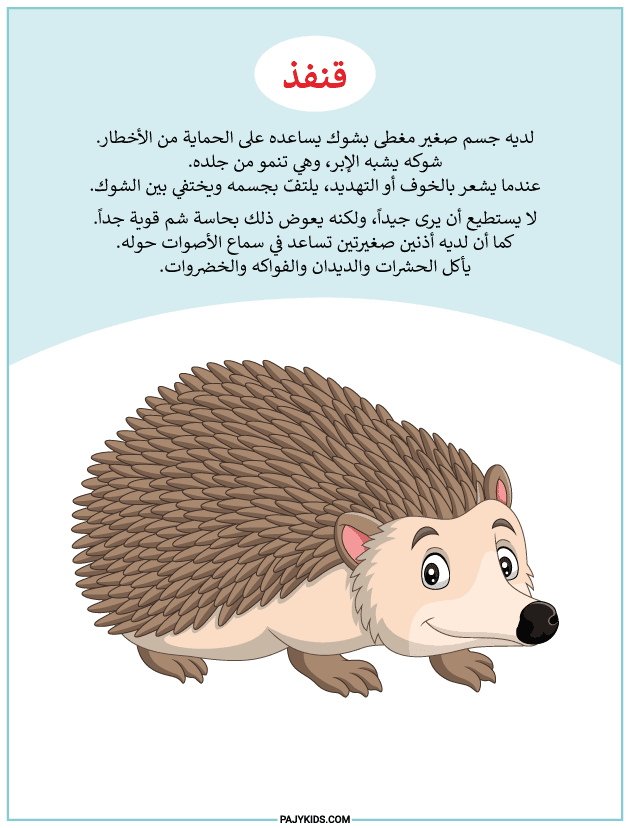
Hedgehog Arabic Worksheet
This worksheet focuses on introducing the hedgehog with a friendly illustration and simple Arabic text. It enhances vocabulary development and listening comprehension when used alongside teacher or parent guidance. Educational arabic worksheets such as this one help children associate words with images, making language learning more natural and memorable at an early age.
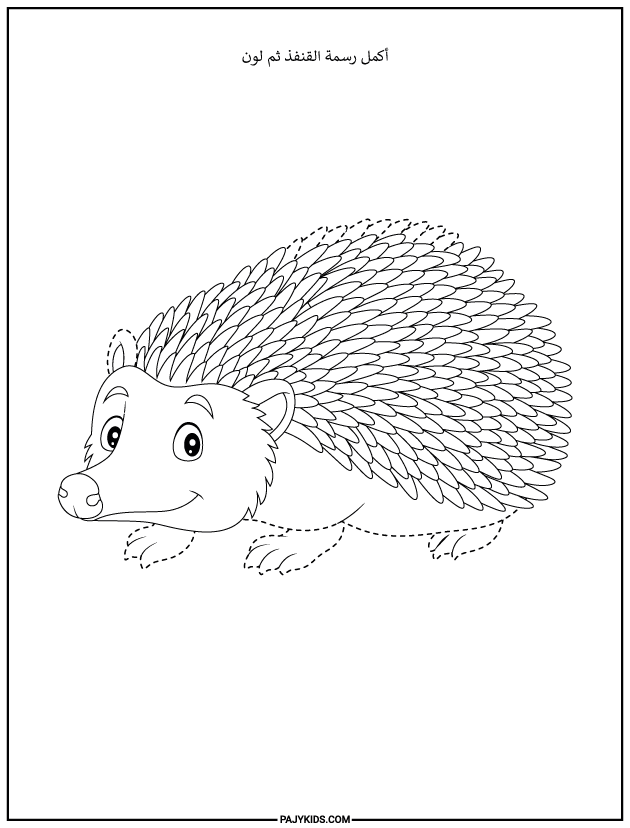
Hedgehog Tracing and Coloring Worksheet
The tracing and coloring activity in this worksheet encourages children to follow lines carefully and complete the picture independently. This process supports fine motor development and boosts self-confidence. Repeated practice with arabic worksheets like this strengthens pre-writing skills while keeping children engaged and motivated through visual learning.
The Different Forms of the Letter Ya in Various Word Positions
These animal-themed activities provide a balanced learning experience that combines language development, motor skills, and creativity. Well-designed arabic worksheets help kindergarten children build a strong foundation in Arabic through enjoyable, age-appropriate tasks. By regularly using arabic worksheets, educators and parents can support early literacy, enhance concentration, and make learning Arabic a positive and rewarding experience for young learners.