Table of contents
An arabic alphabet worksheet is one of the most effective learning tools for introducing young children to letter recognition through visual association. By combining colorful illustrations with writing spaces, this type of activity helps preschool learners connect each picture with its beginning Arabic letter, making early literacy development more engaging and meaningful.
Identifying the First Letter Through Bird Pictures
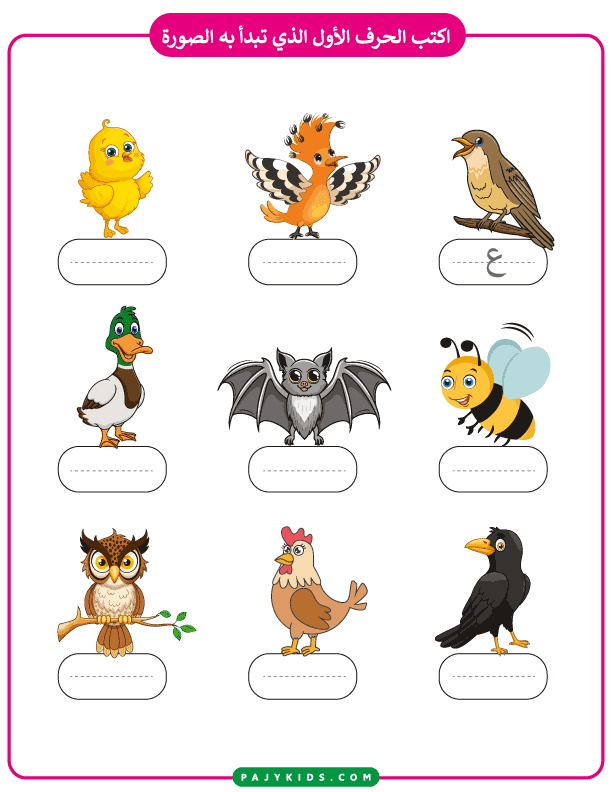
This arabic alphabet worksheet focuses on familiar bird images such as chicks, ducks, owls, and hens, encouraging children to observe each picture carefully and write the correct starting letter. The activity strengthens phonemic awareness and supports early writing practice, allowing children to learn letters naturally through recognition and repetition.
Learning Letters Using Wild Animal Images
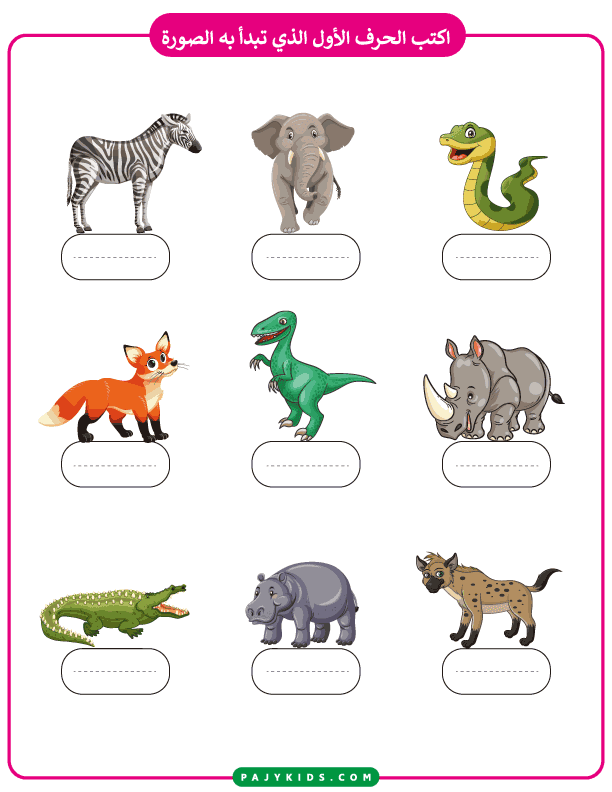
In this arabic alphabet worksheet, children explore wild animals like elephants, zebras, snakes, foxes, and rhinos. By identifying the first letter of each animal’s name, learners improve vocabulary development and sharpen visual memory, making letter learning more interactive and enjoyable for kindergarten students.
Matching Arabic Letters With Animal Names
This arabic alphabet worksheet helps children connect spoken words with written letters by asking them to write the first letter that matches each illustrated animal. The clear layout and guided spaces promote confidence in handwriting while reinforcing correct letter identification in a calm and structured way.
Write the Name Aseel: The Best Way to Learn Your Letters
Using an arabic alphabet worksheet supports multiple early-learning skills, including fine motor control, concentration, and sound-letter association. These worksheets allow children to practice independently or with guidance, building a strong foundation for reading readiness and Arabic language comprehension.
Incorporating an arabic alphabet worksheet into daily learning routines provides children with a simple yet powerful method for mastering letter recognition. Through picture-based activities and hands-on practice, young learners develop confidence, curiosity, and essential literacy skills that prepare them for future reading success.
See Also: