Table of contents
Early childhood is the ideal stage to introduce language foundations in a structured and engaging way. Worksheets that focus on tracing, repetition, and short vowel practice help children recognize letter shapes and sounds naturally. Through guided activities, arabic letters learning becomes easier for preschoolers as they develop fine motor skills, visual awareness, and early reading readiness.
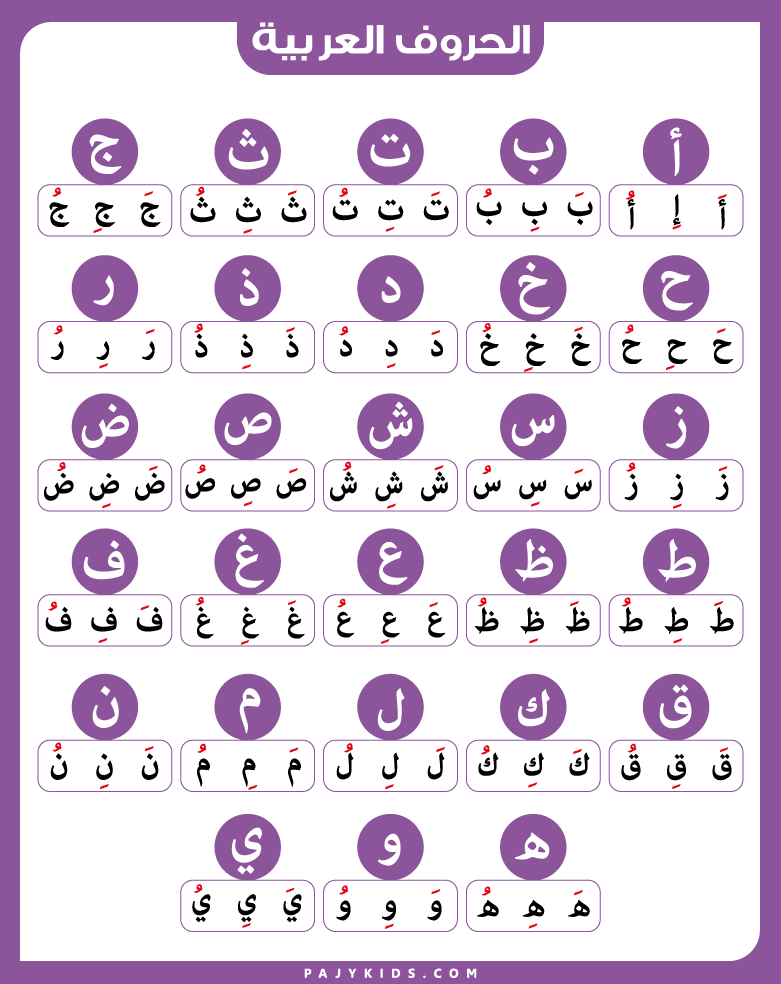
Worksheet for Learning Letters from Alif to Yaa
This worksheet introduces children to the first Arabic letters using clear models and writing spaces. By practicing each letter individually, learners understand basic letter structure and writing direction. This activity supports arabic letters learning by building confidence and familiarity before moving to more complex letter groups.
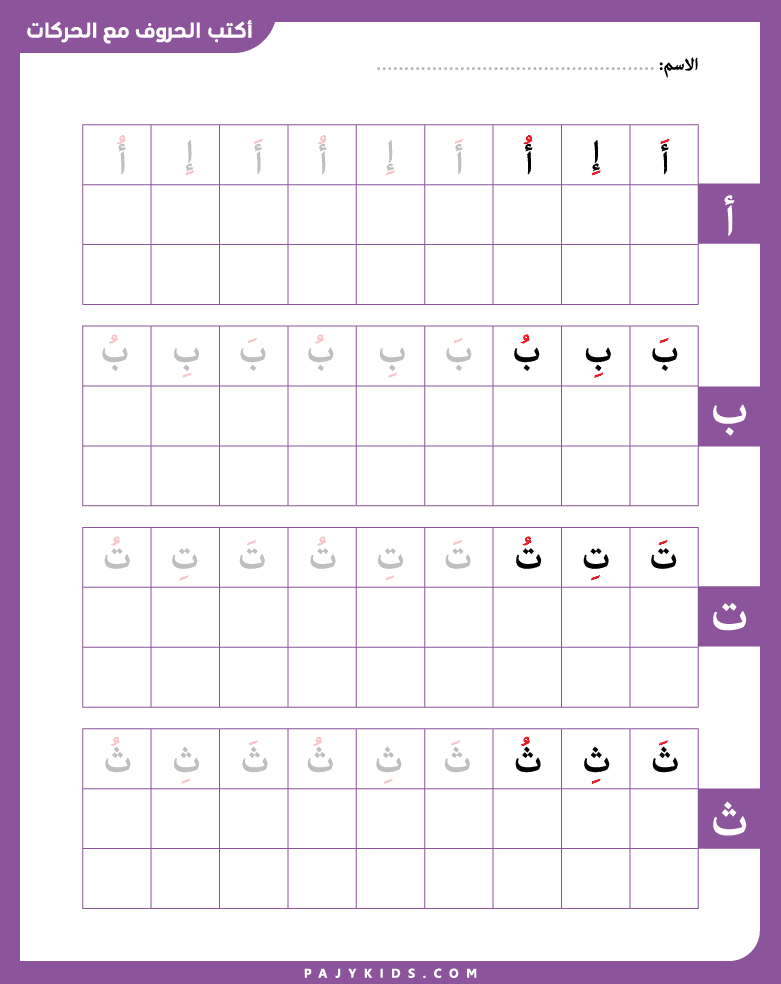
Tracing Alif, Baa, Taa, and Thaa with Short Vowels
In this worksheet, children trace four letters combined with short vowels to connect sound with shape. The repeated practice strengthens phonemic awareness and improves handwriting accuracy. Such structured repetition plays a key role in arabic letters learning during the early years.
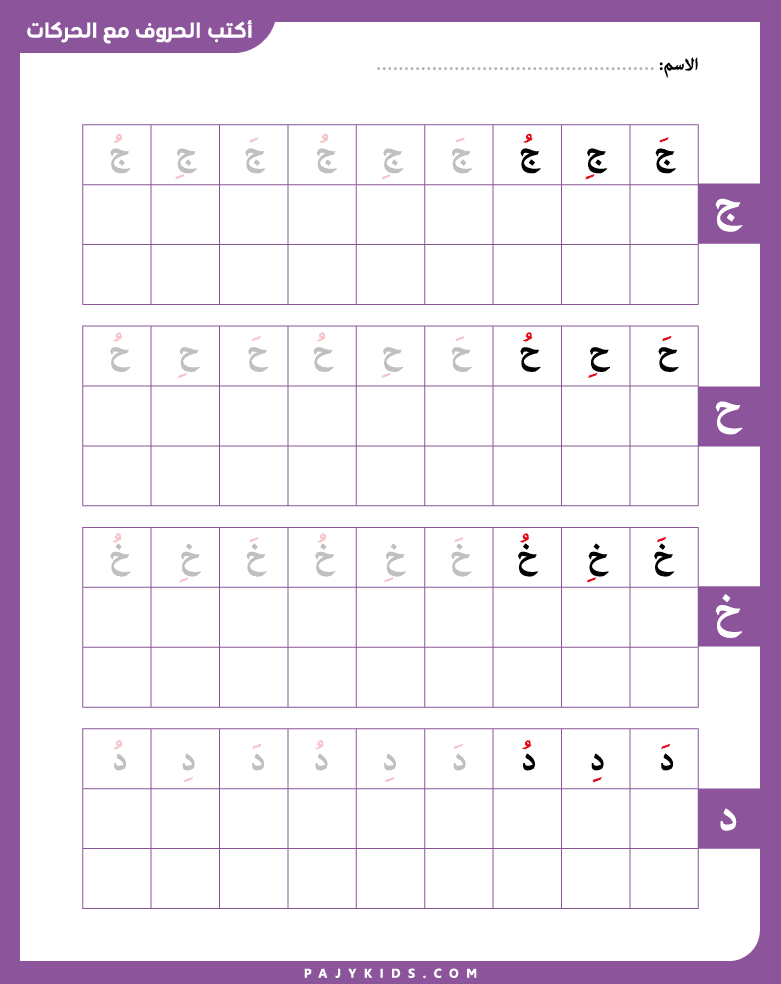
Practicing Jeem, Haa, Khaa, and Daal with Short Vowels
This activity focuses on letters that share similar forms, helping children identify small visual differences. Tracing and writing these letters supports attention to detail and reduces confusion. Including these exercises enhances arabic letters learning by improving visual discrimination.
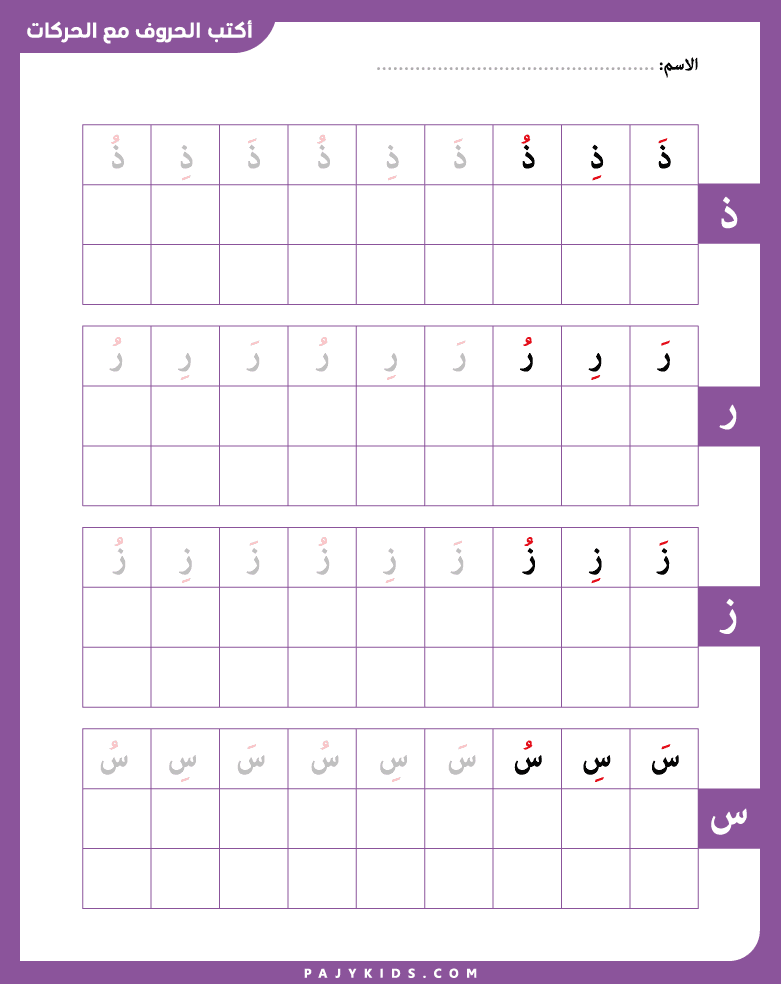
Writing Dhaal, Raa, Zay, and Seen with Short Vowels
Children practice letters that differ mainly in pronunciation and flow. Writing them with short vowels helps reinforce correct sound recognition. This worksheet supports arabic letters learning by strengthening the connection between spoken and written Arabic.
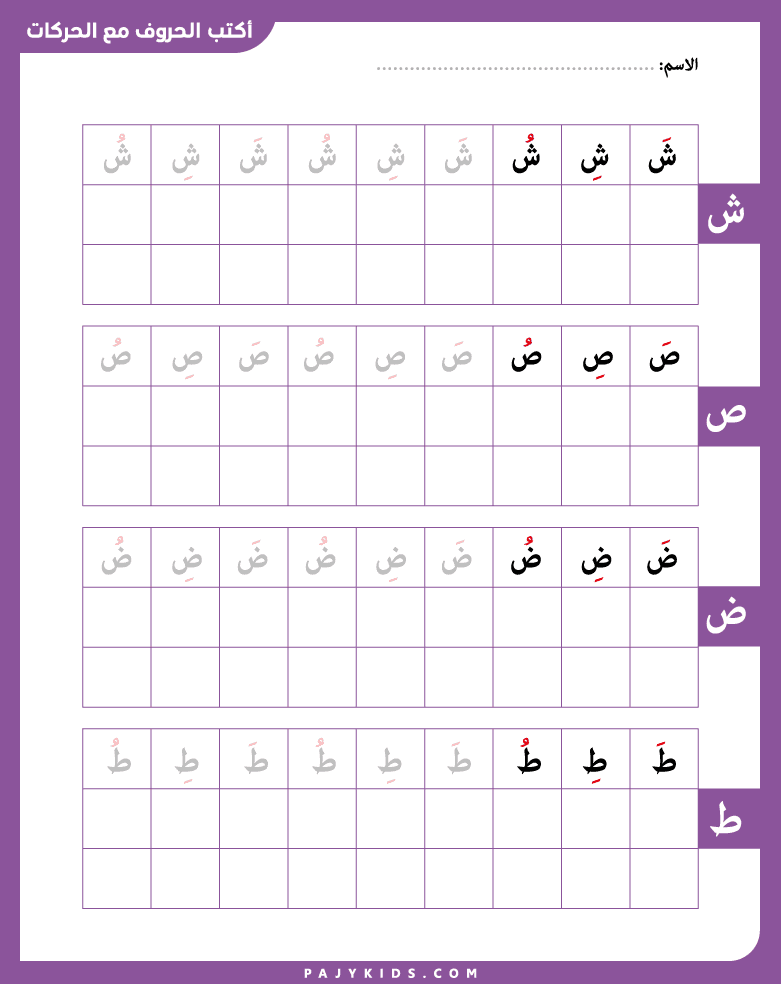
Learning Sheen, Saad, Daad, and Taa with Vowels
This worksheet introduces heavier and emphatic letters through guided writing. Children learn correct formation while becoming familiar with letter sounds. Such exposure supports advanced stages of arabic letters learning in kindergarten.
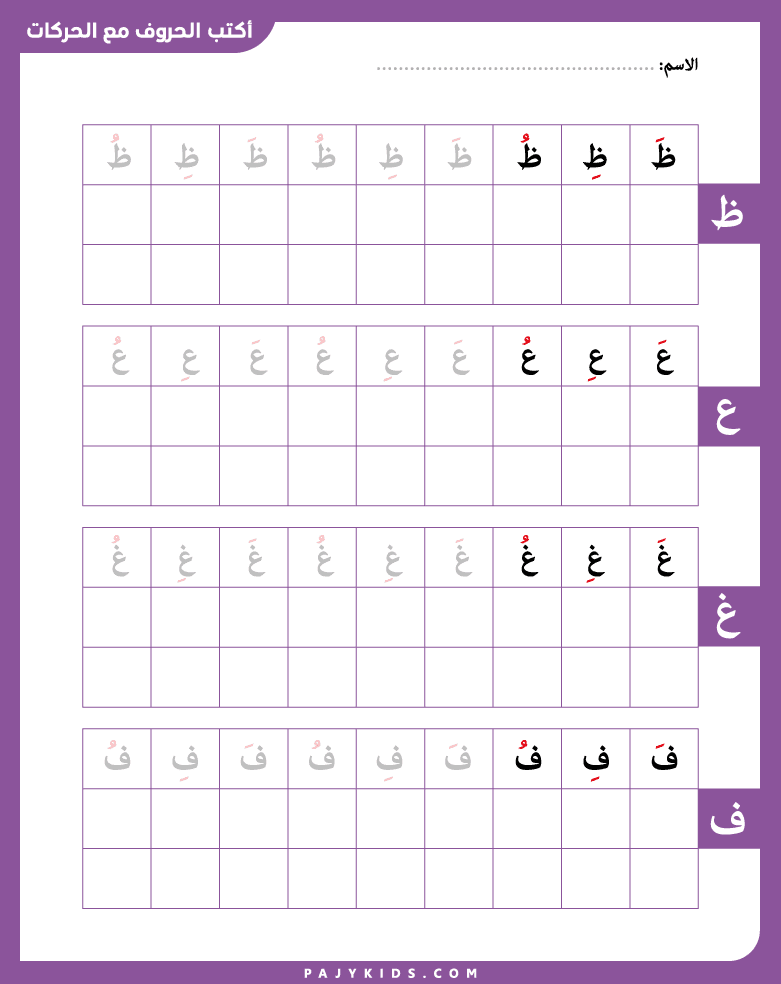
Practicing Thaa, Ain, Ghain, and Faa with Short Vowels
These letters require greater attention to articulation and shape. Writing practice combined with vowels helps children build confidence and accuracy. This worksheet plays an important role in structured arabic letters learning.
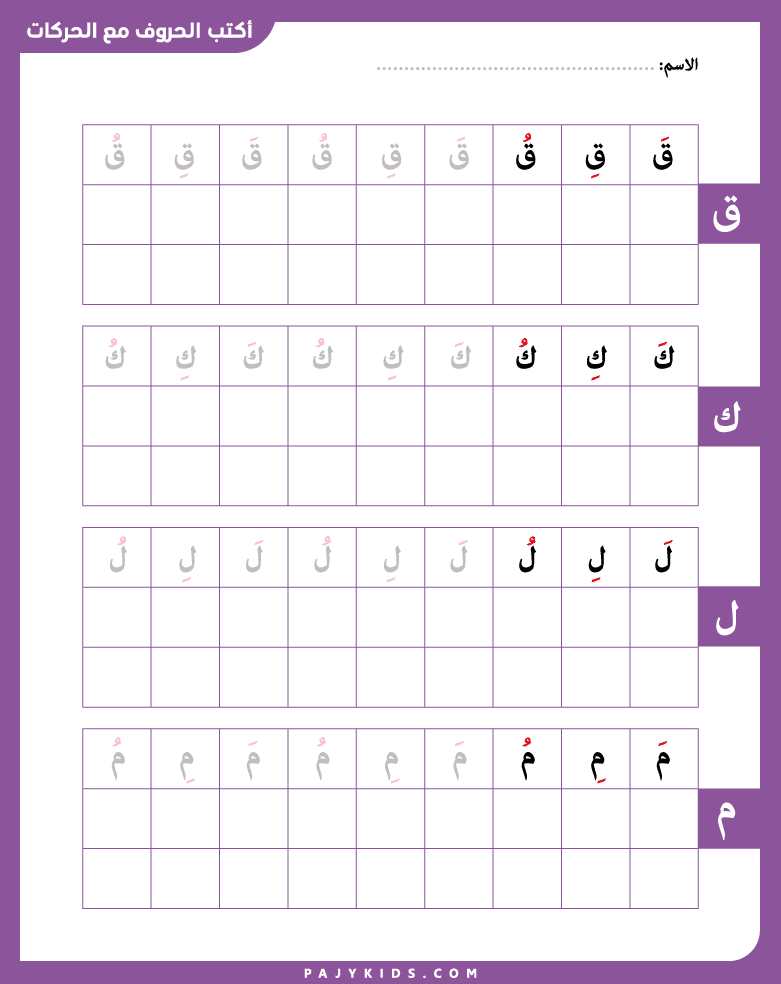
Writing Qaaf, Kaaf, Laam, and Meem with Vowels
This worksheet focuses on commonly used letters that appear frequently in Arabic words. Practicing them improves fluency and prepares children for syllable reading. These exercises support continuous arabic letters learning through repetition.
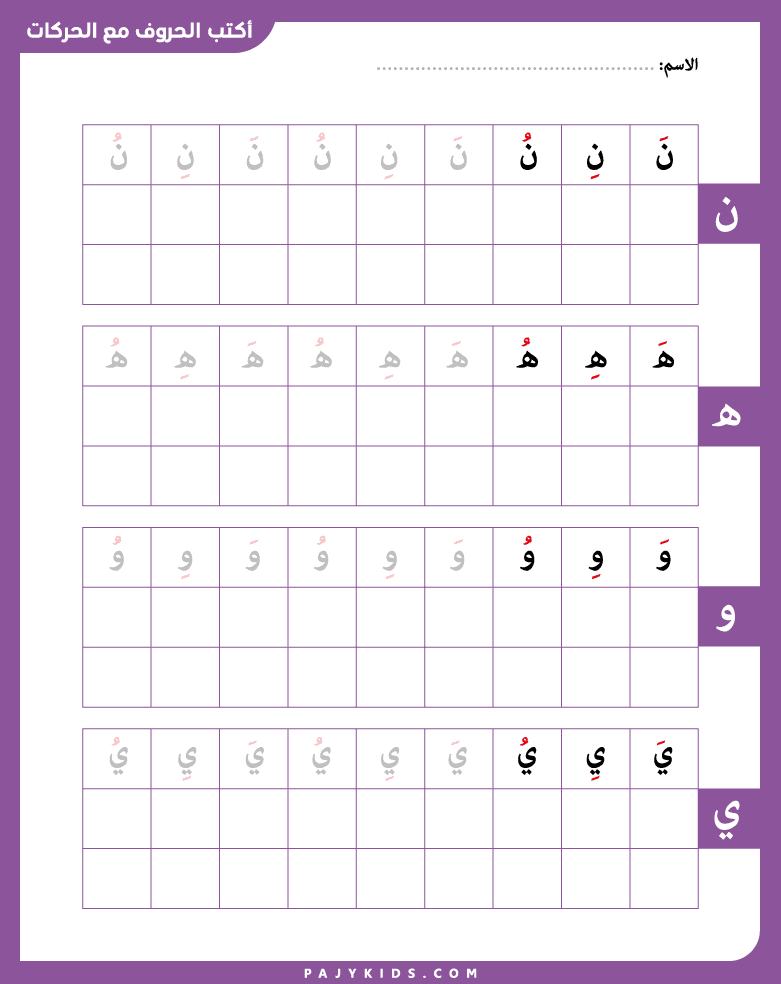
Learning Noon, Haa, Waaw, and Yaa with Short Vowels
As one of the final letter groups, this worksheet strengthens readiness for word formation. Children review letter shapes and vowels together, making arabic letters learning more complete and connected to future reading skills.
Arabic Numbers 1 10: Learn to Count with Engaging Visuals
A gradual and well-organized approach is essential for successful early literacy development. By progressing letter group by letter group, children gain confidence and clarity. Structured worksheets play a powerful role in arabic letters learning, helping young learners move smoothly from letter recognition to reading and writing readiness.
See Also: