Table of contents
Early childhood is the most important stage for building language foundations, as children begin to recognize letters, sounds, and meanings through visual and hands-on learning. Activities that combine pictures with letter choices encourage thinking rather than memorization. These worksheets are designed to support Arabic alphabet practice by helping children connect spoken words with their beginning letters in a fun and age-appropriate way.
Choosing the Correct Beginning Letter
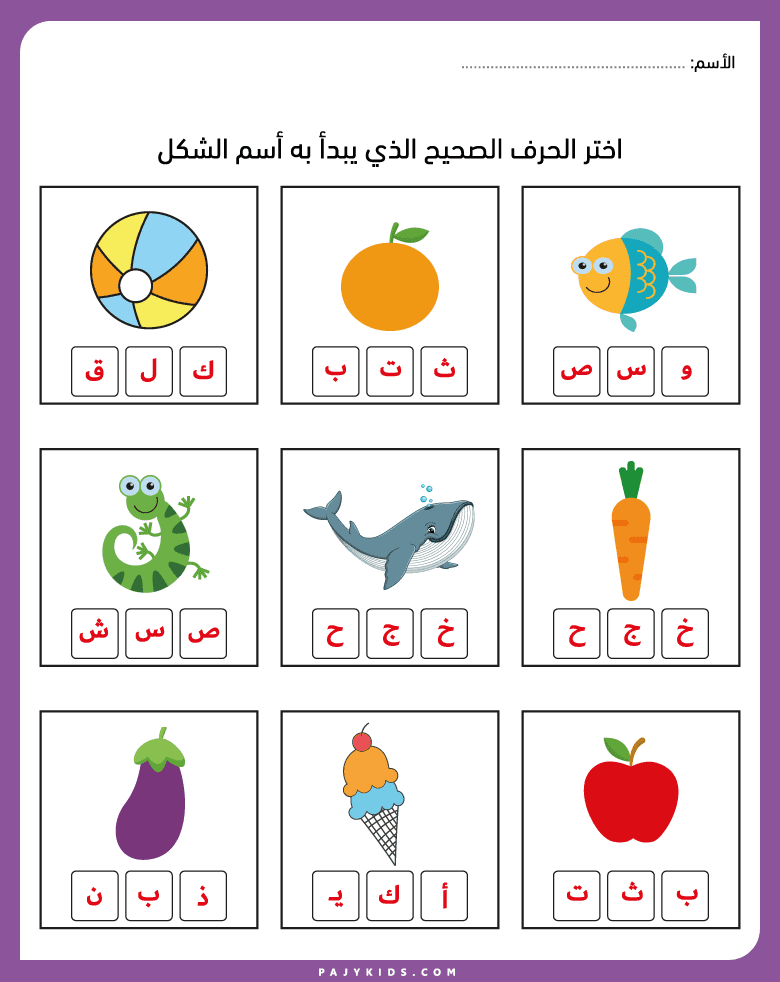
In this activity, children are shown colorful images such as a ball, orange, fish, lizard, whale, carrot, eggplant, ice cream, and apple. Beneath each picture, three Arabic letters are provided, and the child selects the letter that correctly begins the word. This format strengthens arabic alphabet practice by encouraging learners to analyze sounds before making a choice.
This activity develops early phonemic awareness by training children to listen carefully to the first sound of each word. It also improves attention, visual discrimination, and confidence, making arabic alphabet practice more meaningful and engaging for kindergarten learners.
Letter Recognition Through Everyday Objects
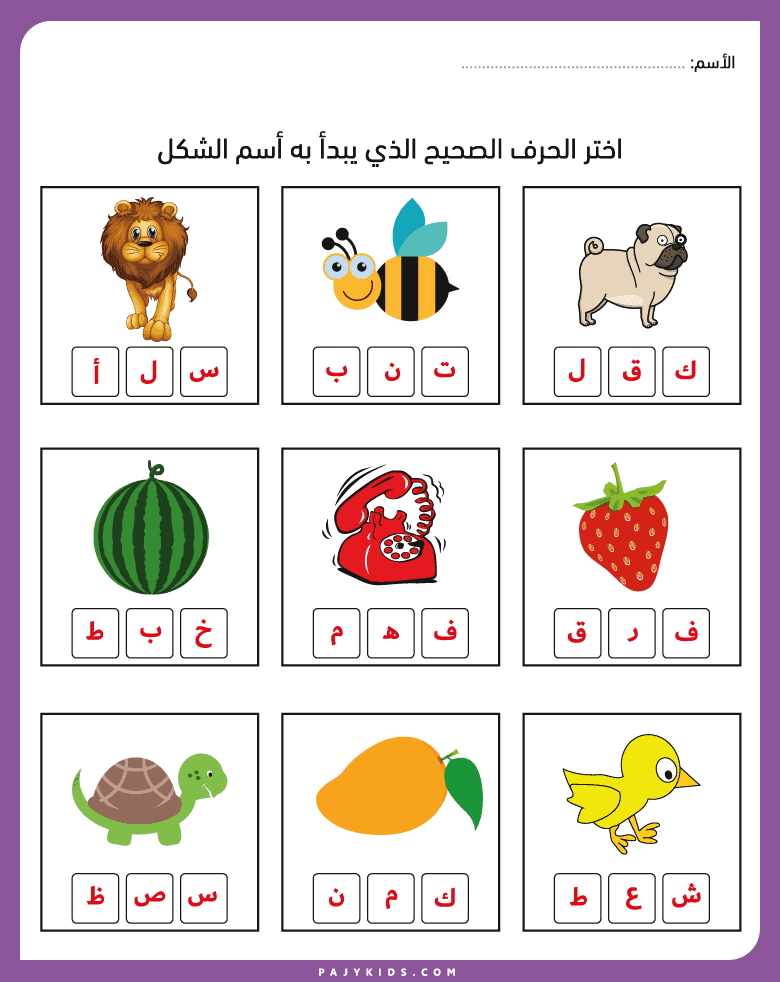
This worksheet includes familiar images such as a lion, bee, dog, watermelon, telephone, strawberry, turtle, mango, and bird. Children observe each picture and choose the correct starting letter from the options provided. Through repeated exposure, arabic alphabet practice becomes a natural learning process rather than a challenging task.
By using objects children recognize from daily life, this activity reinforces vocabulary and strengthens memory retention. It also helps reduce confusion between similar letters, supporting accurate arabic alphabet practice and preparing children for early reading skills.
Arabic numerals 1 to 10: Boost Early Math Skills through Visual Learning
Picture-based letter activities play a vital role in early literacy development. When children are encouraged to think, observe, and choose, learning becomes active and enjoyable. Integrating worksheets like these into classroom or home routines builds strong foundations for arabic alphabet practice, helping children progress confidently toward reading and writing readiness.
See Also: