Table of contents
Stories are one of the most powerful tools for early childhood development. Through simple narratives, colorful characters, and relatable emotions, children begin to understand the world around them. A well-crafted jungle adventure story for kids not only entertains but also nurtures essential life skills such as problem-solving, emotional awareness, and curiosity.
In early learning environments whether at home or in a classroom stories help children build language skills, improve listening abilities, and develop empathy. When a story includes a gentle challenge, like getting lost and finding the way back, it also teaches resilience and confidence. That’s exactly what makes this type of story so valuable for preschoolers and young learners.
What This Story Teaches Children
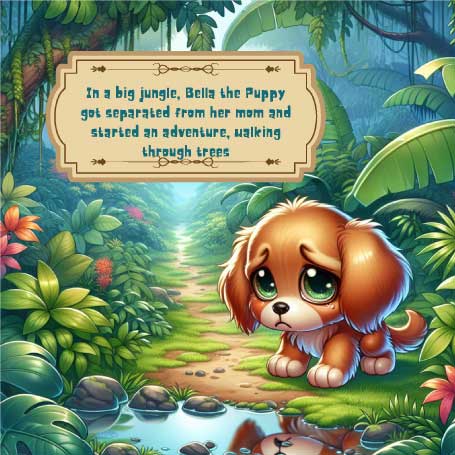
The story presented in the material follows a young puppy named Bella as she navigates a jungle after becoming separated from her mother. While simple in structure, it offers rich developmental benefits for children.
1. Emotional Awareness and Security
Children experience a range of emotions through Bella’s journey fear, curiosity, hope, and happiness. Seeing Bella feel worried when she is lost and joyful when reunited helps children recognize and name their own emotions.
2. Problem-Solving Skills
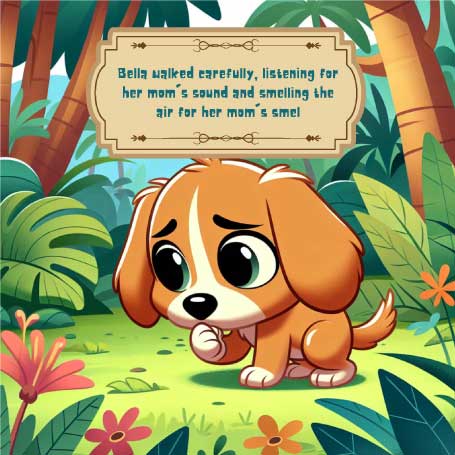
Bella doesn’t stay still; she actively searches for her mother by listening, smelling, and observing her surroundings. This encourages children to think about how problems can be solved step by step.
3. Language Development
The story uses simple, repetitive language structures, which are ideal for early learners. Phrases describing actions like walking, listening, and following help children build vocabulary naturally.
4. Observation and Sensory Skills
Bella uses her senses hearing, smell, and sight to navigate the jungle. This subtly teaches children how to pay attention to their environment and use observation skills.
5. Social Skills and Kindness
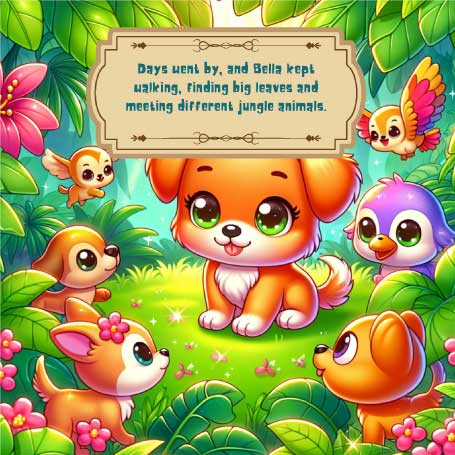
When Bella meets helpful jungle animals (as shown in the middle part of the story), children learn the value of cooperation and kindness. It reinforces the idea that asking for help is okay.
6. Confidence and Independence
Although Bella is young, she continues her journey bravely. This encourages children to develop independence and self-confidence in unfamiliar situations.
How Parents Can Use This Story with Their Child
This kids adventure story can be transformed into an interactive and meaningful learning experience with just a few simple steps.
Step 1: Read the Story Together
Sit with your child in a calm, comfortable space and read the story slowly. Use expressive tones to bring Bella’s emotions to life soft voice for sadness, excited tone for discovery.
Step 2: Pause and Ask Questions
After each part, ask simple questions like:
- “How do you think Bella feels?”
- “What would you do if you were Bella?”
This builds comprehension and emotional intelligence.
Step 3: Encourage Prediction
Before turning to the next part, ask your child what they think will happen next. This strengthens critical thinking and imagination.
Step 4: Act Out the Story
Invite your child to pretend they are Bella walking through the jungle. They can mimic listening, smelling, and searching. This adds a physical, playful dimension to learning.
Step 5: Talk About Feelings
Discuss the moment when Bella is reunited with her mom. Ask your child:
- “Have you ever felt lost or scared?”
- “How did you feel when you found someone you love?”
This helps children connect the story to real-life experiences.
Step 6: Extend with Creative Activities
You can follow up with simple activities such as:
- Drawing Bella and her jungle adventure
- Creating animal sounds for each jungle creature
- Building a “jungle path” using toys or cushions
Curiosity Story for Kids: How “Ally’s Swamp Secret” Teaches Problem Solving and Teamwork
Story Preview
In this gentle and engaging animal story for children, young readers follow Bella, a small puppy who suddenly finds herself alone in a vast jungle. As shown at the beginning of the story (page 2), Bella is separated from her mother and begins walking through trees, unsure of where to go. Her big, expressive eyes and cautious steps immediately capture children’s attention, inviting them to empathize with her situation.
As the story unfolds, Bella uses her senses to search for her mom listening carefully and smelling the air. She continues her journey over several days, meeting friendly jungle animals and discovering new surroundings. One of the most engaging moments occurs when Bella finds paw prints on the ground , giving her hope and direction. Children are naturally drawn into this simple mystery will the paw prints lead her home?
The story builds excitement as Bella follows the trail through bushes and grass, receiving guidance from helpful creatures. Finally, she finds her mother resting near a peaceful river, leading to a joyful reunion filled with warmth and safety. The closing scene shows Bella and her mom walking together, reinforcing a sense of love, security, and belonging.
This narrative is especially beneficial because it combines emotional storytelling with visual cues and simple progression. Children not only enjoy the journey but also learn that challenges can be overcome with patience, courage, and help from others.
Conclusion
Simple stories like this jungle adventure story for kids can have a powerful impact on early childhood development. Through Bella’s journey, children learn about emotions, resilience, and the importance of connection all in a way that feels natural and enjoyable.
For parents, homeschoolers, and teachers, this type of story is more than just entertainment it’s a meaningful learning tool. By reading together, asking questions, and extending the story into playful activities, you can turn a short story into a rich developmental experience.
Even the simplest moments like sitting together and sharing a story can help children grow in confidence, understanding, and imagination. And that’s where true learning begins.