Table of contents
Stories play a powerful role in shaping how children understand the world around them. Through engaging characters and simple narratives, children learn important life lessons in a way that feels natural and enjoyable. One of the most valuable skills children can develop early on is cooperation—the ability to work with others toward a shared goal.
A well-crafted cooperation story for kids helps children see how teamwork, kindness, and shared responsibility can lead to meaningful outcomes. These lessons go beyond the story itself and influence how children interact with siblings, friends, and classmates. When children understand the value of working together, they build a strong foundation for emotional intelligence and positive social behavior.
What This Story Teaches Children
This story introduces children to several essential developmental and educational skills through a simple yet meaningful narrative.
1. Teamwork and Collaboration
At the heart of the story is the idea that working together creates better results. Children see how different characters contribute in their own ways to achieve a shared goal. This reinforces the idea that everyone’s effort matters.
2. Social Skills Development
Through interactions between characters, children observe positive communication, cooperation, and helping behaviors. These are key elements in developing strong social skills.
3. Problem Solving
The main character identifies a problem in the environment and takes initiative to solve it. Children learn that challenges can be overcome with creativity and persistence—especially when others join in.
4. Responsibility and Contribution
Each character plays a role in completing the task. This teaches children that being responsible and contributing to a group effort is important.
5. Appreciation for Nature
The story also highlights the beauty of nature and caring for shared spaces. This encourages children to respect and enjoy their environment.
6. Emotional Development
Children experience feelings of kindness, joy, and pride through the story. Seeing characters feel happy after working together reinforces positive emotional connections to cooperation.
Kids Jungle Adventure Story: Fun and Educational Storytelling for Preschool Learning
How Parents Can Use This Story with Their Child
Parents and educators can turn this story into a meaningful learning experience with just a few simple steps:
Step 1: Read Together
Sit with your child and read the story aloud in a warm and expressive tone. Pause occasionally to let your child observe the illustrations and absorb the details.
Step 2: Ask Thoughtful Questions
Encourage your child to think deeper by asking questions such as:
- Why did the main character want to create something new?
- How did the friends help?
- What would happen if no one helped?
Step 3: Discuss Real-Life Connections
Relate the story to everyday situations. For example, talk about how your child can cooperate at home—like cleaning up toys or helping set the table.
Step 4: Act It Out
Use toys or simple role-play to recreate the story. Let your child take on different roles and act out scenes of helping and teamwork.
Step 5: Create a Mini Project
Inspired by the story, work on a small collaborative activity together. This could be planting flowers, organizing a play area, or building something simple. The goal is to experience teamwork firsthand.
Step 6: Reinforce Positive Behavior
Whenever your child shows cooperation in daily life, connect it back to the story. For example: “That was just like the characters working together!”
Story Preview
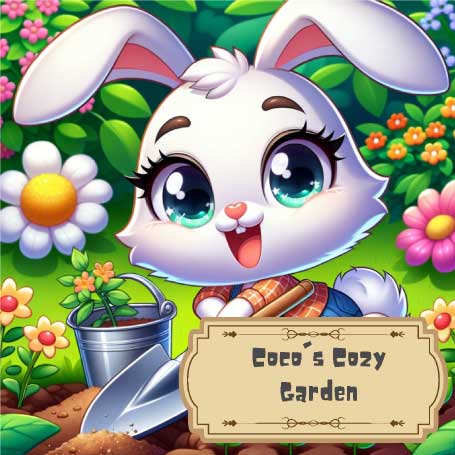
This charming story centers around a thoughtful and determined little rabbit who notices something missing in her community a comfortable and welcoming space where everyone can relax and enjoy nature. Although the village is peaceful and surrounded by beautiful scenery, there is no shared place for animals to gather. This observation sparks an idea in her mind: to create a cozy garden that everyone can enjoy.
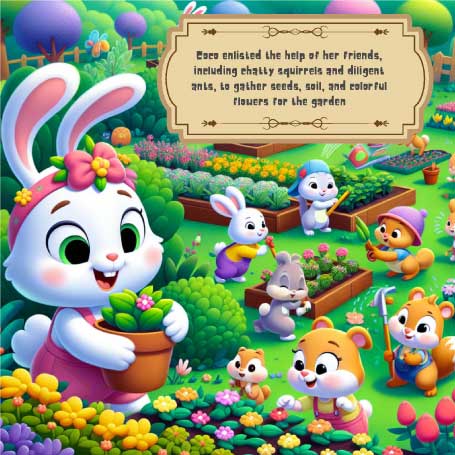
With motivation and a caring heart, the rabbit begins transforming an unused area into something special. She doesn’t do it alone she invites her friends to join her. Soon, various animals come together, each contributing in their own unique way. Some gather seeds, others prepare the soil, and some help decorate the space with colorful flowers. The story beautifully illustrates how each small effort adds up to something meaningful.
As the garden begins to grow, it becomes a lively and peaceful retreat filled with blooming flowers, cheerful animals, and soothing natural sounds. The once-empty space turns into a vibrant gathering place where everyone feels welcome. More animals hear about the garden and join in, helping to maintain and expand it. In the end, the rabbit becomes a beloved figure, not because she worked alone, but because she inspired a community to work together.
This story gives children a visual and emotional understanding of how cooperation works. They see not just the result, but the process how teamwork unfolds step by step.
Conclusion
Teaching children cooperation doesn’t require complicated lessons or structured activities. Sometimes, a simple and heartfelt story is enough to spark meaningful understanding. Through engaging characters and relatable situations, children learn that helping others, sharing responsibilities, and working as a team can lead to wonderful outcomes.
By reading and interacting with stories like this, parents and educators can nurture essential life skills in a natural and enjoyable way. These small moments of learning—reading together, discussing ideas, and practicing teamwork can have a lasting impact on a child’s development.