Table of contents
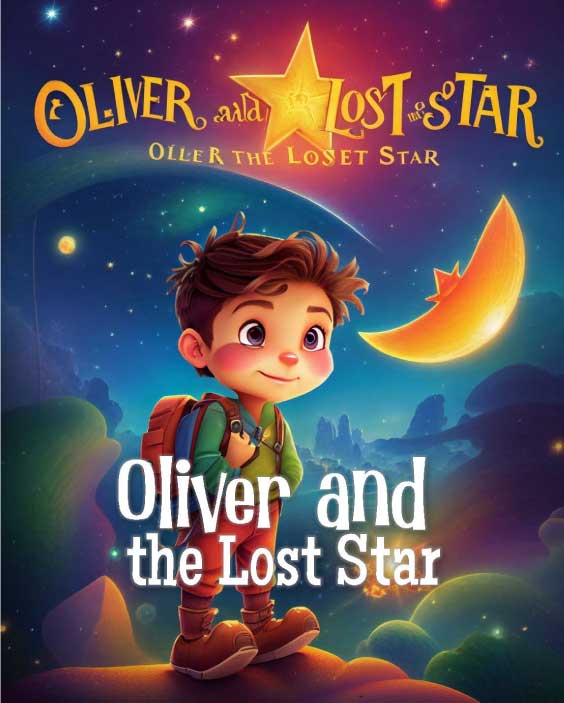
Stories play a foundational role in early childhood development, shaping how children understand the world, express emotions, and build creativity. An imagination story for kids like Oliver and the Lost Star offers more than simple entertainment it opens the door to curiosity, problem-solving, and emotional growth.
Through magical settings, relatable characters, and gentle challenges, children are invited to explore ideas beyond their everyday experiences. This kind of storytelling nurtures cognitive flexibility and encourages children to think independently while also strengthening language skills.
For parents, homeschoolers, and educators, using a thoughtfully designed story like this can transform reading time into a meaningful learning experience.
What This Story Teaches Children
Oliver and the Lost Star is rich in developmental value, combining storytelling with important life skills that young children can absorb naturally.
1. Imagination and Creative Thinking
The story revolves around a mysterious missing star and a magical journey. As described in the opening scene, Oliver notices something unusual in the sky and decides to investigate . This encourages children to ask questions and imagine possibilities beyond what they see.
2. Curiosity and Exploration
Oliver’s decision to search for the lost star models curiosity-driven learning. Children learn that it’s okay to wonder, explore, and seek answers—even when the path is uncertain.
3. Problem-Solving Skills
Throughout the story, Oliver encounters new environments like the enchanted forest and hidden cave. These moments subtly introduce children to problem-solving and persistence, showing that challenges are part of discovery.
4. Emotional Development and Confidence
Oliver begins as a curious boy and grows into a confident explorer. By the end of the story, he understands the importance of believing in himself and trusting his imagination. This reinforces self-confidence in young readers.
5. Language and Listening Skills
The narrative includes descriptive language, dialogue, and sequencing. Listening to or reading the story helps children improve vocabulary, comprehension, and storytelling structure.
6. Moral Understanding
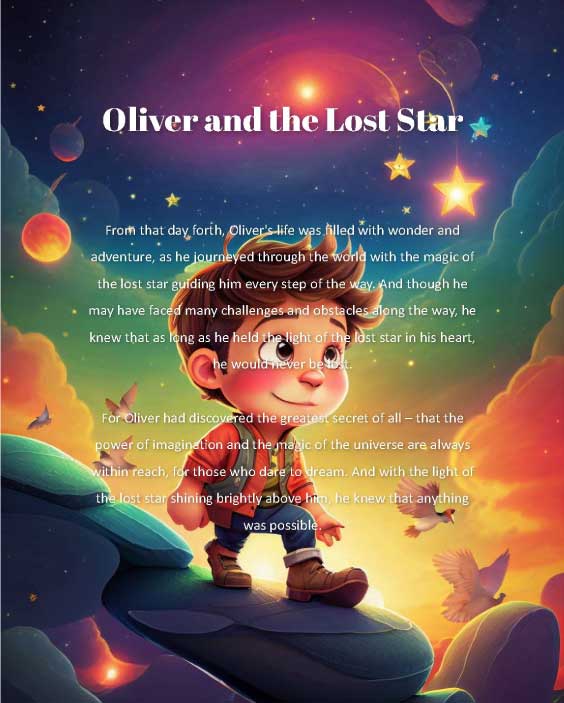
The central message that imagination holds powerful possibilities teaches children that creativity and belief in oneself are valuable strengths.
How Parents Can Use This Story with Their Child
Turning this story into an interactive learning experience is simple and highly effective. Here’s a practical step-by-step approach:
Step 1: Create a Calm Reading Environment
Choose a quiet, cozy space perhaps before bedtime. This helps children focus and associate reading with comfort and security.
Step 2: Read Aloud with Expression
Use different tones for characters and emphasize descriptive parts. For example, when Oliver enters the enchanted forest, slow your voice to create a sense of mystery.
Step 3: Pause and Ask Questions
Encourage engagement by asking open-ended questions:
- “Why do you think the star disappeared?”
- “What would you do if you were Oliver?”
This builds comprehension and critical thinking.
Step 4: Encourage Visualization
Ask your child to imagine the scenes:
- “What does the forest look like in your mind?”
- “How bright do you think the star is?”
This strengthens imagination and mental imagery.
Step 5: Extend the Story with Creative Activities
After reading:
- Have your child draw the lost star or the enchanted forest
- Create a new ending together
- Act out parts of the story
These activities reinforce understanding while making learning fun.
Step 6: Connect the Story to Real Life
Discuss the story’s message:
- “What is something you dream about?”
- “How can imagination help us solve problems?”
This helps children apply lessons to their own experiences.
Teamwork Story for Kids: A Fun and Meaningful Way to Teach Cooperation and Social Skills
Story Preview
Oliver and the Lost Star begins in the peaceful town of Twinkleton, where a young boy named Oliver spends his evenings gazing at the sky, full of curiosity and wonder . One night, he notices something unusual a star is missing. This small but intriguing detail sets the entire adventure in motion, capturing children’s attention immediately and encouraging them to think about the mysteries of the world around them.
As Oliver embarks on his journey, he ventures through magical settings, including an enchanted forest where he meets a gentle fairy who guides him forward. Together, they discover a hidden cave where the lost star glows with a soft, magical light. When Oliver finally reaches the star, he learns that its true power lies in imagination the ability to dream, create, and believe in endless possibilities. This powerful yet simple message is delivered in a way that young children can understand and internalize, making the story both engaging and meaningful.
Conclusion
Simple stories often carry the most powerful lessons. Oliver and the Lost Star shows how a child’s curiosity can lead to discovery, growth, and self-belief. Through imaginative storytelling, children not only enjoy a magical adventure but also develop essential cognitive and emotional skills.
For parents and educators, incorporating stories like this into daily routines can make a lasting difference. Whether it’s bedtime reading or a classroom activity, these moments help children build confidence, creativity, and a lifelong love for learning.
Sometimes, all it takes is one story to remind a child that their imagination can light the way just like a lost star shining in the night sky.