Table of contents
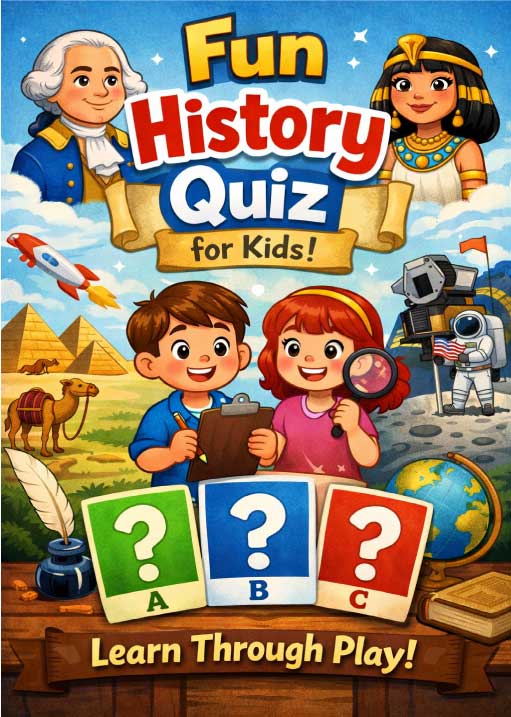
Helping children learn history doesn’t have to feel like memorizing dates and facts. With the right approach, it can become an exciting journey through time filled with stories, discoveries, and meaningful connections. A simple history quiz for kids is a powerful way to introduce important events, famous figures, and civilizations in a fun and engaging format.
Children naturally enjoy answering questions, especially when it feels like a game. Activities like this encourage curiosity while strengthening memory and comprehension skills. Whether you’re a parent, homeschooler, or teacher, using short quizzes can turn everyday learning into an interactive experience your child will actually look forward to.
What This Activity Teaches Children
A well-designed history quiz introduces children to a wide range of essential learning skills beyond just historical knowledge.
1. General Knowledge and Awareness
Children learn about important figures like presidents, explorers, and leaders, as well as major historical events such as the moon landing and ancient civilizations.
2. Memory and Recall Skills
Answering multiple-choice questions helps children practice remembering facts and recognizing correct information among options.
3. Critical Thinking
Even simple questions encourage children to think carefully before choosing an answer, improving decision-making skills.
4. Vocabulary Development
Exposure to historical terms like “civilization,” “empire,” and “century” helps expand language skills naturally.
5. Confidence Building
Answering questions correctly boosts confidence and motivates children to keep learning.
How Parents Can Use This Activity With Their Child
This type of history quiz is flexible and easy to use at home or in a classroom setting.
Step 1: Read Each Question Aloud
Sit with your child and read one question at a time. This supports both listening and comprehension skills.
Step 2: Discuss the Options
Encourage your child to think about each possible answer before choosing. Ask questions like, “Which one sounds familiar?” or “Have we heard this name before?”
Step 3: Let Them Choose Freely
Avoid pressure. The goal is learning, not perfection. Let your child guess if they’re unsure.
Step 4: Reveal and Explain the Answer
After each question, share the correct answer and give a short explanation. For example, explain why George Washington is important or what the pyramids represent.
Step 5: Celebrate Effort
Praise your child’s effort, not just correct answers. This builds a positive learning mindset.
Tips to Make This Activity Fun
Keeping children engaged is key to successful learning. Here are some simple ways to make the quiz more exciting:
Turn It Into a Game
Create a points system or small rewards for participation. You can even have a “quiz night” with the whole family.
Use a Dramatic Voice
Make the questions sound exciting or mysterious to capture your child’s attention.
Act It Out
For certain questions, act out clues. For example, pretend to plant a flag on the moon when talking about the moon landing.
Keep Sessions Short
Young children benefit from short, focused activities. 10–15 minutes is often enough.
Let Children Be the Quiz Master
Switch roles and let your child ask the questions. This reinforces learning and builds confidence.
Easy Science Questions for Kids: Fun Quiz to Boost Learning and Curiosity
Activity Preview
In this activity, children are presented with a set of multiple-choice history questions covering a variety of topics from ancient civilizations to modern events. Each question includes four possible answers, allowing children to think carefully and choose the correct option.
The questions introduce well-known figures such as a U.S. president, a civil rights leader, and a famous nurse, as well as important historical moments like the moon landing. Children also explore ancient cultures including Egyptian and Inca civilizations.
At the end of the activity, answers are provided so children can check their responses and learn from any mistakes.
This structure makes the activity easy to follow while giving children immediate feedback, which is essential for learning.
Conclusion
Teaching history to children doesn’t need to be complicated or overwhelming. Simple activities like a history quiz can spark curiosity, build knowledge, and create meaningful learning moments at home. With just a few questions each day, you’re helping your child develop important skills while exploring the fascinating stories of our world. Small, consistent efforts truly make a lasting difference in your child’s education.