Table of contents
Teaching children about money doesn’t have to be complicated. In fact, some of the most effective lessons happen through simple, interactive activities that encourage thinking and discussion. A well-designed financial literacy quiz for kids introduces essential money concepts in a way that feels approachable and even fun.
Children are naturally curious about how the world works including how money is earned, saved, and spent. By introducing these ideas early, parents and educators can help build strong foundations for responsible decision-making later in life. Activities like quizzes allow children to explore real-life scenarios, reflect on choices, and understand consequences in a safe and supportive environment.
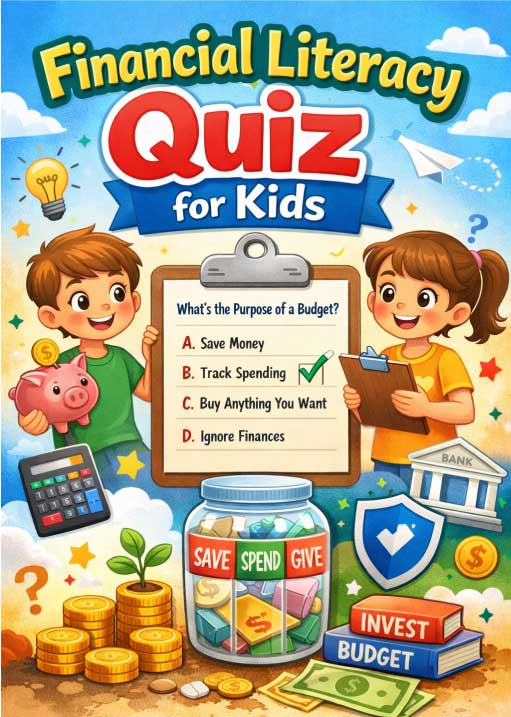
This type of learning material presents key financial concepts like budgeting, saving, and spending wisely through multiple-choice questions that prompt children to think critically about everyday financial situations .
What This Activity Teaches Children
A financial literacy quiz is more than just a set of questions it’s a structured way to build essential life skills. Here’s what children gain from this activity:
1. Understanding Basic Money Concepts
Children learn what money is used for and how it functions in daily life. Concepts like income, expenses, and saving become clearer when presented through relatable questions.
2. Budgeting Awareness
Through guided questions, children begin to understand that money needs to be planned and managed. They learn that budgeting helps balance spending and saving.
3. Importance of Saving
The activity emphasizes why saving matters—whether for future goals or unexpected situations. Children start to see saving as a positive and empowering habit.
4. Introduction to Financial Responsibility
Topics such as loans, credit, and insurance are introduced in simple terms. This helps children understand responsibility and consequences tied to financial decisions.
5. Critical Thinking and Decision-Making
Each question encourages children to evaluate options and choose the most responsible answer. This strengthens their reasoning skills.
6. Real-Life Problem Solving
By exploring scenarios like emergencies or charitable giving, children learn how financial decisions apply to real-world situations.
How Parents Can Use This Activity With Their Child
Using this activity effectively doesn’t require any special preparation. Here’s a simple step-by-step approach:
Step 1: Create a Relaxed Learning Environment
Sit with your child in a comfortable space. Present the activity as a game or challenge rather than a test.
Step 2: Read Each Question Together
Go through each question slowly. Make sure your child understands the vocabulary and context.
Step 3: Discuss Before Answering
Encourage your child to explain their thinking before choosing an answer. Ask questions like:
- “Why do you think that’s the best choice?”
- “What might happen if we chose a different answer?”
Step 4: Reveal and Explain the Answer
After selecting an answer, discuss why it is correct. Reinforce the concept with simple, real-life examples.
Step 5: Connect to Everyday Life
Relate each concept to your child’s daily experiences like saving pocket money or deciding what to buy.
Tips to Make This Activity Fun
Keeping children engaged is key to effective learning. Here are some ways to make the experience enjoyable:
Turn It Into a Game
Assign points for correct answers and celebrate progress. You can even create a small reward system.
Use Role-Playing
Act out scenarios, such as going shopping or saving for a toy, to make concepts more tangible.
Keep Sessions Short
Young children benefit from short, focused sessions rather than long lessons.
Encourage Curiosity
If your child asks questions, explore them together instead of rushing to the next question.
Celebrate Effort, Not Just Accuracy
Praise your child for thinking and participating, even if they make mistakes.
50+ Fun Riddles for Kids: A Brain-Boosting Activity to Build Thinking Skills
Activity Preview
In this activity, children are presented with a series of multiple-choice questions focused on everyday financial concepts. Each question offers four possible answers, encouraging children to think carefully before choosing.
For example, children might explore questions such as:
- What is the purpose of a budget?
- Why is saving money important?
- What does interest mean?
- How is investing different from saving?
They are also introduced to more advanced ideas in simple terms, such as emergency funds, insurance, and credit awareness. The structure helps children gradually build understanding while reinforcing key ideas through repetition and explanation.
At the end of the activity, answers are provided, allowing children to check their understanding and learn from any mistakes .
Conclusion
Teaching children about money doesn’t require complex lessons or formal instruction. Simple, thoughtful activities like a financial literacy quiz can spark meaningful conversations and build lifelong skills.
By guiding your child through these questions, you’re not just teaching them about money—you’re helping them develop responsibility, confidence, and critical thinking. Over time, these small moments of learning add up, shaping how they understand and manage their finances in the future.
Every discussion, every question, and every shared insight brings your child one step closer to becoming financially aware and capable.