Table of contents
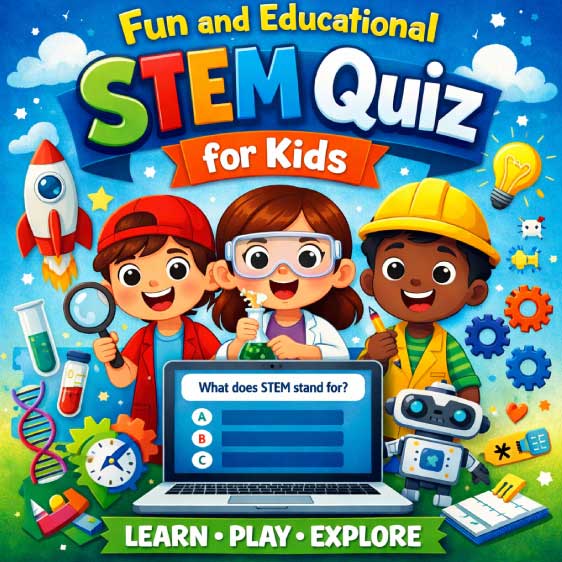
Helping children develop curiosity, problem-solving skills, and confidence in learning doesn’t have to be complicated. Simple, engaging activities like a STEM quiz can introduce young learners to big ideas in science, technology, engineering, and math in a fun and approachable way.
A well-designed STEM quiz encourages children to think, explore, and make connections between everyday life and the world around them. Whether used at home, in a homeschool setting, or in the classroom, this type of activity builds a strong foundation for lifelong learning.
What This Activity Teaches Children
A STEM quiz for kids is much more than just answering questions it supports a wide range of essential developmental skills.
1. Critical Thinking and Problem-Solving
Children are encouraged to think carefully before choosing an answer. Questions about topics like the scientific method or engineering design help them understand how to approach problems step by step.
2. Basic STEM Knowledge
Through simple multiple-choice questions, children are introduced to key concepts such as:
- What STEM stands for
- How scientists conduct experiments
- The role of technology in everyday life
- Why math is important for understanding real-world situations
3. Logical Reasoning
Choosing between different answer options helps children evaluate possibilities and make logical decisions.
4. Language and Comprehension Skills
Reading and understanding each question improves vocabulary and comprehension, especially when new terms like “genetics” or “metric system” are introduced.
5. Confidence Building
When children answer questions correctly, they feel a sense of accomplishment. Even incorrect answers become learning opportunities when discussed together.
How Parents Can Use This Activity With Their Child
Using a STEM quiz at home can be simple and enjoyable. Here’s a step-by-step approach:
Step 1: Create a Relaxed Environment
Sit with your child in a comfortable space where they feel safe to think and respond without pressure.
Step 2: Read Questions Together
Read each question aloud, especially for younger children. This helps with understanding and keeps them engaged.
Step 3: Discuss the Options
Encourage your child to think about each possible answer. Ask questions like:
- “Why do you think this is correct?”
- “What makes this answer different?”
Step 4: Reveal and Explain the Answer
After your child chooses an answer, explain why it is correct. For example, you can discuss how the scientific method helps organize experiments or how coding gives instructions to computers.
Step 5: Encourage Curiosity
If your child shows interest in a topic, take a moment to explore it further. A simple question can lead to a deeper conversation about science or technology.
50+ Fun Riddles for Kids: A Brain-Boosting Activity to Build Thinking Skills
Tips to Make This Activity Fun
Keeping children engaged is key to successful learning. Here are some practical tips:
Turn It Into a Game
Add excitement by turning the quiz into a game. Give points for correct answers or create small rewards for participation.
Use Real-Life Examples
Connect questions to real life. For example:
- Talk about how technology helps at home
- Discuss how measurements are used in cooking
Let Children Be the Quiz Master
Switch roles and let your child ask the questions. This reinforces their understanding and builds confidence.
Keep Sessions Short
Young children learn best in short bursts. Limit the activity to 10–15 minutes to maintain focus.
Celebrate Effort, Not Just Correct Answers
Encourage your child even when they make mistakes. Learning happens through exploration.
Activity Preview
In this STEM quiz activity, children are presented with multiple-choice questions that cover a range of foundational topics in science, technology, engineering, and math.
They will see questions such as:
- What STEM stands for
- Why the scientific method is important
- How engineers solve problems
- The role of technology in daily life
- What coding means
Each question includes four possible answers, allowing children to think critically and choose the best option. At the end, correct answers are provided, helping children review and learn from their choices.
The structure is simple and clear, making it suitable for young learners while still introducing meaningful concepts.
Conclusion
You don’t need complicated tools or long lessons to support your child’s learning. Simple activities like a STEM quiz can spark curiosity, build confidence, and introduce important concepts in a fun and meaningful way.
By spending just a few minutes exploring questions together, you’re helping your child develop skills that will support them for years to come. Small, consistent learning moments truly make a big difference.