Table of contents
Helping children recognize and understand shapes is one of the first steps into the world of early math and geometry. Activities that focus on identifying, naming, and working with shapes build a strong foundation for problem-solving, spatial awareness, and logical thinking.
The materials provided in this resource offer a variety of engaging ways for children to explore 2D shapes through writing, matching, and coloring tasks. Designed with bright visuals and simple instructions, these activities are perfect for young learners in kindergarten and early elementary levels.
In this article, we’ll walk you through how these activities support your child’s development and how you can easily use them at home or in a learning environment.
What This Activity Teaches Children
Using a 2D shapes worksheet for kids goes far beyond simple recognition. These activities build multiple essential skills:
1. Shape Recognition and Naming
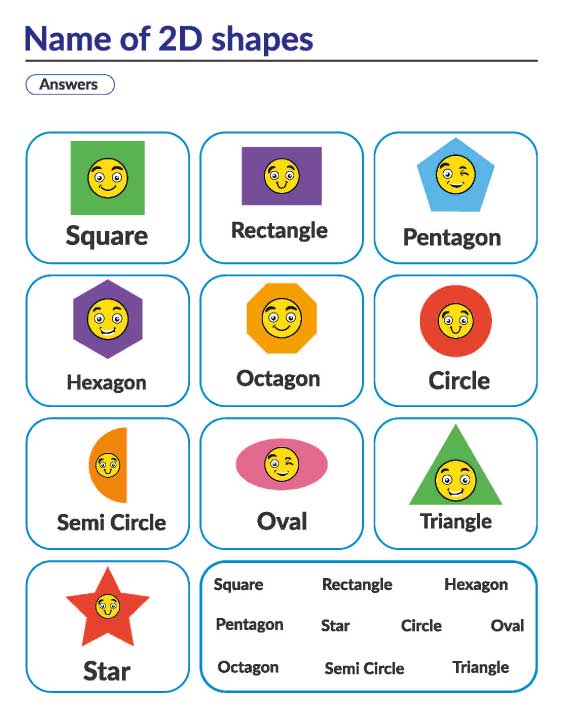
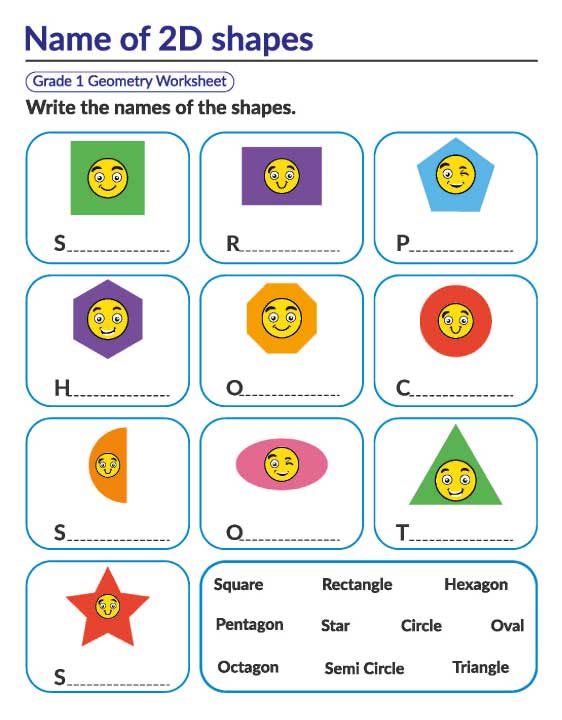
Children learn to identify common 2D shapes such as squares, rectangles, circles, triangles, pentagons, hexagons, and more. On page 1, children are encouraged to write the names of shapes by looking at visual cues and filling in missing letters.
2. Vocabulary Development
By repeatedly seeing and writing shape names, children strengthen their language skills. Words like “octagon” or “semi-circle” become familiar and easier to recall.
3. Visual Discrimination
Matching exercises (like those shown on page 3) help children distinguish between similar shapes. This strengthens their ability to notice details and differences.
4. Fine Motor Skills
Writing shape names and coloring shapes improves pencil control and hand coordination—critical for early writing development.
5. Logical Thinking and Problem-Solving
Activities such as matching shapes to names or identifying specific shapes among many require children to think critically and make decisions.
6. Color Recognition and Following Instructions
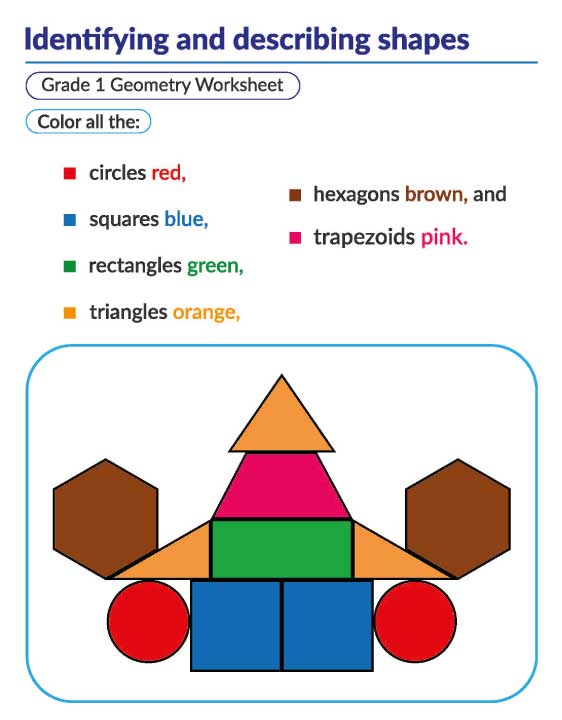
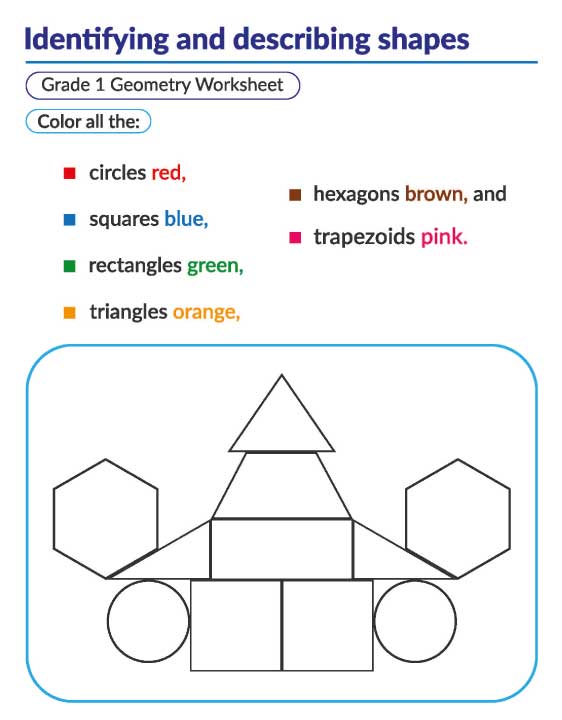
On page 7, children color shapes based on instructions (e.g., circles red, squares blue). This builds listening skills and the ability to follow multi-step directions.
How Parents Can Use This Activity With Their Child
Using these materials at home is simple and highly effective. Here’s a step-by-step approach:
Step 1: Start With Shape Introduction
Begin by pointing to each shape and saying its name out loud. Encourage your child to repeat after you.
Step 2: Practice Naming Shapes
Use the naming activity (like on page 1). Let your child try to fill in the missing letters. Offer gentle hints if needed.
Step 3: Move to Matching Activities
Introduce the matching exercise (page 3). Ask your child to draw lines connecting each shape to its correct name.
Step 4: Add a Coloring Task
Use the coloring activity (page 7). Read the instructions together and guide your child in identifying which shapes to color.
Step 5: Review and Reinforce
After completing each activity, go over the answers together. Celebrate correct answers and gently correct mistakes.
Tips to Make This Activity Fun
Keeping children engaged is key to effective learning. Here are some practical tips:
Use Real-Life Examples
Point out shapes in everyday objects—windows (rectangles), plates (circles), or signs (triangles).
Turn It Into a Game
Challenge your child: “Can you find three circles in this room?” This makes learning interactive and exciting.
Use Colors Creatively
Let your child choose their own colors sometimes, even if it’s different from the instructions. Creativity boosts engagement.
Keep Sessions Short
Young children focus best in short bursts. Aim for 10–15 minutes per session.
Offer Praise and Encouragement
Celebrate effort, not just correct answers. This builds confidence and motivation.
Activity Preview
The activity set includes several engaging exercises:
- Shape Naming (Page 1): Children see colorful shapes with missing letters and must complete the names, such as “S____” for square.
- Answer Reference (Page 2): A helpful guide showing all correct shape names clearly.
- Matching Shapes (Page 3): Children draw lines connecting shapes like circles, triangles, and rectangles to their correct names.
- Shape Identification Task (Pages 5–6): Children are asked to find specific shapes and write their names while ignoring others.
- Color and Describe (Page 7): A creative activity where children color shapes according to instructions, forming a larger picture made of multiple shapes.
These activities combine visual learning, writing, and creativity in a structured yet playful way.
Best Addition Worksheets for Kids to Practice Math Skills Easily
Conclusion
Simple activities like working with a 2D shapes worksheet for kids can have a lasting impact on your child’s learning journey. By combining visual recognition, hands-on practice, and playful interaction, you’re helping your child build essential early math skills in a natural and enjoyable way.
Remember, consistency matters more than perfection. Even a few minutes of focused, positive learning each day can boost your child’s confidence and curiosity. With your support, these small moments can grow into a strong foundation for future learning.