Table of contents
Helping young children build strong early math skills doesn’t have to feel like formal learning. In fact, some of the most effective learning happens through play-based activities that capture a child’s natural curiosity. Number maze worksheets are a perfect example of this combining problem-solving, number recognition, and fine motor practice into one engaging task.
These activities are especially valuable for preschoolers and kindergarten learners who are just beginning to explore numbers. By guiding children through a maze using a specific number sequence, they develop foundational math skills in a fun and low-pressure way. The materials provided here offer a structured yet playful approach to practicing numbers from 1 to 20, making them ideal for both home and classroom use .
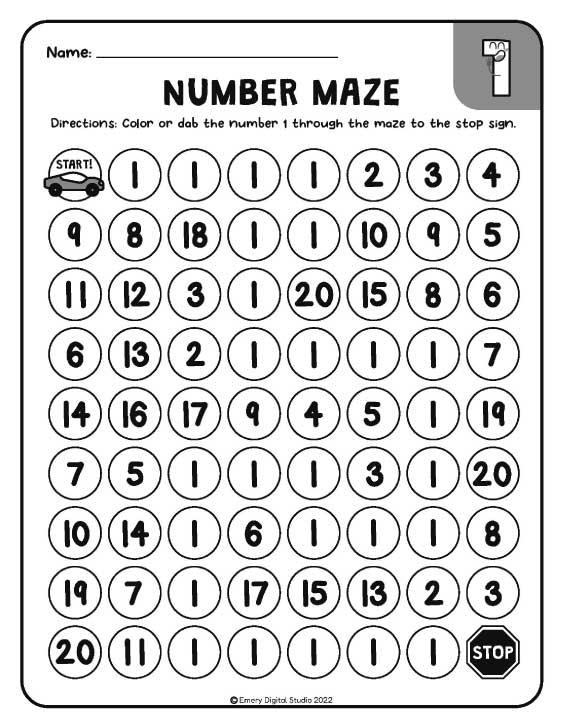
What This Activity Teaches Children
Number maze worksheets may look simple at first glance, but they support a wide range of essential developmental skills:
Number Recognition
Children learn to identify and distinguish numbers by repeatedly locating a target number within a grid. Each maze focuses on a specific number, reinforcing recognition through repetition.
Counting and Number Awareness
As children move through the maze, they begin to understand number patterns and sequencing. This builds early numeracy skills that are crucial for future math learning.
Problem-Solving Skills
Finding the correct path from start to finish requires logical thinking. Children must decide which direction to move based on the numbers they see, strengthening decision-making abilities.
Fine Motor Development
Coloring or dabbing along the correct path helps improve hand control and coordination. These skills are important for writing and other daily tasks.
Focus and Persistence
Completing a maze encourages children to stay engaged and finish a task. It also builds confidence as they successfully reach the “stop” point.
How Parents Can Use This Activity With Their Child
Using number maze worksheets at home is simple and flexible. Here’s a step-by-step approach to make the most of this activity:
Step 1: Choose a Number
Select a maze that focuses on a specific number your child is currently learning. The materials include mazes for numbers 1 through 20, allowing for gradual progression .
Step 2: Explain the Goal
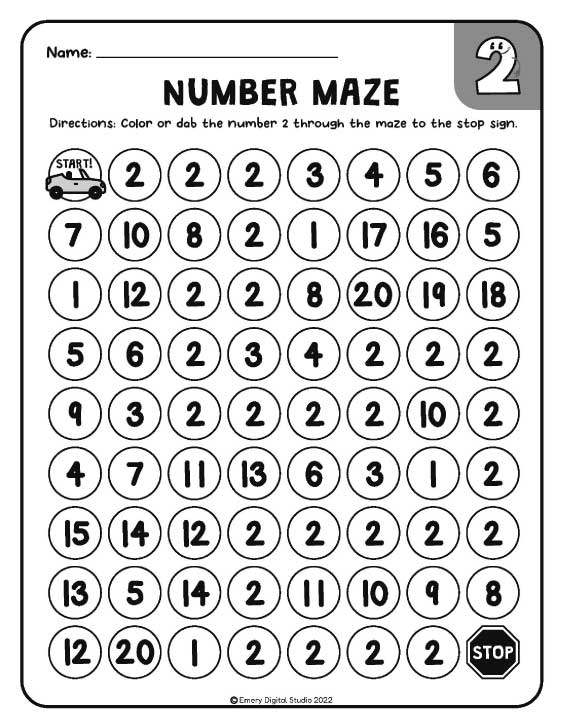
Tell your child that they need to find a path from the “start” to the “stop” by following only one number. This gives them a clear objective.
Step 3: Model the First Steps
For younger children, demonstrate how to find the first few numbers in the maze. Point to the correct path and explain your thinking.
Step 4: Let Them Explore
Encourage your child to continue independently. Offer gentle guidance if they get stuck, but allow them to problem-solve.
Step 5: Color or Dab the Path
Children can use crayons, markers, or dot markers to highlight their path. This adds a creative element and reinforces learning.
Step 6: Check Together
Use the completed examples provided to review the correct path and celebrate their effort .
Tips to Make This Activity Fun
Keeping children engaged is key to effective learning. Here are some simple ways to make number mazes even more enjoyable:
Turn It Into a Game
Pretend the child is helping a car or character reach its destination. Adding a story makes the activity more exciting.
Use Different Colors
Assign a different color for each maze. This adds variety and keeps children interested.
Add a Timer Challenge
For older children, introduce a gentle time challenge. This can make the activity feel like a fun race rather than a task.
Celebrate Small Wins
Praise your child for effort, not just correctness. Even partial completion builds confidence.
Work Together
Sit beside your child and solve a maze together. Shared learning moments strengthen both skills and connection.
Activity Preview
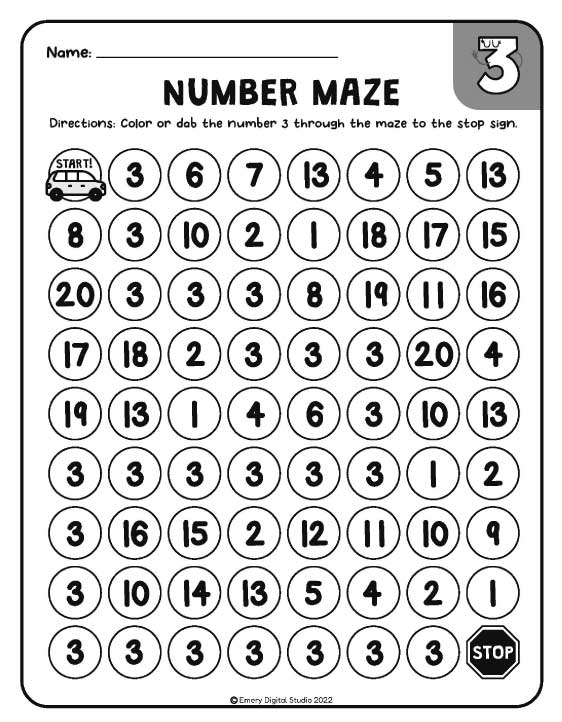
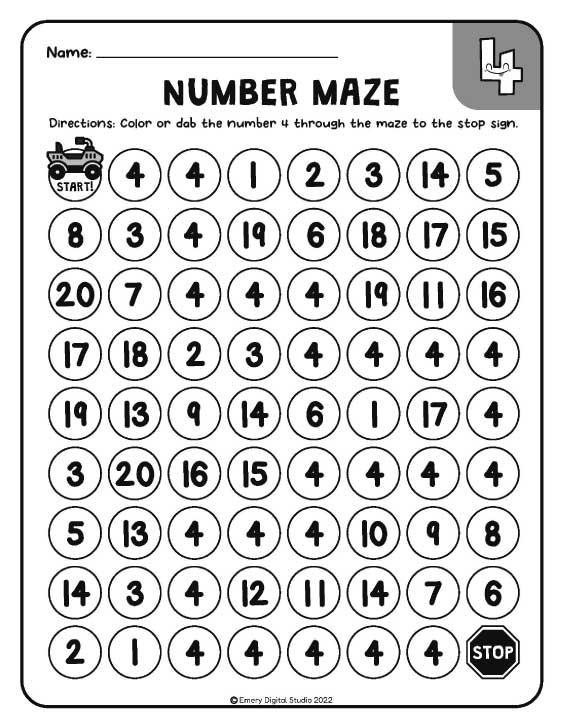
These number maze activities present children with a grid filled with numbers from 1 to 20. Each activity focuses on one specific number, and children are asked to follow that number through the maze from a clearly marked starting point to a stop sign. Along the way, they must carefully scan the grid to identify the correct numbers and avoid distractions from other numbers.
The layout is visually clear and child-friendly, with rounded shapes and bold numbers that are easy to recognize. As seen in the materials, each maze includes a mix of numbers, requiring children to pay close attention and think critically about their choices. The repetition of the target number helps reinforce recognition while the maze format keeps the task engaging and interactive .
Monster-Themed Tracing Worksheets for Preschool and Kindergarten Learning
In addition to the main activities, completed examples are included to help parents guide their children. These examples show the correct path highlighted, making it easier to provide support and feedback. This combination of independent exploration and guided learning makes the activity both effective and adaptable for different learning levels .
Conclusion
Simple activities like number maze worksheets can make a big difference in a child’s early learning journey. By combining play, creativity, and structured practice, these activities help children build essential math skills while having fun. Whether you’re a parent, homeschooler, or teacher, incorporating engaging tools like this into your routine can support your child’s growth in a meaningful and enjoyable way.