Table of contents
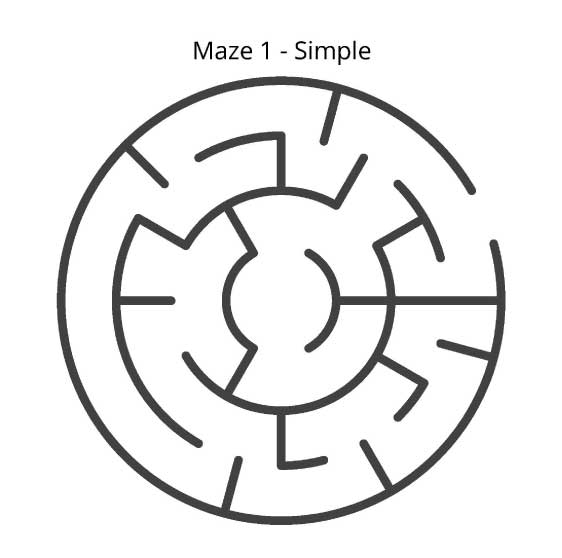
Helping children develop essential thinking skills doesn’t have to feel like a formal lesson. In fact, some of the most effective learning happens through play. Activities like circular mazes for kids offer a simple yet powerful way to support early childhood development while keeping children engaged and entertained.
Mazes are more than just fun puzzles they encourage children to think critically, make decisions, and stay focused on a goal. With their unique round design, circular mazes add an extra layer of excitement and challenge, making them especially appealing to young learners.
Whether you’re a parent, homeschooler, or kindergarten teacher, this type of activity can easily become a favorite part of your daily routine.
What This Activity Teaches Children
Circular mazes may look simple at first glance, but they support a wide range of developmental skills that are crucial during early childhood.
Problem-Solving Skills
Children must carefully analyze each path and decide which direction to take. This builds logical thinking and encourages them to learn from mistakes when they reach a dead end.
Fine Motor Development
As children trace or draw their way through the maze, they strengthen hand muscles and improve pencil control. This is especially important for writing readiness.
Focus and Concentration
Completing a maze requires sustained attention. Children learn to stay engaged with a task until they reach the goal, which builds patience and perseverance.
Visual Tracking and Spatial Awareness
Circular mazes challenge children to follow curved paths and navigate changing directions. This improves their ability to track visually and understand spatial relationships.
Confidence Building
Each completed maze gives children a sense of accomplishment. Even when they make mistakes, they learn that trying again leads to success.
How Parents Can Use This Activity With Their Child
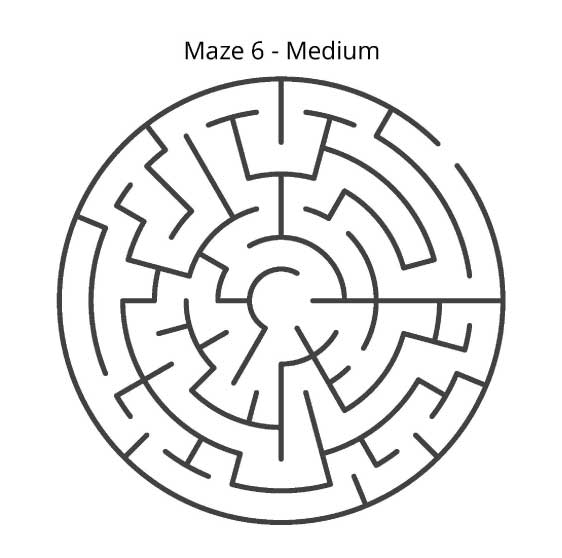
Using circular mazes at home is simple and flexible. Here’s a step-by-step approach to make the most of the activity:
Step 1: Choose an Appropriate Difficulty
Start with simpler mazes for younger children or beginners. Gradually introduce more complex designs as their confidence grows.
Step 2: Explain the Goal
Show your child where to start and where to finish. Keep instructions clear and simple: “Let’s find the path from the outside to the center!”
Step 3: Encourage Slow and Careful Movement
Remind your child to take their time. Encourage them to look ahead before moving their pencil.
Step 4: Allow Mistakes
If they hit a dead end, gently guide them to try again. Avoid correcting immediately—let them discover solutions independently.
Step 5: Celebrate Success
When they complete a maze, acknowledge their effort. A simple “You did it!” can go a long way in building motivation.
Tips to Make This Activity Fun
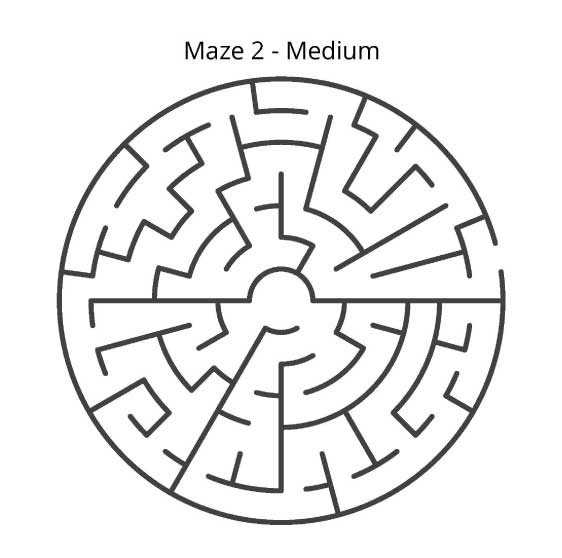
Keeping children engaged is key to effective learning. Here are some practical ways to make circular mazes even more enjoyable:
Turn It Into a Game
Set a fun challenge like “Can you solve this maze before the timer ends?” Keep it light and playful.
Use Colors
Let children use colored pencils or markers to trace their path. This adds a creative element and makes the activity visually exciting.
Add a Story
Transform the maze into an adventure. For example, “Help the little animal find its way home!” This sparks imagination and keeps children interested.
Work Together
Sit beside your child and solve a maze together. This creates a bonding moment and provides gentle guidance.
Offer Choices
Give your child a few maze options and let them pick. Having control increases engagement and enthusiasm.
Activity Preview
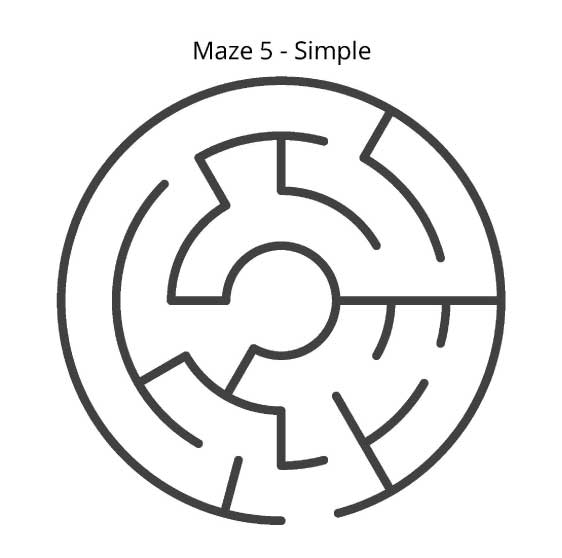
Circular mazes are designed with paths that twist and turn around a central point, creating a visually engaging puzzle that immediately captures a child’s attention. Instead of moving in straight lines like traditional mazes, children follow curved paths that loop around, making the experience feel more like a journey. This unique structure encourages children to think differently and adapt their approach as they navigate through the maze.
Monster-Themed Tracing Worksheets for Preschool and Kindergarten Learning
As children work through the activity, they typically start from an outer edge and attempt to reach the center (or vice versa). Along the way, they encounter multiple branching paths, some leading forward and others ending in dead ends. This process requires careful observation, decision-making, and persistence. Over time, children begin to anticipate patterns, improving both their problem-solving skills and their confidence in tackling new challenges.
Conclusion
Simple activities like circular mazes for kids can have a meaningful impact on a child’s development. They combine fun and learning in a natural way, helping children build essential skills without pressure.
By spending just a few minutes each day on engaging activities like these, you create opportunities for growth, confidence, and connection. Over time, these small moments add up, supporting your child’s learning journey in a joyful and memorable way.