Table of contents
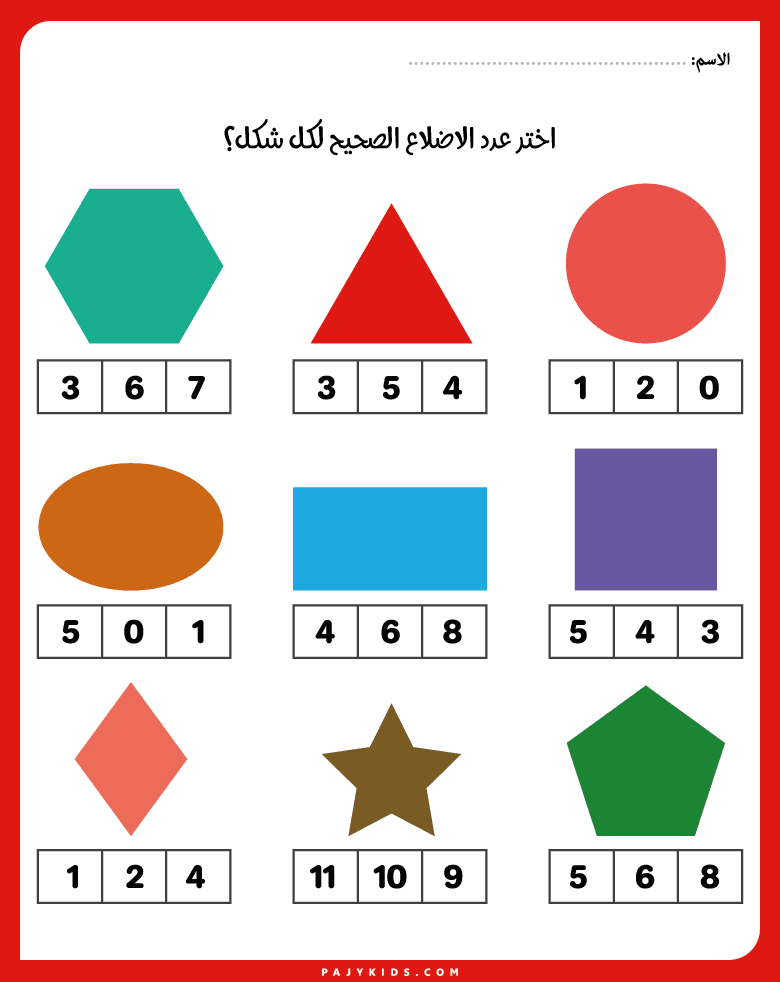
Early geometry learning helps children observe, compare, and understand the world around them. A well-designed shapes activity for kg introduces young learners to basic shapes while guiding them to recognize and count the number of sides in a simple, engaging way. When this concept is taught through hands-on practice and visual exploration, children build strong foundations in both math and thinking skills without feeling overwhelmed.
Why Learning the Number of Sides Matters in Kindergarten
Counting the sides of shapes helps children move beyond recognizing shapes by name to understanding their structure. This skill strengthens observation, comparison, and early reasoning abilities. By focusing on sides, children begin to notice what makes each shape unique, which supports later learning in geometry, patterns, and problem-solving.
Shapes Activity for KG Using Visual Recognition
Visual learning is especially effective at the kindergarten level. Showing clear, colorful shapes and highlighting their sides helps children focus on key details. In a shapes activity for kg, teachers can guide children to trace each side with a finger or pointer while counting aloud, reinforcing both visual memory and number awareness.
Hands-On Activities That Make Learning Easier
Children learn best when they can touch and move objects. Using cut-out shapes, sticks, or strings allows learners to physically build shapes and count their sides. These hands-on methods make abstract ideas concrete and help children stay engaged. Such activities also encourage curiosity and independent exploration.
Shapes Activity for KG Through Games and Interaction
Turning learning into a game increases motivation and attention. Matching shapes to the correct number of sides, sorting shapes by side count, or simple classroom challenges keep children actively involved. With a playful shapes activity for kg, learning feels enjoyable while concepts are reinforced naturally through repetition.

Supporting Fine Motor and Cognitive Skills Together
Many shape activities involve tracing, drawing, cutting, or connecting lines, which strengthens fine motor control. At the same time, children practice focus, sequencing, and counting. This combination supports overall school readiness and helps children gain confidence in both movement and thinking tasks.
Shapes Posters: A Teacher’s Resource for Kindergarten and School
Teaching the number of sides does not require complex methods, but it does require clear, engaging activities. When a shapes activity for kg is built around visuals, hands-on practice, and play-based learning, children understand shapes more deeply and confidently. These early experiences create a strong foundation for future math learning and encourage a positive attitude toward exploration and discovery.