Table of contents
Early learning experiences should be engaging, visual, and developmentally appropriate. shape for preschool activities that focus on matching and connecting shapes help young learners build strong visual awareness while laying the groundwork for early math and problem-solving skills. Through playful exploration, children learn to recognize similarities, differences, and spatial relationships in a natural and enjoyable way.
Understanding Shapes Through Matching Activities
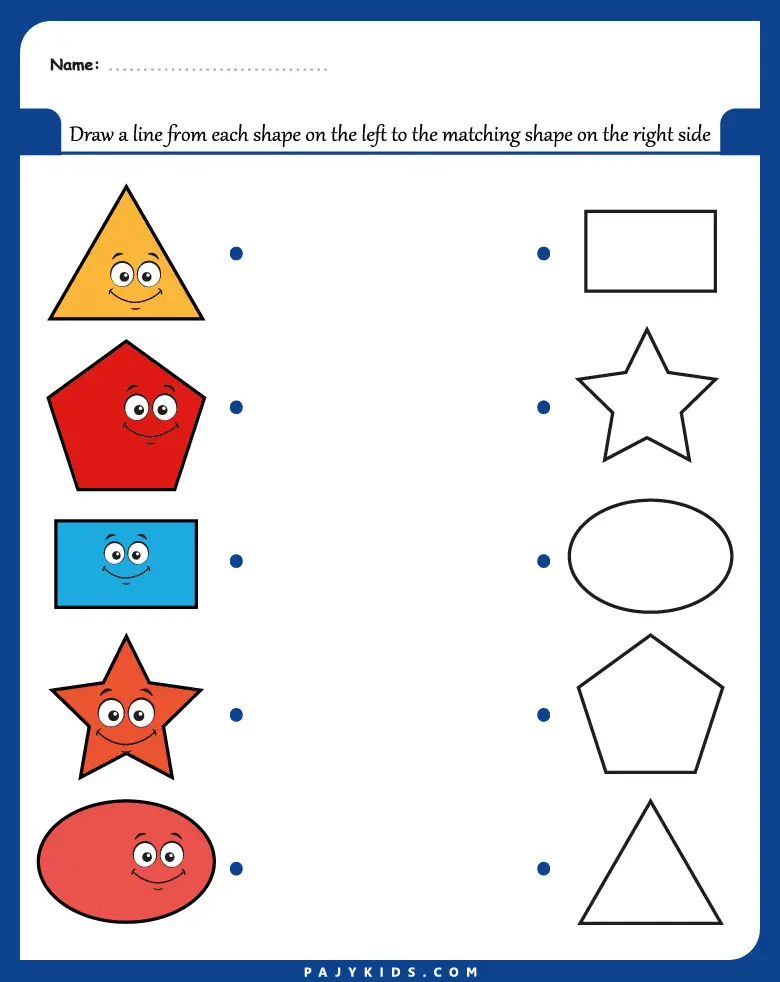
Matching activities are often a child’s first step toward recognizing geometric forms. By pairing identical shapes or matching shapes to outlines, children begin to notice defining features such as sides and curves. These activities strengthen observation skills and help children organize visual information, which supports later learning in math, reading, and logical thinking.
Shape for Preschool as a Tool for Cognitive Development
When children engage in shape for preschool matching tasks, they practice comparing, analyzing, and making decisions. These cognitive processes improve memory, attention, and problem-solving abilities. Connecting related shapes also encourages children to think sequentially, an important skill for understanding patterns and following instructions.

Connecting Shapes to Build Spatial Awareness
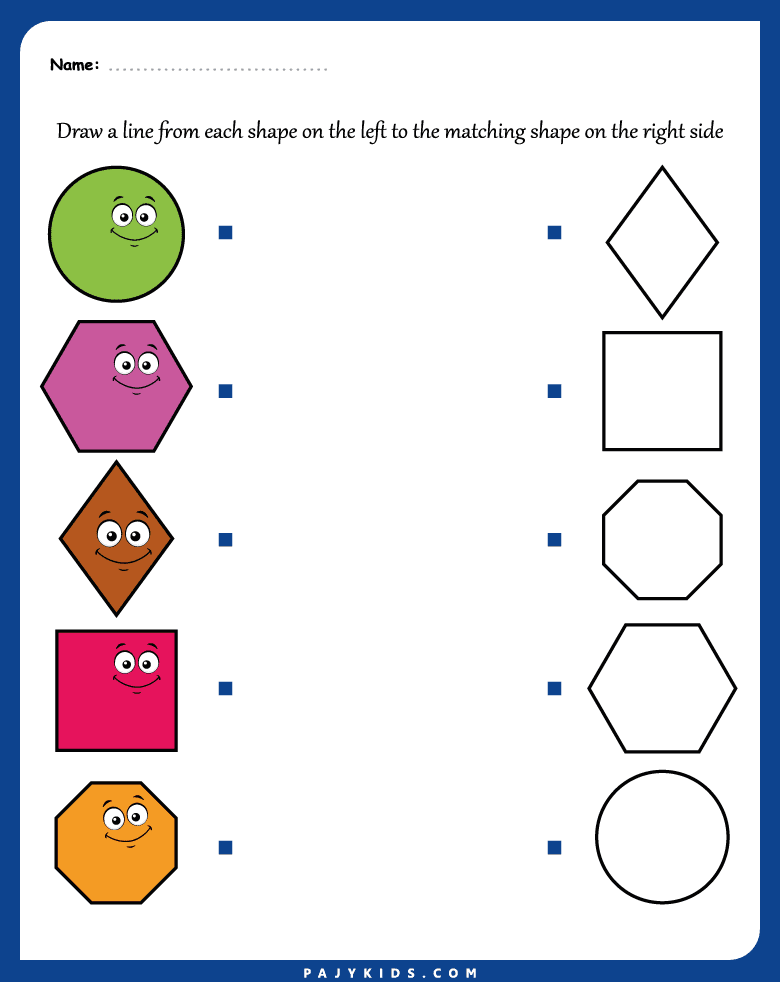
Connecting activities, such as drawing lines between related shapes or assembling shape puzzles, help children understand how forms relate to one another in space. This spatial awareness is essential for future skills like writing, geometry, and even everyday tasks. Working with shape for preschool exercises in this way turns abstract concepts into hands-on experiences.
Supporting Fine Motor Skills Through Hands-On Practice
Many matching and connecting activities require children to draw lines, trace shapes, cut pieces, or place items carefully. These actions strengthen fine motor skills and hand–eye coordination. As children repeat shape for preschool activities, they gain better control over their movements, which supports writing readiness and classroom independence.
Shapes Posters: A Teacher’s Resource for Kindergarten and School
Integrating Shape Activities at School and Home
Consistency across learning environments enhances understanding. Teachers can introduce structured matching and connecting activities in the classroom, while parents reinforce the same skills at home through games and simple worksheets. Regular exposure to shape for preschool activities helps children retain concepts and apply them confidently in different contexts.
Matching and connecting activities offer more than simple shape recognition; they support cognitive growth, spatial awareness, and fine motor development. When thoughtfully designed, shape for preschool activities create meaningful learning experiences that prepare children for kindergarten and beyond. By combining play with structure, educators and parents help young learners build strong foundations through exploration and discovery.