Table of contents
Early childhood education focuses not only on academic knowledge but also on developing the skills that support learning as a whole. descending order activities play an important role in this process by helping children understand number relationships while simultaneously strengthening cognitive and fine motor abilities. When numbers are arranged from largest to smallest through hands-on practice, children engage their minds and bodies in a balanced and meaningful way.
Understanding Descending Order in Early Learning
At the kindergarten level, learning to organize numbers is closely linked to thinking skills. Arranging numbers from higher to lower values encourages children to compare, analyze, and make decisions. These mental processes strengthen logical reasoning and problem-solving abilities. Through repeated practice, children begin to recognize numerical patterns and develop a clearer sense of how numbers relate to one another.
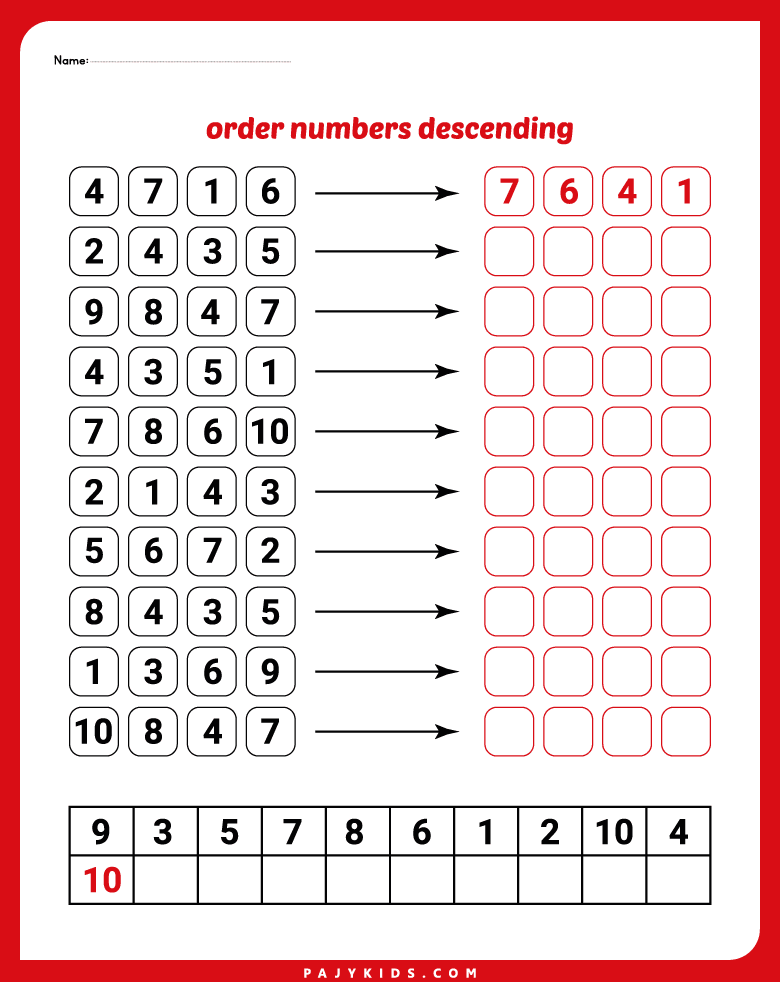
Descending Order as a Tool for Cognitive Development
Working with descending order tasks requires focus, memory, and sequencing. Children must remember number values, identify the largest first, and then continue the sequence correctly. This process enhances attention span and working memory, which are essential skills across all areas of learning. Over time, these activities help children approach tasks more systematically and with greater confidence.
Fine Motor Skills Through Hands-On Ordering Activities
Many number-ordering exercises involve physical actions such as placing cards, drawing lines, cutting, pasting, or writing numbers. These movements strengthen the small muscles in the hands and fingers. When children practice descending order through such activities, they improve hand–eye coordination, pencil control, and precision, all of which are vital for writing and classroom tasks.
Integrating Thinking and Movement in Learning
The most effective early learning activities combine mental effort with physical action. Ordering numbers using manipulatives like blocks or counters allows children to think and move at the same time. This integration supports deeper understanding and keeps children engaged. Through descending order exercises, learning becomes active rather than passive, making concepts easier to grasp and remember.
Division for Kindergarten: Simple Strategies for Learning Math
Supporting Skill Development at School and Home
Consistency across environments strengthens learning outcomes. Teachers can introduce structured ordering activities in the classroom, while parents can reinforce the same skills at home through simple games or daily routines. Practicing descending order in familiar contexts helps children transfer skills and apply them naturally, reinforcing both cognitive and motor development.
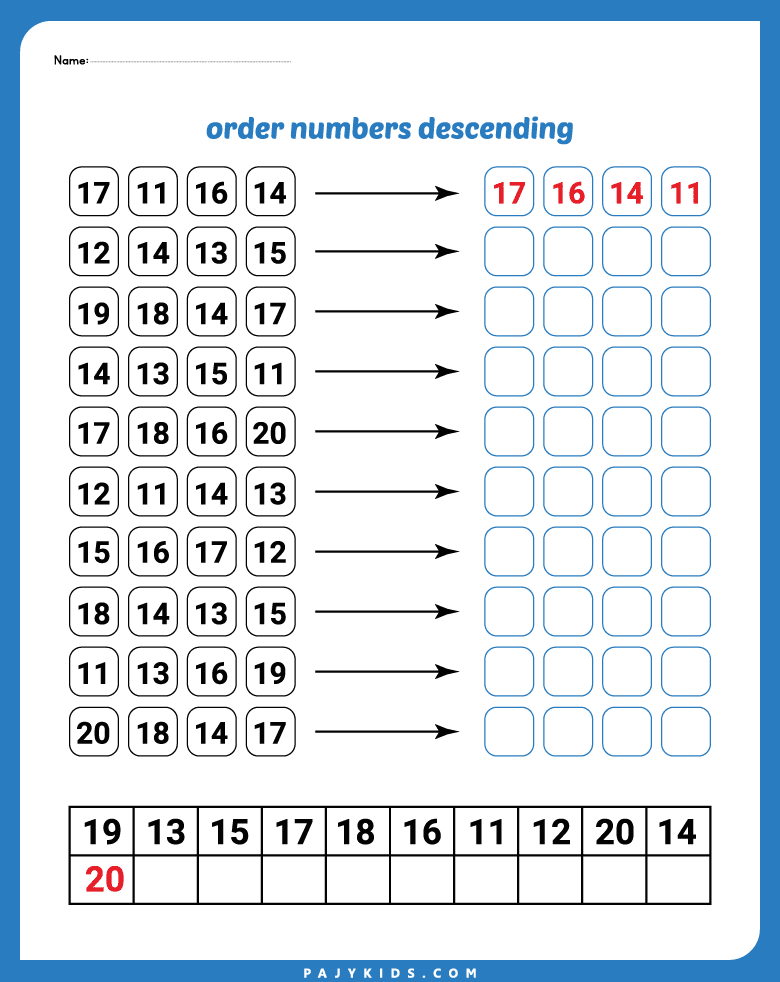
Number-ordering activities offer far more than basic math practice. When thoughtfully designed, descending order exercises support cognitive growth, fine motor development, and overall learning readiness. By engaging children in activities that combine thinking, movement, and repetition, educators and parents help build a strong foundation that supports future academic success with confidence and independence.