Table of contents
Helping young children learn the alphabet is one of the most important steps in early education. Before children can read or write, they need to recognize letters, understand their sounds, and begin connecting them to words. One of the most engaging and developmentally appropriate ways to introduce these foundational skills is through animal alphabet flashcards.
Children are naturally drawn to animals. When letters are paired with friendly, colorful animal illustrations, learning becomes more meaningful and memorable. These types of activities combine visual learning, phonics, and play creating a positive early literacy experience that children genuinely enjoy.
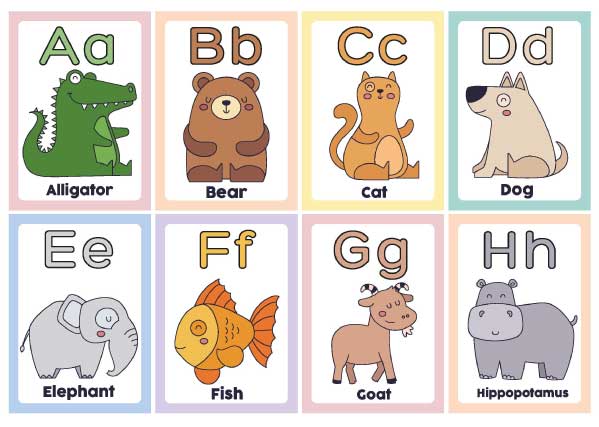
The materials provided showcase a complete A–Z animal alphabet set, where each letter is paired with a corresponding animal (such as “A for Alligator,” “B for Bear,” and “C for Cat”) . This simple yet powerful approach supports both recognition and recall, making it ideal for preschoolers and early learners.
What This Activity Teaches Children
Animal alphabet flashcards are much more than just letter cards. They support multiple areas of child development simultaneously:
1. Letter Recognition
Children learn to identify both uppercase and lowercase letters, as shown clearly in each card. Seeing “Aa,” “Bb,” and so on helps them understand letter forms and differences.
2. Phonics Awareness
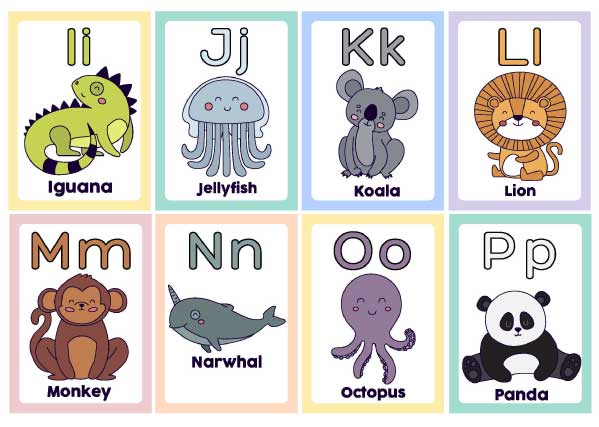
Each letter is paired with an animal that begins with the same sound. For example, “Ff – Fish” or “Mm – Monkey” . This strengthens early phonemic awareness, helping children connect letters to sounds.
3. Vocabulary Development
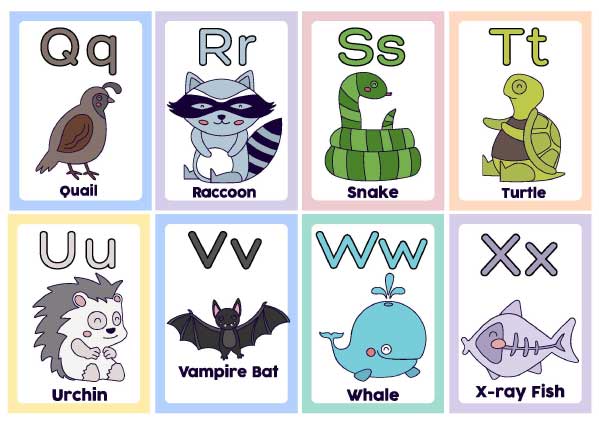
Children are introduced to a wide range of animals, including familiar ones like dog and cat, as well as less common ones like narwhal and quail . This expands their vocabulary in a natural way.
4. Visual Learning Skills
Bright, friendly illustrations support visual memory. Children often remember the animal first, which then helps them recall the letter.
5. Attention and Focus
Short, interactive flashcard sessions help build attention span. Children learn to focus on one concept at a time.
6. Early Categorization Skills
By grouping animals with letters, children begin to understand how items can be categorized and organized.
How Parents Can Use This Activity With Their Child
Using animal alphabet flashcards at home is simple and flexible. You don’t need long sessions just a few minutes of focused interaction can make a big difference.
Step 1: Introduce a Few Letters at a Time
Start with 2–4 flashcards instead of the whole alphabet. For example, introduce A, B, and C using “Alligator,” “Bear,” and “Cat.”
Step 2: Say the Letter and Sound
Hold up a card and say:
“This is A. A says /a/. A is for Alligator.”
Encourage your child to repeat after you.
Step 3: Talk About the Animal
Make it conversational:
“Have you seen an alligator before?”
“What sound does a bear make?”
This builds language skills alongside letter recognition.
Step 4: Practice Recall
After a few minutes, ask:
“Which one is B?”
“Can you find the Cat?”
This reinforces memory through gentle questioning.
Step 5: Repeat and Rotate
Revisit the same letters over a few days, then gradually add new ones. Repetition is key for mastery.
Tips to Make This Activity Fun
Keeping learning playful is essential for young children. Here are simple ways to make flashcards more engaging:
Use Animal Sounds
Act out each animal sound together. For example:
“Roar like a lion!” or “Swim like a fish!”
Turn It Into a Game
Lay out a few cards and say:
“Can you find the letter that starts with ‘sss’?” (Snake)
Add Movement
Ask your child to jump to the correct card or run and pick it up. Movement helps reinforce learning.
Let Your Child Lead
If your child shows interest in a particular animal (like pandas or whales), spend extra time on those letters.
Keep Sessions Short
5–10 minutes is enough. Ending while your child is still interested keeps motivation high.
Tracing Letter Z Practice with Fun and Educational Worksheets
Activity Preview
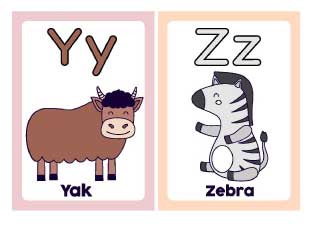
This activity presents a full set of alphabet cards, each featuring both uppercase and lowercase letters paired with a clearly illustrated animal. For example, children see “Aa” alongside a friendly alligator, “Gg” with a goat, and “Ww” with a whale . The visuals are simple, colorful, and designed to be easily recognizable for young learners, which helps reduce cognitive overload and supports focus.
Children are encouraged to look at each card, say the letter aloud, and connect it with the animal shown. The combination of letter forms and familiar imagery makes it easier for children to remember what they’ve learned. As they progress through the set from A to Z they gain confidence in recognizing letters and begin forming early connections between sounds and words.
This type of activity is especially beneficial because it integrates multiple learning styles. Visual learners benefit from the illustrations, auditory learners from repeating sounds, and kinesthetic learners from interactive play. Over time, children begin to anticipate patterns and recognize letters more quickly, building a strong foundation for reading readiness.
Conclusion
Teaching the alphabet doesn’t need to be complicated or stressful. With simple tools like animal alphabet flashcards, learning becomes playful, engaging, and effective. By combining letters with animals, children build meaningful connections that support memory, language, and early reading skills.
With just a few minutes each day, you can create a positive learning experience that helps your child grow in confidence and curiosity. Small, consistent moments like these lay the foundation for a lifelong love of learning.