Table of contents
Helping children understand how living things grow and change is a beautiful way to introduce early science concepts. A butterfly life cycle activity is especially engaging because it combines visual learning, storytelling, and hands-on practice. Children are naturally fascinated by butterflies, and exploring their transformation from egg to adult sparks curiosity and wonder.
The materials provided guide children through each stage of a butterfly’s life using a variety of interactive exercises. From labeling diagrams to tracing words and assembling life cycle wheels, these activities gently build foundational science knowledge while also supporting literacy and motor skills.
What This Activity Teaches Children
This butterfly-themed learning set offers a well-rounded educational experience. It goes beyond simple memorization and encourages children to actively explore and understand each stage.
1. Understanding Life Cycles
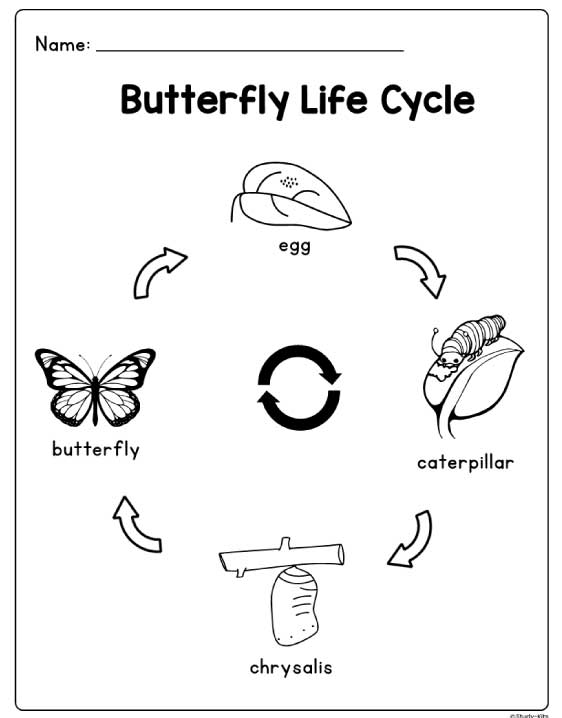
Children learn the four key stages:
- Egg
- Caterpillar
- Chrysalis
- Butterfly
The circular diagrams (as shown on pages 2 and 3) visually reinforce that this is a continuous cycle, helping children grasp sequencing and transformation.
2. Vocabulary Development
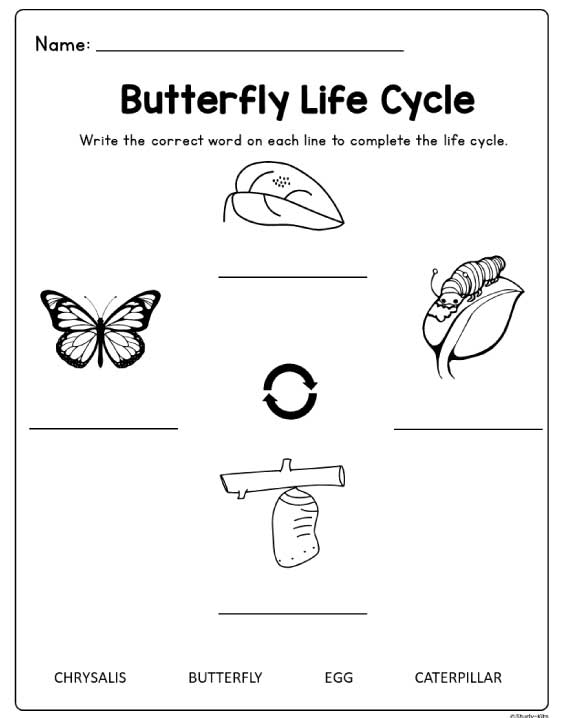
Through labeling and tracing activities (pages 4 and 16), children become familiar with important science words. Repetition helps them recognize and remember these terms with confidence.
3. Fine Motor Skills
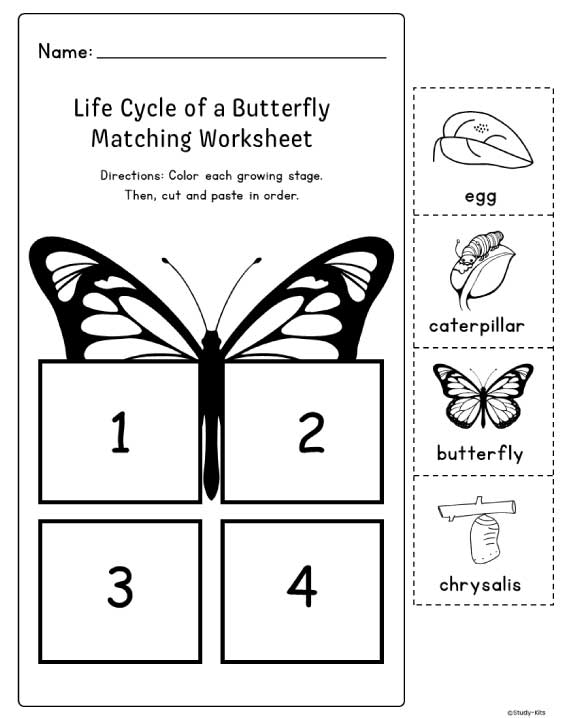
Activities like tracing, coloring, cutting, and pasting (pages 12 and 16) strengthen hand coordination and pencil control essential skills for early writing.
4. Critical Thinking and Comprehension
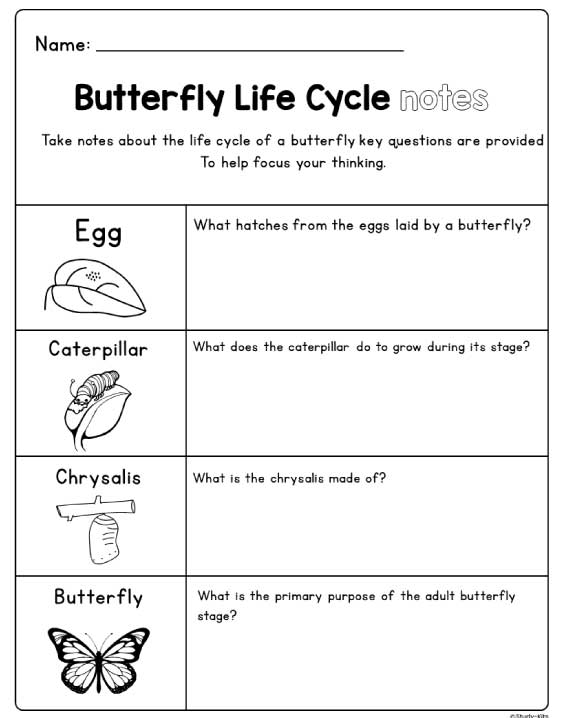
The question pages (pages 7–10) encourage children to think deeper:
- Where do butterflies lay eggs?
- What happens inside the chrysalis?
These prompts support early reasoning and understanding of cause-and-effect relationships.
5. Reading Confidence
Simple sentence pages (pages 19–23) introduce beginner readers to short, clear statements such as “Here is the caterpillar.” These help children connect words with images.
How Parents Can Use This Activity With Their Child
Using this activity at home can be simple and enjoyable. Here’s a step-by-step approach to guide your child:
Step 1: Introduce the Butterfly Life Cycle
Start with the visual diagram.
Talk through each stage slowly. Ask your child what they notice about each picture.
Step 2: Practice Naming the Stages
Use the labeling worksheet (page 4). Let your child match the correct words to each image.
Step 3: Add Hands-On Learning
Move to the cut-and-paste activity (page 12). Children place the stages in order, reinforcing sequencing skills.
Step 4: Encourage Writing and Tracing
Use tracing sheets (page 16) to help children practice writing each stage name.
Step 5: Discuss and Reflect
Use the question pages (pages 7–10) to have simple conversations. You can guide your child if needed and keep explanations age-appropriate.
Tips to Make This Activity Fun
Children learn best when they are engaged and enjoying the process. Here are a few ways to make the experience more exciting:
- Use storytelling: Describe the caterpillar as a “tiny eater” that grows big before resting in its chrysalis.
- Add movement: Act out each stage—curl up like a chrysalis or pretend to fly like a butterfly.
- Use colors creatively: Let children color butterflies in bright, imaginative patterns.
- Repeat through play: Revisit the stages during playtime or outdoor walks.
- Celebrate completion: Praise your child after finishing each activity to build confidence.
Activity Preview
The materials include a variety of engaging pages designed to support learning from multiple angles.
- On page 2, children see a clear circular diagram with labeled stages: egg, caterpillar, chrysalis, and butterfly.
- On page 4, they are asked to fill in the correct names under each image, reinforcing vocabulary.
- The matching activity on page 11 helps children connect images with words, strengthening recognition skills.
- The cut-and-paste page (page 12) allows children to physically arrange the life cycle in order.
- The tracing pages (page 16) guide children to trace and write each stage name.
- The question pages (pages 7–10) encourage deeper thinking and understanding.
- Finally, the simple reading pages (pages 19–23) introduce clear sentences like “Here is the butterfly,” helping early readers build confidence.
Together, these pages create a complete learning experience that combines science, literacy, and hands-on play.
Monster-Themed Tracing Worksheets for Preschool and Kindergarten Learning
Simple Ways to Try This Activity Today
- Sit with your child and explore the butterfly diagram together.
- Ask your child to name each stage using the pictures.
- Complete one worksheet at a time to avoid overwhelm.
- Let your child color and decorate freely to make it personal.
- End the session by reviewing the stages in order together.
Conclusion
Simple activities like learning about the butterfly life cycle can have a powerful impact on your child’s development. Through hands-on exploration, thoughtful questions, and creative play, children begin to understand how the natural world works.
You don’t need complicated tools or long lessons just a little time, curiosity, and encouragement. By guiding your child through these engaging activities, you are helping them build confidence, develop new skills, and discover the joy of learning.