Table of contents
Helping young children build vocabulary while introducing them to healthy food choices can be both simple and enjoyable. Fruit-themed learning activities are especially effective because they connect everyday experiences like eating and shopping with early language development. Using fruit flashcards for kids is a gentle, engaging way to support your child’s learning while also encouraging curiosity about the world around them.
Whether you’re a parent, homeschooler, or early years educator, this type of activity offers a hands-on approach to learning that feels more like play than structured teaching. With colorful visuals and familiar objects, children can easily connect words to real-life items, building confidence and enthusiasm along the way.
What This Activity Teaches Children
Fruit flashcards may seem simple, but they support a wide range of foundational skills in early childhood development.
Vocabulary and Language Development
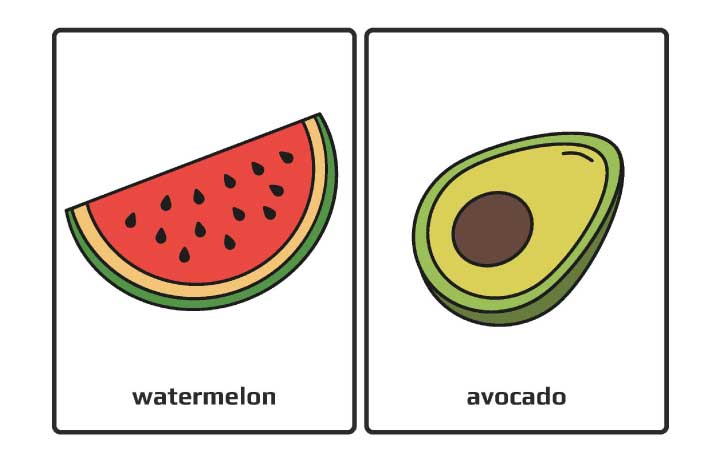
Children learn to recognize and name different fruits such as watermelon, mango, banana, and strawberry. Exposure to both common and less familiar fruits helps expand their vocabulary naturally.
Visual Recognition Skills
Matching images with words strengthens a child’s ability to identify objects and associate them with language. This builds early reading readiness.
Memory and Recall
Repeated exposure to the same flashcards helps children remember names and characteristics of fruits, improving both short-term and long-term memory.
Healthy Food Awareness
Introducing fruits through learning activities subtly encourages children to become more familiar with healthy food choices, which can positively influence eating habits.
Focus and Attention
Flashcard activities require children to observe carefully, listen, and respond, helping improve concentration skills in a playful way.
How Parents Can Use This Activity With Their Child
Using fruit flashcards at home is straightforward and flexible. You can adapt the activity depending on your child’s age and interest level.
Step-by-Step Guide
1. Start with a Few Cards
Begin with 3–5 fruit flashcards to avoid overwhelming your child. Gradually introduce more as they become familiar with the activity.
2. Say the Names Clearly
Hold up each card and clearly say the fruit’s name. Encourage your child to repeat after you.
3. Ask Simple Questions
Engage your child by asking questions like:
- “What color is this fruit?”
- “Have you eaten this before?”
4. Practice Matching
If you have real fruits at home, let your child match the flashcard to the actual fruit.
5. Repeat Regularly
Short, frequent sessions are more effective than long ones. Even 5–10 minutes daily can make a big difference.
Tips to Make This Activity Fun
Keeping children engaged is key to effective learning. Here are some simple ways to make the experience enjoyable:
Turn It Into a Game
Hide the flashcards around the room and ask your child to find a specific fruit. This adds movement and excitement.
Use a Funny Voice
Say fruit names in silly voices or exaggerate pronunciation to make your child laugh and stay interested.
Add Real-Life Connections
When eating fruit, bring out the matching card and reinforce the name. This strengthens understanding through real-world context.
Let Your Child Lead
Allow your child to pick which card comes next. Giving them control increases motivation.
Celebrate Small Wins
Praise your child when they correctly identify or remember a fruit. Positive reinforcement builds confidence.
معاينة النشاط
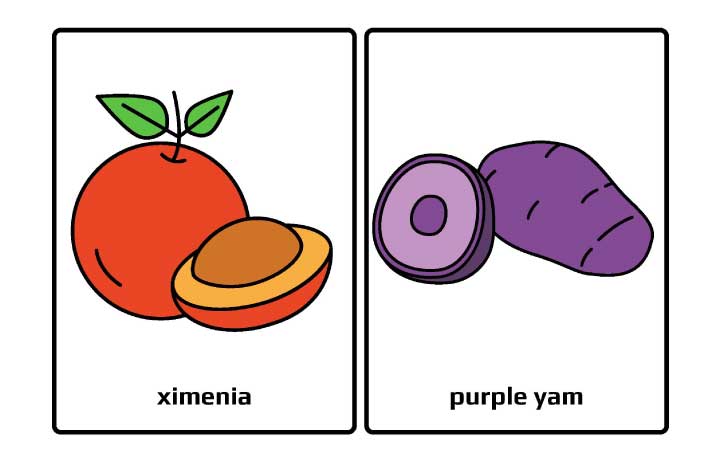
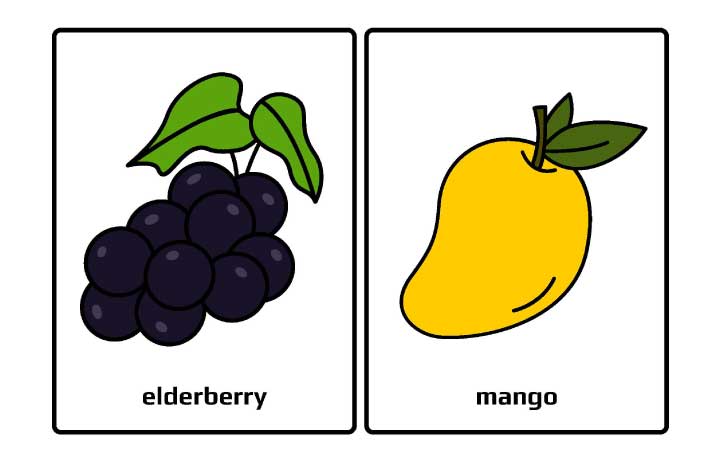
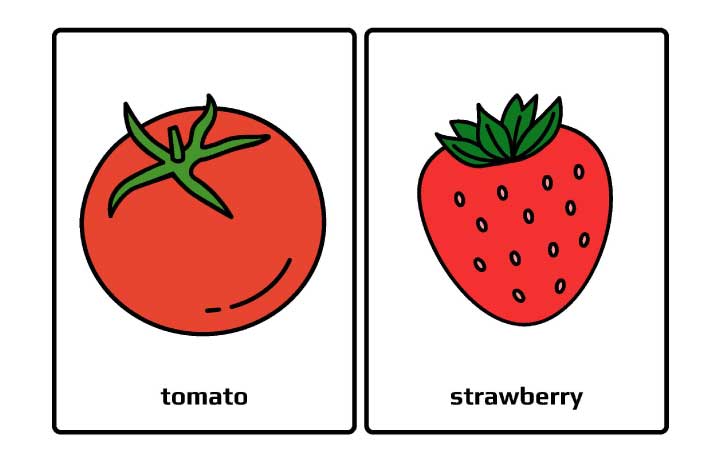
This activity presents children with clear, visually engaging fruit illustrations paired with their names. The collection includes a variety of fruits, from familiar ones like bananas, grapes, and oranges to more unique options such as jackfruit, figs, and ximenia. This variety introduces children to a broader range of vocabulary than they might encounter in daily life.
Fun Colors for Nursery: Flashcards Set, 24 Pages
Children are encouraged to look at each image, listen to the fruit’s name, and eventually say it themselves. Over time, they begin to recognize patterns—colors, shapes, and even similarities between fruits. This visual and verbal repetition strengthens their ability to identify objects and connect them with language.
Beyond vocabulary, the activity also promotes curiosity. Children may start asking questions about unfamiliar fruits, opening the door to discussions about taste, texture, and where food comes from. This makes the learning experience richer and more meaningful.
Conclusion
Simple learning tools like fruit flashcards can have a powerful impact on your child’s early development. They combine visual learning, language practice, and real-world connections in a way that feels natural and enjoyable. With just a few minutes each day, you can help your child build vocabulary, confidence, and curiosity all through playful interaction. Small, consistent efforts like this create a strong foundation for lifelong learning.