Table of contents
Helping children develop respect for nature is one of the most meaningful lessons parents and teachers can share. Young children are naturally curious about the world around them—trees, animals, rivers, and forests all spark their imagination. When we combine storytelling with environmental themes, we can turn that curiosity into a lifelong appreciation for protecting the planet.
An environmental protection story for kids is a powerful learning activity that blends imagination, empathy, and real-world responsibility. Through stories, children can see characters their own age solving problems, helping nature, and making a positive impact in their community.
The illustrated story presented in the learning material tells the adventure of three children, Mia, Beni, and Rina, who discover that their forest has been polluted and decide to take action. By reading and discussing stories like this with your child, you can introduce important ideas such as teamwork, responsibility, and caring for the environment in a way that feels inspiring rather than overwhelming.
What This Activity Teaches Children
Story-based environmental activities teach much more than just reading skills. They nurture several areas of child development at the same time.
Environmental Awareness
One of the biggest lessons children gain from this activity is understanding that nature needs care and protection. The story shows children discovering that their forest has become polluted and deciding to clean it up together. This helps young learners recognize that their actions affect the environment.
Responsibility and Empathy
Children begin to see that taking care of the planet is everyone’s responsibility. When they observe characters taking initiative to protect their surroundings, they develop empathy toward nature and the living things that depend on it.
Early Reading and Comprehension
Listening to or reading a story helps children build vocabulary, improve listening skills, and strengthen comprehension. Asking simple questions about the story encourages them to think about what they read.
Problem-Solving Skills
The story demonstrates a challenge, pollution in the forest—and shows how the characters solve it by organizing a cleanup and encouraging others to join them. This introduces children to the idea that problems can be solved through cooperation and action.
Social and Community Values
Another important theme is teamwork. The children in the story bring their village together to protect the forest, demonstrating how communities can work together to achieve positive change.
How Parents Can Use This Activity With Their Child
This storytelling activity is simple to implement and can easily become part of your daily learning routine.
Step 1: Read the Story Together
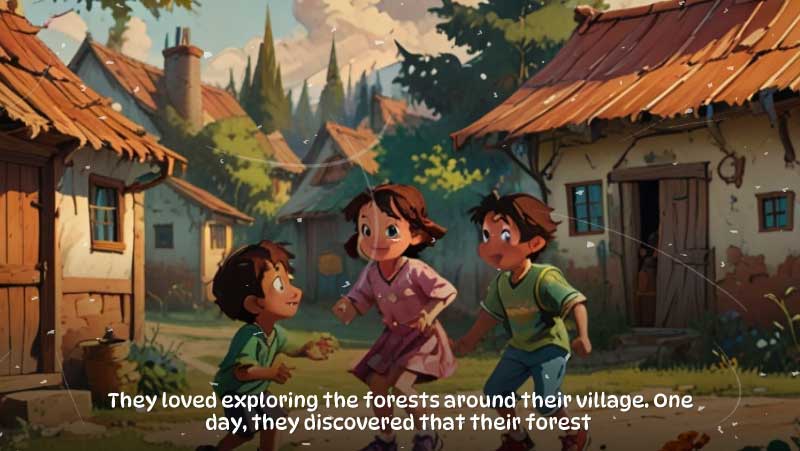
Sit with your child and go through the illustrated story slowly. The first page introduces the theme and shows children in a forest setting, presenting the idea of young environmental heroes.
Encourage your child to look closely at the illustrations while you read.
Step 2: Talk About the Characters
Introduce the characters, Mia, Beni, and Rina, and ask your child what they think about them. Questions like these can spark conversation:
- Which character do you like the most?
- What would you do if you saw trash in the forest?
Step 3: Discuss the Problem
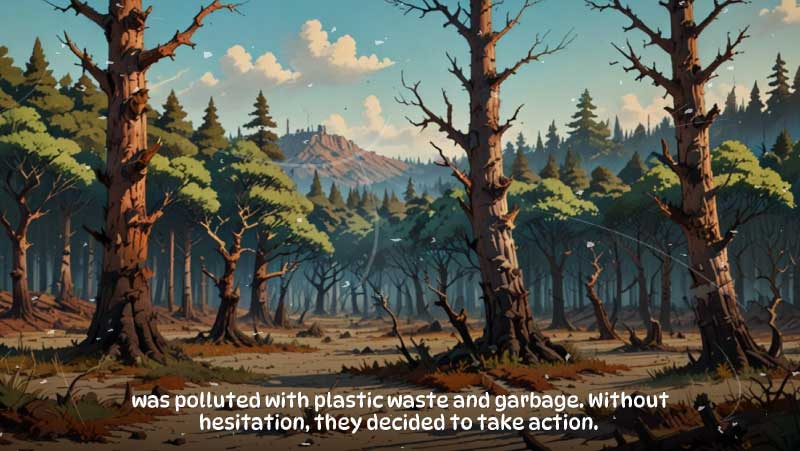
In the middle of the story, the children discover that their forest is polluted with plastic waste.
Pause and ask your child:
- Why is pollution bad for nature?
- What animals might be affected by trash?
This encourages critical thinking and environmental awareness.
Step 4: Explore the Solution
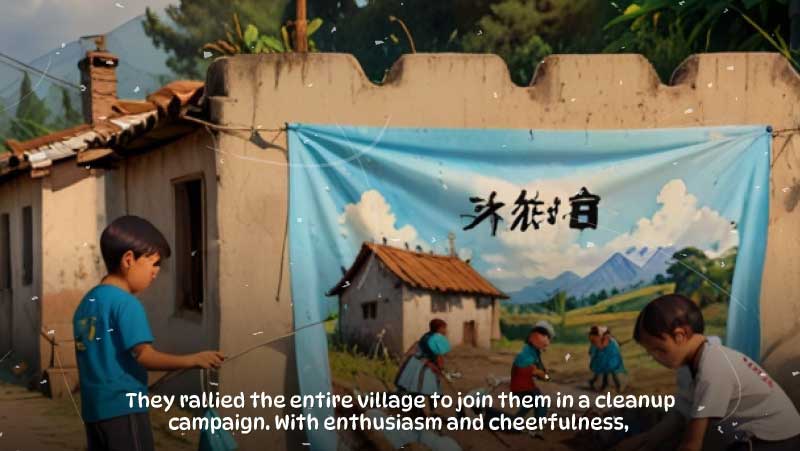
The story shows the children organizing a cleanup and encouraging their community to help restore the forest.
Discuss with your child:
- Why is teamwork important?
- How can we help keep our environment clean?
Step 5: Reflect on the Lesson
At the end of the story, the characters learn that protecting nature is everyone’s responsibility.
Ask your child what lesson they learned from the story.
Tips to Make This Activity Fun
Children learn best when they are engaged and enjoying the experience. Here are some ideas to make the activity more interactive.
Use Character Voices
Give each character a different voice when reading the story. This makes storytelling more lively and keeps children interested.
Ask Predictive Questions
Pause before turning a page and ask:
- What do you think will happen next?
This helps build imagination and storytelling skills.
Act Out the Story
Encourage children to pretend they are environmental heroes like the characters. They might pretend to pick up trash or plant trees.
Draw the Story
After reading, invite your child to draw their favorite scene from the story. This reinforces comprehension while encouraging creativity.
Connect It to Real Life
Talk about ways your family can help the environment, such as recycling or picking up litter at the park.
Ways to Extend the Activity
Once your child understands the story, you can expand the learning experience with additional activities.
Nature Cleanup Adventure
Take your child to a park or garden and do a small cleanup activity together. This helps connect the story to real-life action.
Recycling Game
Create a simple sorting game where children separate items like paper, plastic, and metal into different bins.
Environmental Hero Storytelling
Invite your child to create their own story about children who help protect nature.
Planting Activity
Plant a small tree, flower, or vegetable together. This teaches children that caring for nature can also mean helping it grow.
Community Awareness Poster
Encourage your child to draw a poster reminding people not to litter.
Activity Preview
The learning material presents a colorful illustrated story about young environmental heroes.
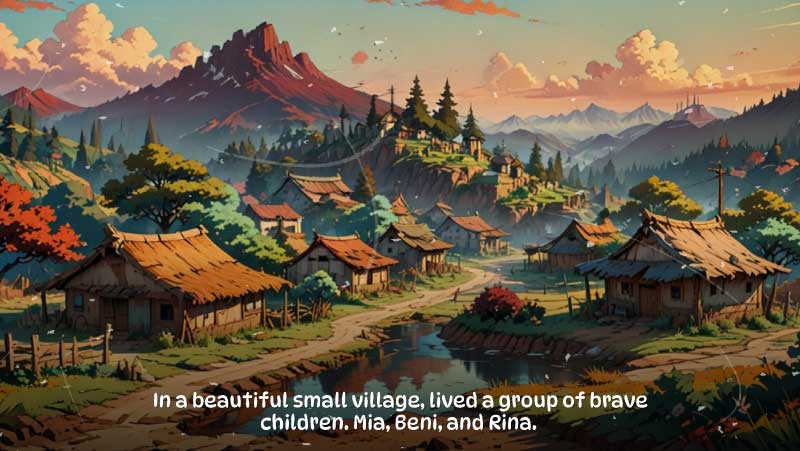
The opening scene introduces three children enjoying time in nature, surrounded by trees and wildlife. This creates a warm and inviting atmosphere that draws children into the story.
Next, the story shows a peaceful village located near mountains and forests. The characters love exploring the surrounding nature.
As the story progresses, the children discover that their forest has been polluted with plastic and garbage. This moment introduces the central problem and encourages children to think about environmental issues.
The characters then take action by organizing a cleanup campaign. They work together with their community to remove trash and restore the forest.
Later scenes show the children encouraging others to reduce plastic use and dispose of waste properly.
Finally, the story concludes with an important message: protecting nature is a shared responsibility that can be done with joy and teamwork.
The visual storytelling helps children understand these ideas even if they are still early readers.
Simple Ways to Try This Activity Today
Here are easy steps you can try right away:
- Read the environmental story with your child and explore the illustrations together.
- Ask questions about the characters and what they did to help the forest.
- Talk about ways your family can help keep nature clean.
- Encourage your child to draw their own environmental hero.
- Plan a small nature-friendly action, such as recycling or picking up litter.
Conclusion
Teaching children to care for the planet does not require complicated lessons. Simple activities like reading an environmental protection story for kids can open meaningful conversations about responsibility, kindness, and teamwork.
When children see characters their own age protecting forests, cleaning their surroundings, and inspiring others, they begin to believe that they can make a difference too.
With gentle guidance and engaging stories, parents and teachers can help raise a generation of children who not only love nature, but also feel proud to protect it.