Table of contents
Helping children understand friendship, kindness, and empathy is one of the most valuable lessons parents and teachers can share. Story-based learning is a powerful way to introduce these important social skills because children naturally connect with characters, emotions, and simple storylines.
A gentle storytelling activity featuring a friendly dinosaur who wants to make friends offers young learners a meaningful way to explore feelings, communication, and cooperation. In this engaging story, children follow a kind T-Rex who worries that others might be afraid of him, but who bravely reaches out and discovers that kindness can lead to wonderful friendships.
Stories like this help children learn that being different doesn’t mean being alone. Instead, it shows them that courage, kindness, and openness can build strong connections with others.
What This Activity Teaches Children
A storytelling activity centered around friendship can support many areas of early childhood development. Even a simple story can help children develop important life skills.
1. Social and Emotional Learning
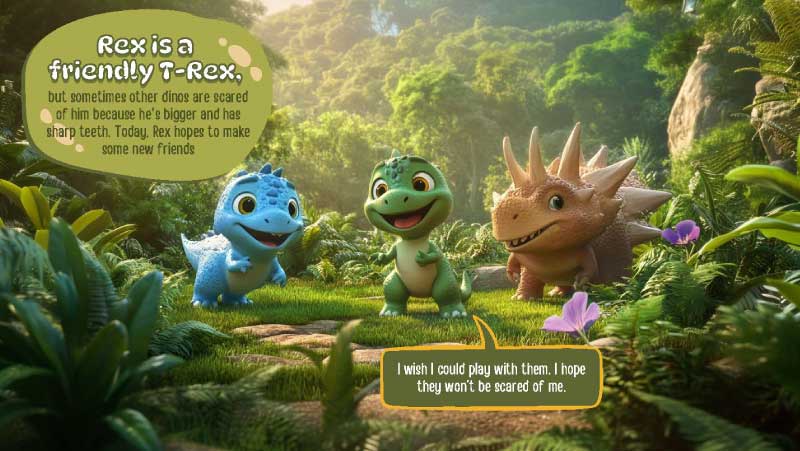
The main theme of the story focuses on friendship and overcoming fears about being accepted. Children see how the dinosaur feels lonely but chooses to be brave and say hello to others.
This helps children learn:
- empathy and understanding others’ feelings
- confidence in social situations
- how to approach new friends
- kindness and acceptance
When kids see characters working through emotions, they begin to recognize and understand their own feelings.
2. Communication Skills
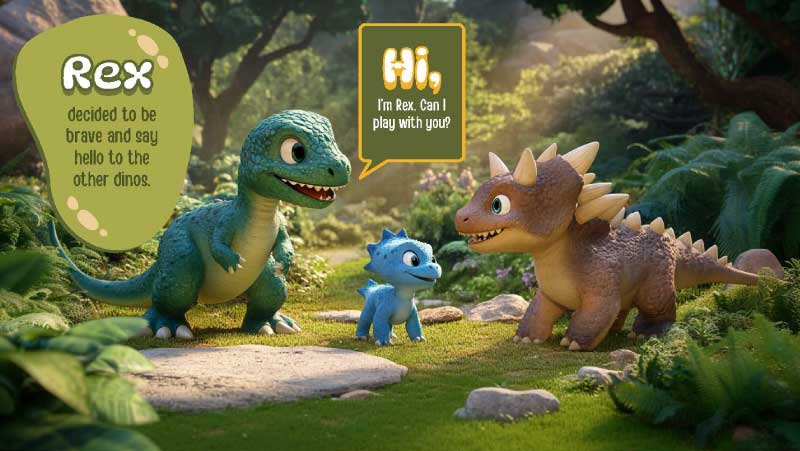
The story models simple conversations between characters. For example, the friendly dinosaur introduces himself and politely asks if he can join the others.
This encourages children to practice:
- greeting others
- asking to join a game
- speaking politely
- responding kindly
Role-playing these moments can be especially helpful for shy children.
3. Listening and Story Comprehension
Following the storyline helps children practice listening skills and understanding sequences.
They learn to identify:
- the beginning of a story (a problem or feeling)
- the middle (trying something new)
- the ending (a positive resolution)
These skills form the foundation for later reading comprehension.
4. Early Counting and Play Skills
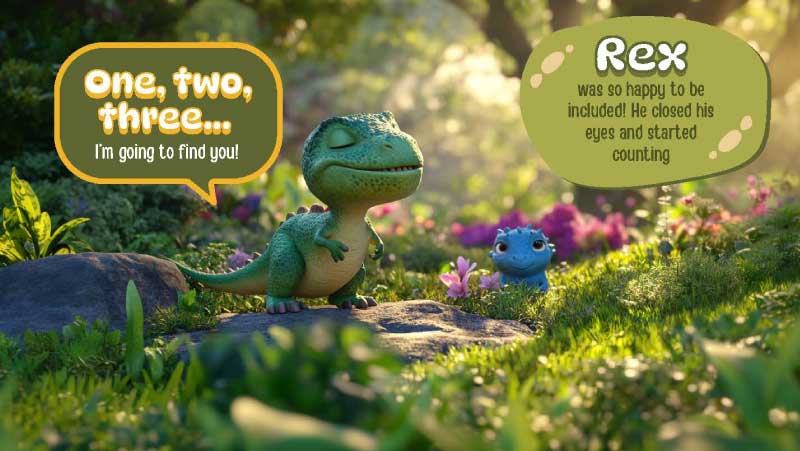
In the story, the dinosaur joins a game of hide-and-seek and begins counting before searching for friends.
This introduces early numeracy concepts in a playful context, helping children connect numbers with real activities.
5. Imagination and Creativity
Colorful dinosaur characters and playful environments inspire imagination. Children can picture the forest, the dinosaurs hiding, and the fun of the game.
Creative thinking is strengthened when children imagine themselves inside the story.
How Parents Can Use This Activity With Their Child
You don’t need special materials to turn a simple story into a powerful learning moment. Here is a simple approach parents can follow.
Step 1: Read the Story Together
Sit with your child and slowly read the story aloud. Use expressive voices for different characters to make the experience lively.
Pause occasionally to show the illustrations and ask questions like:
- “How do you think Rex feels right now?”
- “Why do you think the other dinosaurs were scared?”
This encourages emotional awareness and discussion.
Step 2: Talk About the Feelings in the Story
After reading, discuss the emotions shown throughout the story.
You might ask:
- Why did Rex feel lonely at first?
- What helped him make friends?
- Have you ever felt shy meeting someone new?
Connecting the story to real experiences helps children internalize the lesson.
Step 3: Act Out the Story
Children love movement and pretend play.
You can recreate the story by:
- pretending to be dinosaurs
- acting out the greeting scene
- playing a mini hide-and-seek game
This makes the learning active and memorable.
Step 4: Practice Friendly Introductions
Encourage your child to practice saying:
- “Hi, I’m ___.”
- “Can I play with you?”
Role-playing helps build confidence for real-life social situations.
Tips to Make This Activity Fun
Young children learn best when they feel relaxed and excited. Here are a few ways to make the storytelling experience even more enjoyable.
Use Character Voices
Give each dinosaur a different voice. Children love dramatic storytelling, and it helps them remember the story better.
Encourage Predictions
Pause during the story and ask:
- “What do you think will happen next?”
- “Will the other dinosaurs be kind?”
This builds critical thinking skills.
Add Movement
Let children stomp like dinosaurs, pretend to hide, or count loudly while covering their eyes.
Physical movement keeps children engaged.
Let Children Retell the Story
Ask your child to tell the story back to you in their own words.
Retelling strengthens memory and language development.
Draw Favorite Characters
After reading, encourage children to draw the friendly dinosaur and his new friends.
Creative expression reinforces story comprehension.
Ways to Extend the Activity
Once children enjoy the story, you can build on the theme with additional activities.
Friendship Role Play
Pretend to meet new friends using toys or stuffed animals.
Practice friendly greetings and sharing games.
Dinosaur Hide-and-Seek Game
Recreate the game from the story.
Have your child count while others hide, just like the friendly dinosaur did.
Make a Friendship Chart
Create a simple chart with your child listing ways to be a good friend, such as:
- sharing toys
- helping others
- saying kind words
Create a Dinosaur Story Together
Ask your child to invent another adventure with the dinosaur characters.
This encourages storytelling skills and imagination.
Practice Kindness Challenges
Give children simple daily goals like:
- smile at someone new
- invite a friend to play
- help clean up together
These small actions reinforce the story’s message.
Activity Preview
In this story-based activity, children follow the journey of a friendly dinosaur who hopes to make new friends.
At the beginning, the large but gentle T-Rex feels worried that other dinosaurs might be afraid of him because he is bigger and has sharp teeth. The illustrations show colorful dinosaurs standing together while Rex wonders if they will accept him.
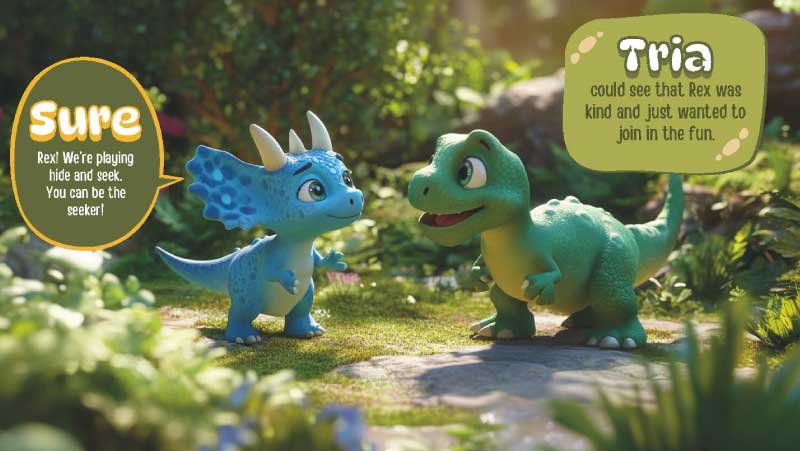
Soon, Rex gathers the courage to say hello and politely asks if he can join the others. The other dinosaurs recognize that Rex is kind and invite him to play hide-and-seek.
Children then see Rex closing his eyes and counting “one, two, three” before searching for his friends. The playful scenes show dinosaurs hiding among rocks and trees while Rex carefully looks for them.
As the story continues, Rex finds his friends and they happily praise him for being good at the game. By the end of the story, Rex realizes he is no longer lonely, he has found friends who like him just the way he is.
The final scenes show the dinosaurs smiling together and planning to play again tomorrow, reinforcing the joyful message of friendship and acceptance.
Simple Ways to Try This Activity Today
Parents can start this activity immediately with just a few simple steps.
- Read the friendship story slowly with your child.
- Pause to talk about the characters’ feelings and actions.
- Act out the hide-and-seek game together.
- Practice friendly greetings and introductions.
- Encourage your child to draw the dinosaurs and tell the story again.
Even a short storytelling session can spark meaningful conversations about kindness and friendship.
Conclusion
Children learn powerful life lessons through simple stories. A warm and engaging friendship story allows young learners to explore emotions, practice social skills, and build confidence in meeting new friends.
By reading together, talking about feelings, and turning the story into playful activities, parents can transform storytelling into a meaningful learning experience. These small moments of connection help children grow not only as readers, but also as kind, empathetic individuals who understand the value of friendship.
Sometimes the simplest stories can create the biggest impact in a child’s heart.