Table of contents
Helping children open up, express themselves, and connect with others is an essential part of early development. Whether at home, in a classroom, or during social gatherings, children often need a little encouragement to start conversations and share their thoughts.
That’s where ice breaker questions for kids come in. These simple yet powerful prompts create opportunities for meaningful conversations, laughter, and bonding. They gently guide children to talk about their feelings, preferences, ideas, and imagination all while building confidence and communication skills.
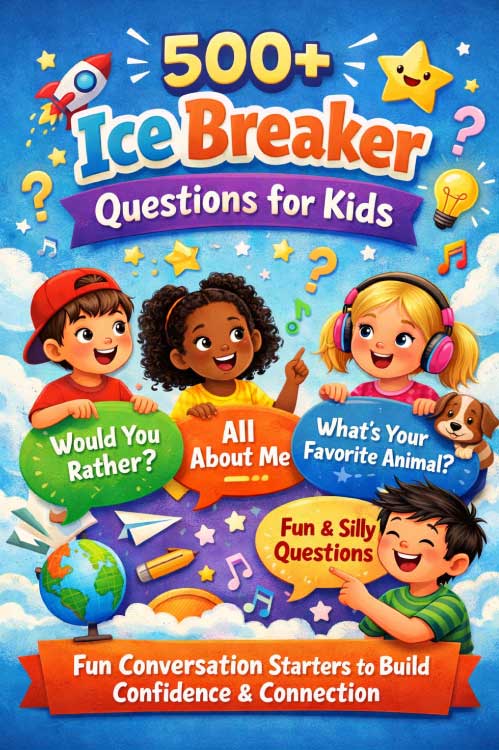
The activity presented here is a rich collection of engaging questions organized into fun categories like “All About Me,” “Would You Rather,” and “Creative Thinking.” These prompts are perfect for sparking conversations and helping children feel comfortable expressing themselves.
What This Activity Teaches Children
Using conversation prompts may seem simple, but they support a wide range of developmental skills:
1. Communication Skills
Children learn how to express their thoughts clearly and listen to others. Answering questions like “What’s your favorite food?” or “What makes you happy?” helps them practice forming complete ideas and sentences.
2. Social Confidence
Ice breaker questions reduce shyness and help children feel more comfortable in group settings. They learn that their ideas and opinions matter.
3. Emotional Awareness
Questions about feelings, memories, and preferences encourage children to identify and express emotions. This builds emotional intelligence and self-awareness.
4. Critical Thinking
“Would you rather…” and “If you could…” questions challenge children to think, compare, and make decisions. These types of prompts develop reasoning skills.
5. Creativity and Imagination
Open-ended questions like “If you could invent something, what would it be?” inspire imaginative thinking and storytelling.
6. Relationship Building
Sharing personal answers helps children connect with parents, teachers, and peers, strengthening relationships and empathy.
How Parents Can Use This Activity With Their Child
This activity is flexible and can easily fit into your daily routine. Here’s a simple way to get started:
Step 1: Choose a Comfortable Setting
Pick a relaxed moment during dinner, bedtime, car rides, or quiet playtime.
Step 2: Select a Few Questions
Choose 3–5 questions from different categories to keep things interesting. For example:
- A personal question (“What’s your favorite thing to do outside?”)
- A fun choice question (“Pizza or tacos?”)
- An imaginative question (“If you could fly, where would you go?”)
Step 3: Take Turns Answering
Make it a two-way conversation. When parents participate, children feel more encouraged and valued.
Step 4: Encourage Full Answers
Gently prompt your child to explain their answers:
- “Why do you like that?”
- “Can you tell me more?”
Step 5: Keep It Light and Fun
There are no right or wrong answers. The goal is connection, not correctness.
Tips to Make This Activity Fun
Keeping children engaged is key. Here are some practical ways to make the activity enjoyable:
Turn It Into a Game
Write questions on slips of paper and let your child pick one randomly. This adds excitement and anticipation.
Use Props or Toys
Let a favorite toy “ask” the question. Younger children especially enjoy pretend play.
Add Movement
Turn it into a movement game:
- Jump for “yes”
- Clap for “no”
- Spin before answering
Create a Daily Routine
Ask one question every day at the same time. Children begin to look forward to it.
Celebrate Unique Answers
Show enthusiasm for creative or unexpected responses. This builds confidence and encourages originality.
Activity Preview
This activity includes a wide variety of engaging prompts designed to spark conversation and curiosity.
Children will see different types of questions, such as:
- Personal Questions:
“What’s your favorite color?”
“Do you have any pets?” - School and Daily Life:
“What is your favorite thing to do at school?”
“What is your favorite game at recess?” - Friendship and Family:
“What do you like to do with your friends?”
“What is your favorite family tradition?” - Imaginative Thinking:
“If you could travel anywhere, where would you go?”
“If you could invent something, what would it be?” - Fun Choices:
“Cats or dogs?”
“Summer or winter?” - Creative and Silly Prompts:
“If you could be any fruit, what would you be?”
“What’s the funniest thing you’ve ever seen?”
Children are encouraged to answer freely, share ideas, and sometimes even ask questions back. The activity is open-ended, making it suitable for a wide age range.
Easy Financial Literacy Quiz for Kids to Learn Money Management
Conclusion
Simple conversations can have a powerful impact on a child’s development. Activities like these help children feel heard, valued, and confident in expressing themselves. By using ice breaker questions regularly, you’re not just passing time you’re building communication skills, strengthening your bond, and nurturing your child’s creativity.
Even a few minutes of meaningful conversation each day can make a lasting difference.