Table of contents
Stories play a powerful role in a child’s development. Long before children can fully understand complex lessons, they absorb ideas through characters, adventures, and emotions. Simple narratives about kindness, friendship, and empathy help young children learn how to treat others and understand their own feelings.
One gentle example is a story about a cheerful kitten named Rose who sets off on a small adventure with new friends in the forest. Throughout the story, children see how kindness and friendliness can change someone’s day and create meaningful friendships. The illustrated scenes show animals meeting, helping each other, and discovering that happiness often comes from caring for others.
For parents and teachers, stories like this are not just entertainment they are opportunities to build emotional intelligence, spark conversations, and nurture compassion in young children.
What This Activity Teaches Children
Reading a kindness story for kids can support many areas of early childhood development. Even a short story filled with friendly animal characters can teach valuable life skills.
1. Social and Emotional Learning
Stories about friendship help children recognize emotions and understand how actions affect others. When children see a character being kind, they begin to understand empathy and compassion.
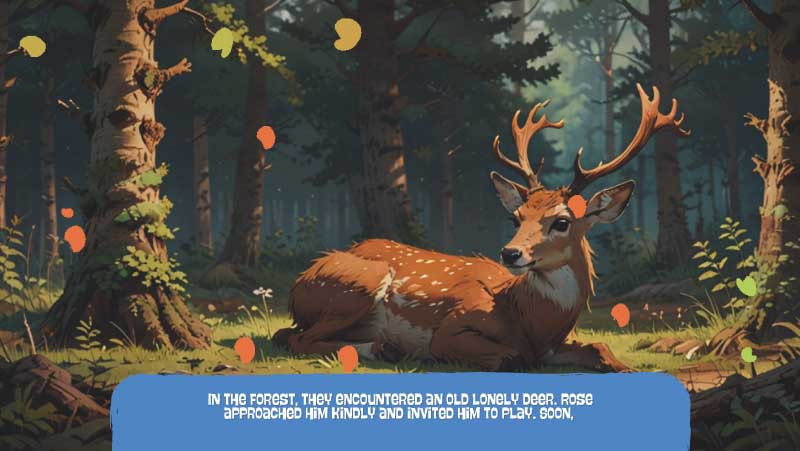
In the story, Rose approaches a lonely deer kindly and invites him to play. This moment helps children see how small gestures can make someone feel welcome and valued.
2. Understanding Friendship
Young children are still learning how friendships work. Through storytelling, they can observe examples of cooperation, kindness, and inclusion.
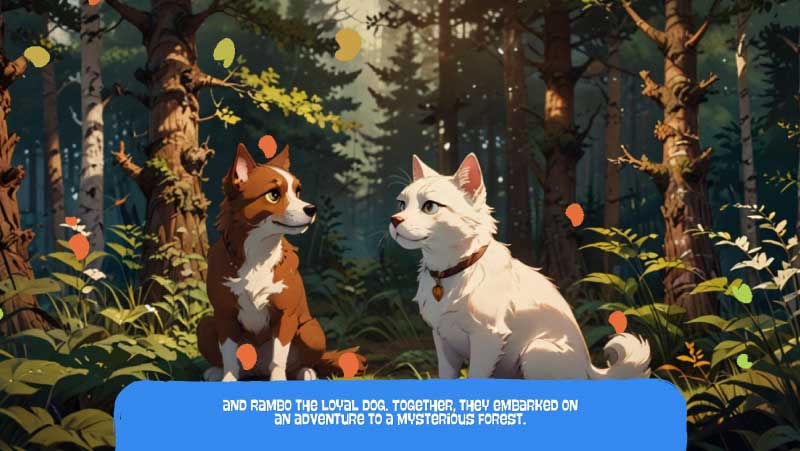
Characters like Rose the kitten, Tika the wise owl, and Rambo the loyal dog demonstrate how different personalities can work together and enjoy shared adventures.
3. Language Development
Listening to or reading stories strengthens vocabulary and comprehension skills. Children learn new words, sentence patterns, and storytelling structures.
Parents can pause to explain words like:
- adventure
- forest
- grateful
- friendship
These conversations expand a child’s understanding of language in a natural way.
4. Imagination and Creativity
Illustrated stories encourage children to imagine themselves inside the story world. Forest settings, animal characters, and adventures spark curiosity and creative thinking.
Children may begin to imagine their own stories about animals helping each other.
5. Moral Understanding
Simple moral lessons—such as kindness, helping others, and sharing become easier for children to grasp when they see them played out in a story.
By the end of the story, children understand that happiness often comes from kindness and friendship.
How Parents Can Use This Activity With Their Child
Using a kindness story as a learning activity is simple and enjoyable. Parents can turn reading time into a meaningful bonding moment.
Step 1: Read the Story Together
Sit with your child and read the story slowly. Allow time for your child to look carefully at the illustrations.
Point to the characters and ask:
- “What animal is this?”
- “What do you think the kitten is feeling?”
These questions keep children engaged.
Step 2: Talk About the Characters
After each part of the story, briefly discuss what happened.
For example:
- Why was the deer lonely?
- How did Rose help him feel better?
This encourages children to think about emotions and relationships.
Step 3: Encourage Predictions
Before turning the page, ask your child what they think might happen next.
Children love guessing the story’s outcome, and this builds comprehension skills.
Step 4: Discuss the Lesson
At the end of the story, talk about the message.
Ask simple questions like:
- “Why is kindness important?”
- “How can we be kind to others?”
Children learn best when they connect stories to real life.
Tips to Make This Activity Fun
Reading a friendship story for children becomes even more enjoyable when parents add a few playful elements.
Use Character Voices
Give each character a different voice:
- A soft voice for the owl
- A cheerful voice for the kitten
- A friendly voice for the dog
Children love animated storytelling.
Act Out the Story
After reading, invite your child to pretend to be one of the animals.
You might say:
“Let’s pretend we are exploring the forest!”
Role-playing strengthens imagination and emotional understanding.
Ask Open Questions
Instead of only yes/no questions, try:
- “How do you think the deer felt when Rose talked to him?”
- “What would you do if you met someone lonely?”
These questions encourage deeper thinking.
Create a Cozy Reading Environment
A quiet corner with pillows, blankets, or stuffed animals can turn storytime into a comforting routine.
When children feel relaxed, they absorb stories more deeply.
Ways to Extend the Activity
Parents can turn one simple story into many meaningful learning activities.
1. Draw the Characters
Invite your child to draw Rose the kitten, the owl, or the deer.
Ask them to add their own details to the forest scene.
2. Create a New Adventure
Ask your child:
“What should Rose do next?”
Children might invent a new story about helping another animal in the forest.
3. Practice Kindness in Real Life
Encourage children to perform small acts of kindness, such as:
- sharing toys
- helping a sibling
- saying kind words
Relating the story to real actions reinforces the lesson.
4. Make a Friendship Chart
Parents can create a simple chart where children add a sticker each time they do something kind.
This builds positive habits.
Activity Preview
The story follows a cheerful kitten named Rose who begins a journey in a peaceful forest. On the first pages, children see Rose exploring among tall trees and colorful leaves.
Soon, Rose meets Tika, a wise owl sitting on a tree branch. The owl becomes one of her companions on the adventure. Later, they meet Rambo, a loyal dog, and the three friends continue exploring together.
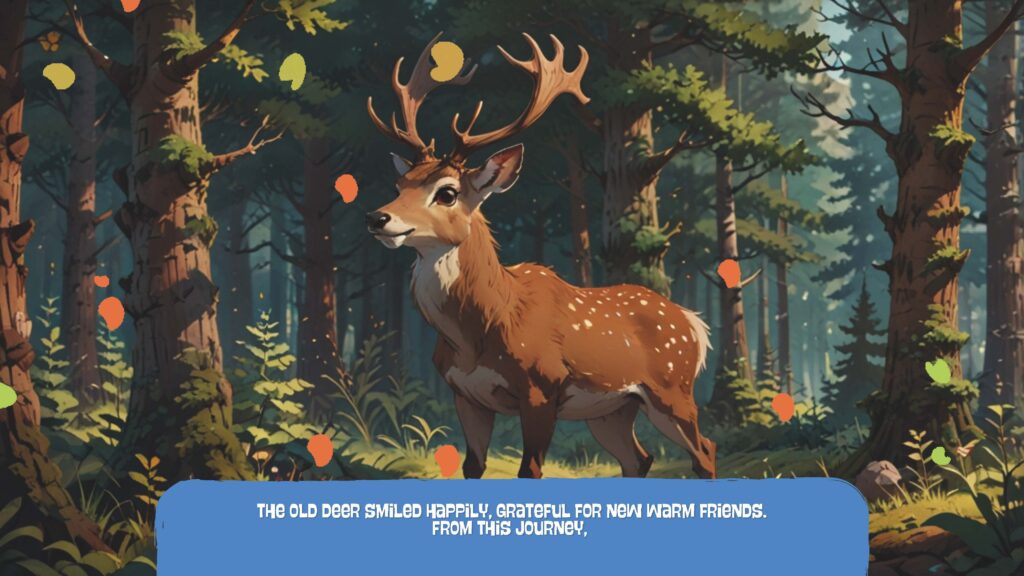
As they travel through the forest, they encounter an old deer who appears lonely. Instead of ignoring him, Rose approaches kindly and invites him to play. This simple act of kindness changes the deer’s mood, and he becomes happy to have new friends.
The story ends with a gentle message: kindness and cheerful hearts can touch anyone, and true happiness often comes from friendship and sharing love.
The bright forest scenes and friendly animal characters make the story engaging and easy for young children to follow.
Simple Ways to Try This Activity Today
Parents can start using this kindness story activity right away.
- Read the story together during bedtime or quiet time.
- Ask your child how each character might be feeling.
- Talk about how kindness helped the lonely deer feel happy again.
- Encourage your child to share one way they can be kind today.
- End the activity by drawing their favorite character from the story.
These small steps turn storytime into a meaningful learning experience.
Conclusion
Children learn powerful life lessons through simple stories. A gentle kindness story for kids can help young readers understand empathy, friendship, and the joy of helping others.
When parents read stories together and talk about the characters’ actions and feelings, children begin to develop compassion and emotional awareness. Even a short story about animals in a forest can inspire children to treat others with kindness in their everyday lives.
Most importantly, these moments of shared reading create warm memories and strengthen the bond between parent and child, making learning feel natural, comforting, and joyful.