These worksheets are designed to support early literacy development by engaging children in fun, visual, and meaningful learning letters activities. At the kindergarten level, children benefit most from hands-on practice that combines images, letter recognition, and simple decision-making. Through guided interaction, these worksheets help young learners build confidence as they identify letters, connect them with familiar objects, and strengthen their foundational reading skills. Using structured learning letters exercises like these ensures that children learn at an age-appropriate pace while staying motivated and focused.
Choosing the Correct Letter from Pictures
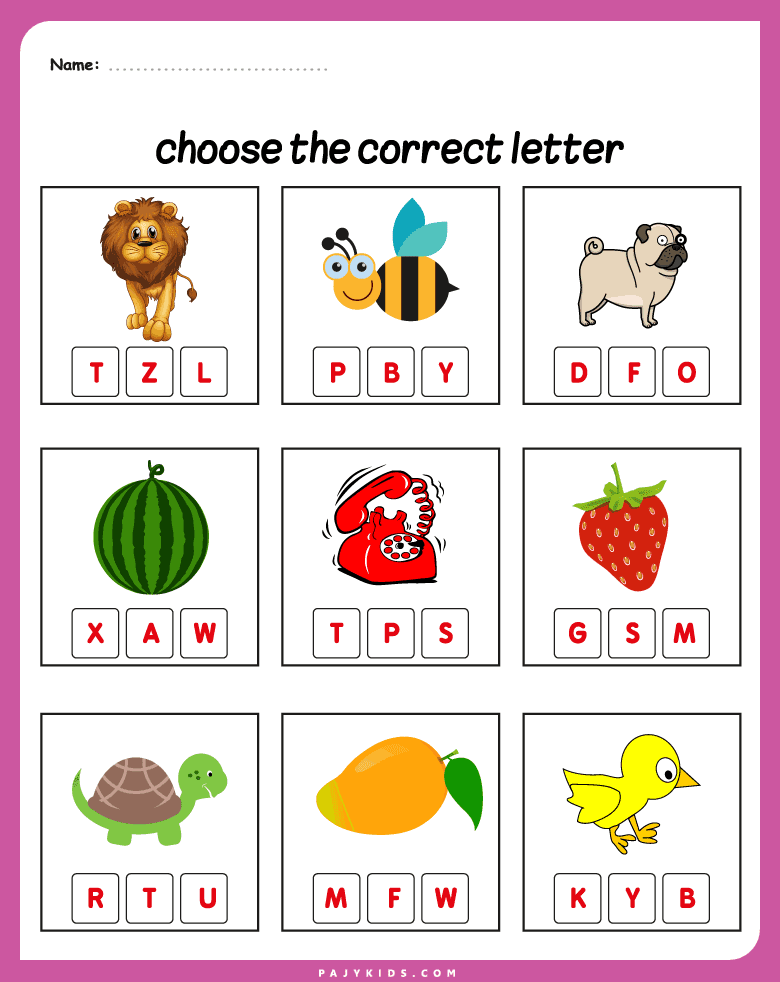
This worksheet invites children to look at clear, colorful pictures and choose the correct starting letter from multiple options. The activity supports learning letters by helping children associate sounds with symbols in a visual and engaging way. It is especially important for kindergarten learners because it develops phonemic awareness, a key building block for reading success. By practicing letter identification through images, children improve their attention span, enhance vocabulary, and gain early confidence in recognizing letters independently.
Letter Recognition and Visual Discrimination
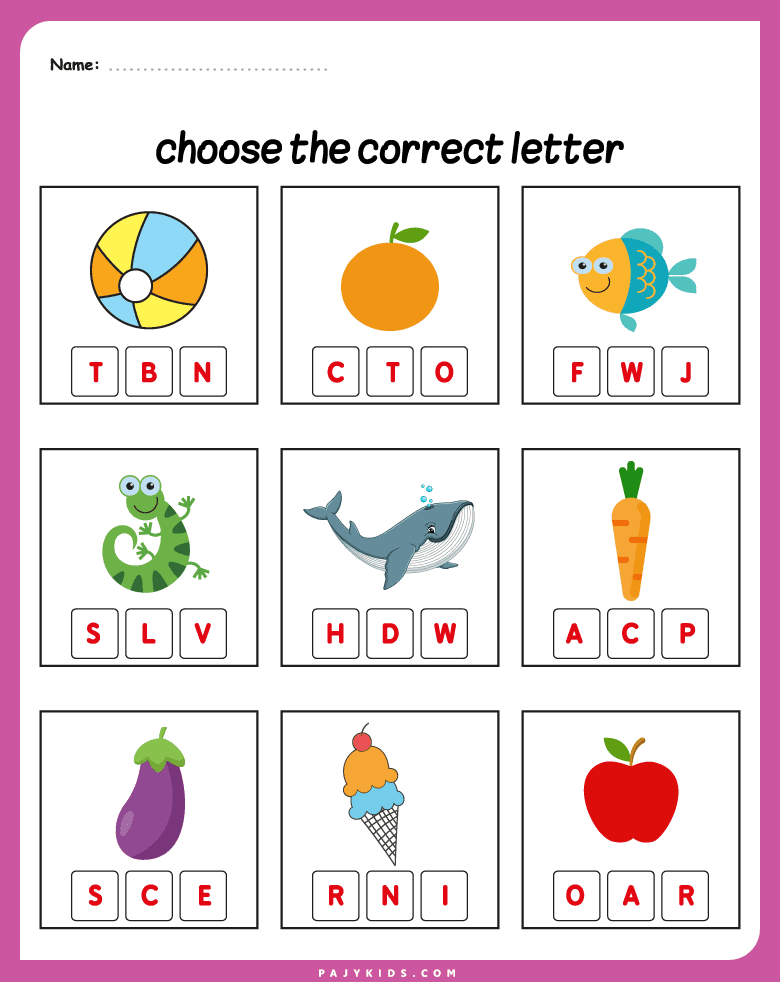
The second worksheet focuses on strengthening letter recognition by encouraging children to carefully observe images and select the correct letter among similar choices. This activity is essential for refining visual discrimination skills and reducing confusion between letters that look or sound alike. Through repeated learning letters practice, children become more accurate and confident in their choices. This worksheet also promotes critical thinking, as children must pause, compare options, and make informed decisions—skills that support overall academic growth in kindergarten.
Free Printable Kindergarten Activity Sheets for Fun Learning at Home
In conclusion, these worksheets provide an effective and enjoyable way to support learning letters in kindergarten. By combining visual cues with letter selection, children develop strong early literacy skills that prepare them for reading and writing. Consistent use of learning letters activities like these helps young learners build a solid foundation, encourages independent thinking, and makes the learning process both engaging and rewarding for children, teachers, and parents alike.