Table of contents
Helping young children develop focus, patience, and problem-solving skills doesn’t have to feel like formal learning. In fact, some of the most effective learning happens through simple, playful activities—like maze worksheets for kids.
Maze activities are especially engaging for preschoolers and kindergarteners because they combine curiosity with a sense of challenge. Children naturally want to “find the way,” and this motivation keeps them focused while building essential cognitive and motor skills.
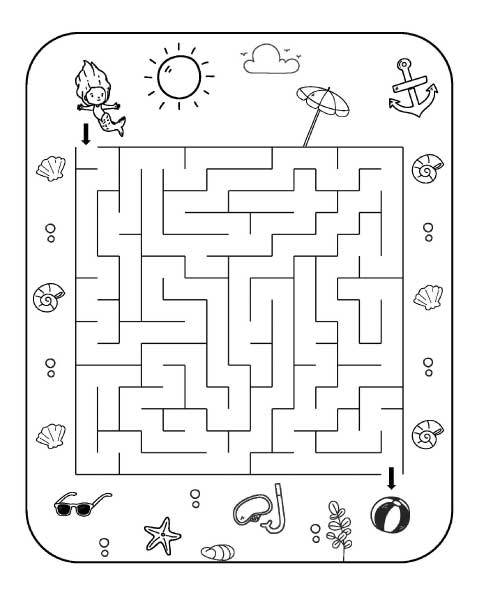
The materials shown here feature a delightful beach theme with playful illustrations like seashells, anchors, sunglasses, and ocean elements, making the activity feel like a mini adventure rather than a task.
What This Activity Teaches Children
Maze worksheets may look simple, but they support a wide range of developmental skills that are crucial in early childhood.
1. Problem-Solving Skills
Children must analyze different paths, recognize dead ends, and try alternative routes. This strengthens logical thinking and decision-making.
2. Fine Motor Development
Tracing the maze paths helps children control hand movements, improving pencil grip and coordination important for writing readiness.
3. Visual Tracking and Focus
Following a path from start to finish requires careful eye movement and concentration, which supports reading skills later on.
4. Perseverance and Patience
Not every path works on the first try. Mazes gently teach children that mistakes are part of learning.
5. Spatial Awareness
Children learn to navigate directions (up, down, left, right), building early spatial reasoning skills.
How Parents Can Use This Activity With Their Child
Using maze worksheets effectively is simple, and a little guidance can make the experience even more valuable.
Step 1: Set the Scene
Sit with your child in a calm, distraction-free space. Introduce the activity as a fun challenge rather than a task.
Step 2: Explain the Goal
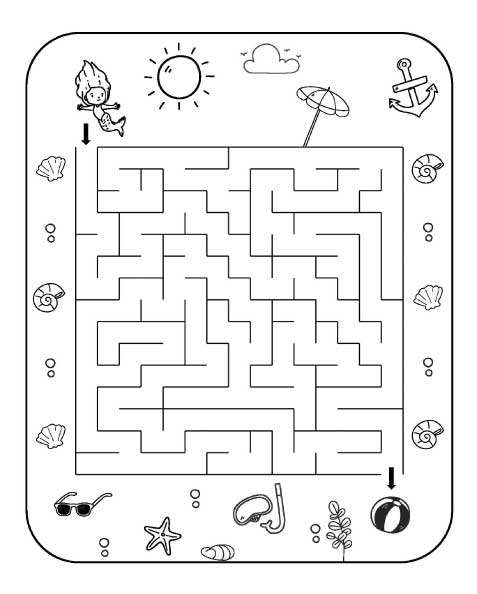
Show the starting point (often marked with an arrow or character) and the finish point (like a beach ball or exit arrow).
Step 3: Encourage Finger Tracing First
Before using a pencil, let your child trace the path with their finger. This reduces frustration and builds confidence.
Step 4: Try with a Pencil or Crayon
Once they understand the path, let them draw the route. Encourage slow and careful movement.
Step 5: Celebrate Effort
Focus on effort, not perfection. Even if they make mistakes, praise their thinking and persistence.
Printable Maze Book: 75 Free Pages of Brain-Boosting Fun
Tips to Make This Activity Fun
Keeping children engaged is key. Here are some simple ways to make maze worksheets even more enjoyable:
- Turn it into a story: “Help the little swimmer reach the beach!”
- Use colorful tools: Let your child choose bright crayons or markers
- Add a timer (optional): For older kids, make it a gentle challenge
- Work together: Solve the first maze as a team
- Offer choices: Let your child pick which maze to complete
Activity Preview
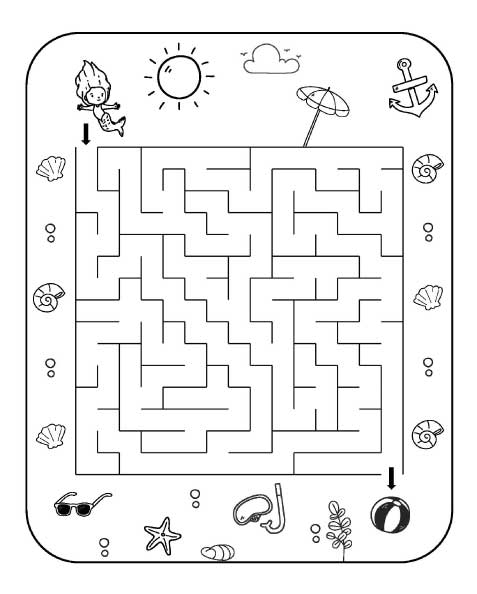
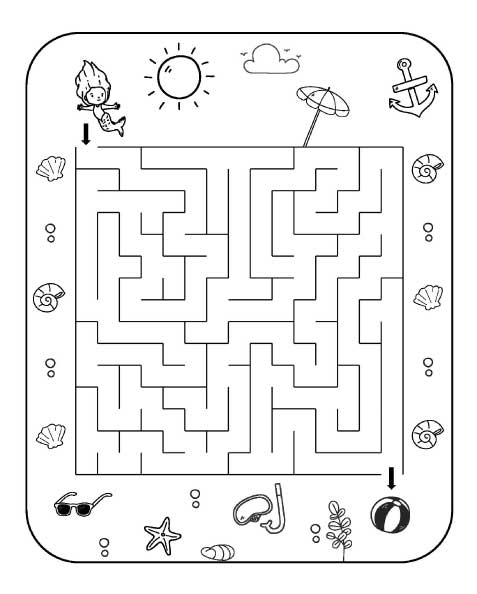
The pages feature a friendly beach setting with fun elements like suns, umbrellas, shells, and playful ocean-themed decorations. Each maze begins with a clear starting point often near a small character—and ends at a goal such as a beach ball.
As children move through the pages, the mazes become more complex, with tighter turns and more branching paths. This gradual progression helps build confidence while gently increasing the challenge.
Later pages also include solution examples, allowing parents to guide children when needed or check completed work.
Conclusion
Simple activities like maze worksheets can have a powerful impact on your child’s development. They build focus, confidence, and problem-solving skills all while feeling like play.
The key is consistency and encouragement. When children are given opportunities to explore, make mistakes, and try again, they develop a love for learning that lasts far beyond early childhood.
By turning these small moments into meaningful learning experiences, you’re helping your child grow in ways that truly matter.