Table of contents
Stories have a magical way of opening up new worlds for children. When a story combines imagination with real-life elements like ocean life and underwater exploration it becomes an incredibly powerful learning tool. An ocean adventure story for kids is more than just an entertaining activity; it helps children build curiosity, develop language skills, and connect emotionally with the world around them.
Through engaging visuals and simple storytelling, children are introduced to fascinating marine life and the concept of exploration. These experiences support early childhood development by encouraging observation, imagination, and meaningful conversations between parents and children.
What This Activity Teaches Children
This ocean-themed storytelling activity offers a rich learning experience across several developmental areas:
1. Language and Vocabulary Development
Children are exposed to new words such as “submarine,” “coral reef,” “sea turtle,” and “dolphin.” Hearing and repeating these words helps expand their vocabulary naturally.
2. Curiosity and Scientific Awareness
As children observe different sea animals and underwater environments, they begin to ask questions. This builds early scientific thinking and encourages exploration of nature.
3. Imagination and Creative Thinking
The idea of traveling deep underwater in a submarine sparks imagination. Children begin to visualize themselves in similar adventures, which strengthens creative thinking.
4. Observation Skills
The detailed visuals—colorful fish, moving sea creatures, and underwater landscapes—encourage children to notice details, patterns, and differences.
5. Emotional Connection and Bonding
The story highlights a shared experience between a child and a parent, helping children feel safe, connected, and inspired to explore the world with loved ones.
How Parents Can Use This Activity With Their Child
Using this activity at home or in a classroom is simple and rewarding. Here’s a step-by-step approach:
Step 1: Read the Story Together
Sit with your child and go through the story slowly. Use expressive tones and pause to let your child observe the illustrations.
Step 2: Ask Open-Ended Questions
Encourage interaction by asking questions like:
- What animals do you see?
- Which one is your favorite?
- What do you think happens next?
Step 3: Encourage Description
Ask your child to describe what they see in their own words. This strengthens language skills and confidence.
Step 4: Relate to Real Life
Talk about real oceans and sea animals. If possible, connect the story to documentaries, aquarium visits, or simple discussions about marine life.
Step 5: Reflect on the Experience
After finishing the story, ask your child how they felt during the adventure. This helps build emotional awareness.
Teamwork Story for Kids: A Fun and Meaningful Way to Teach Cooperation and Social Skills
Tips to Make This Activity Fun
Keeping children engaged is key to making learning effective. Here are some simple ways to add excitement:
- Use sound effects: Make ocean sounds like bubbles or dolphin noises while reading.
- Act it out: Pretend to be inside a submarine and “look around” together.
- Use toys: Incorporate toy sea animals to bring the story to life.
- Change your voice: Use different voices for narration to keep your child interested.
- Let your child lead: Allow your child to guide parts of the story or invent new scenes.
Activity Preview
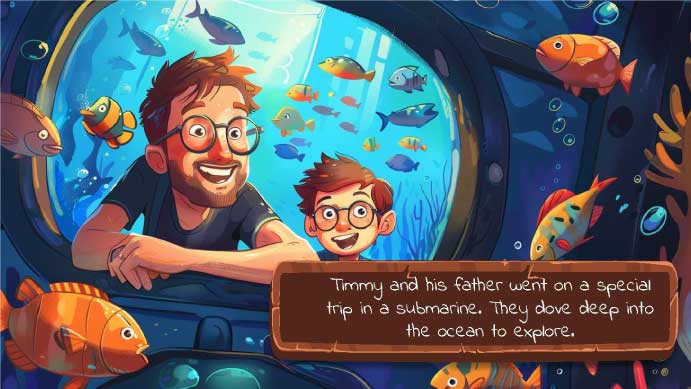
In this activity, children follow a young child and their parent on a special underwater journey inside a submarine. The story begins with excitement as they dive deep into the ocean, immediately capturing attention with the idea of exploration.
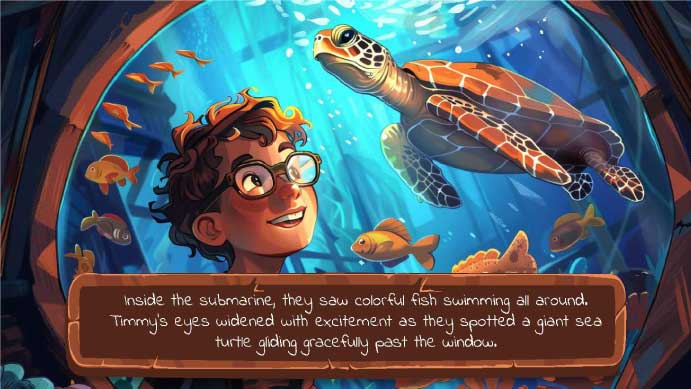
As the journey continues, children are presented with vibrant underwater scenes filled with colorful fish swimming in different directions. They also encounter a large sea turtle gliding gracefully through the water, which introduces the concept of slow, calm movement in contrast to the lively fish.
Further along, children observe groups of tiny fish moving together near coral reefs, as well as a playful dolphin jumping in the distance. These scenes help children understand diversity in marine life and behavior.
By the end of the activity, the characters return to the surface feeling happy and amazed. This provides a gentle and positive conclusion, reinforcing feelings of joy, curiosity, and wonder.
Conclusion
Simple storytelling activities like an ocean adventure story for kids can have a powerful impact on your child’s development. They nurture imagination, build language skills, and create meaningful bonding moments all through something as simple as a shared story.
You don’t need complex tools or structured lessons. With a little time, curiosity, and engagement, you can turn everyday moments into valuable learning experiences. These small interactions help children grow into curious, confident learners who are excited to explore the world around them.