Table of contents
Helping children build healthy habits early in life is one of the most valuable gifts parents and educators can offer. Understanding how the body works, why exercise matters, and how to make healthy choices doesn’t have to feel like a lecture it can be fun, interactive, and engaging.
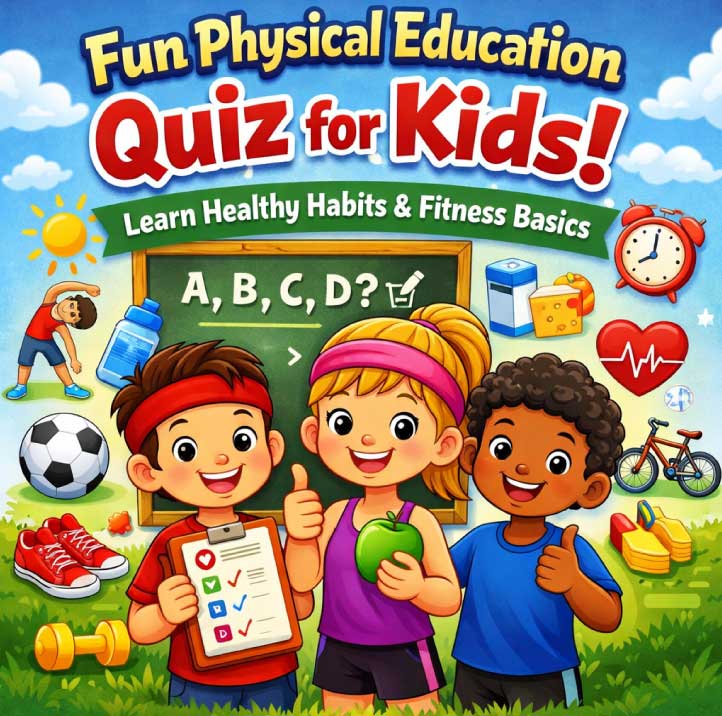
A physical education quiz for kids is a simple yet powerful way to introduce important health concepts in a playful format. Instead of passive learning, children actively think, choose answers, and reflect on their daily habits. This kind of activity blends learning with curiosity, making it ideal for homeschooling families, classrooms, or even casual learning at home.
What This Activity Teaches Children
This quiz-style activity supports multiple areas of a child’s development beyond just physical health knowledge.
1. Understanding Healthy Habits
Children learn essential concepts such as:
- The importance of warming up before exercise
- Staying hydrated during physical activity
- The role of sleep in overall health
These foundational ideas help children make better daily choices.
2. Basic Body Awareness
The questions introduce children to how their bodies function, including:
- The role of the heart in pumping blood
- The importance of flexibility
- How exercise supports overall wellness
This builds early awareness of body systems in a simple, age-appropriate way.
3. Knowledge of Nutrition
Children are exposed to healthy eating concepts, such as:
- Foods that strengthen bones (like calcium-rich options)
- The importance of balanced nutrition
This encourages mindful eating habits from a young age.
4. Critical Thinking Skills
Instead of memorizing facts, children:
- Read questions carefully
- Evaluate multiple choices
- Select the best answer
This strengthens reasoning and decision-making skills.
5. Confidence Building
Answering questions correctly gives children a sense of achievement, boosting their confidence and encouraging further learning.
How Parents Can Use This Activity With Their Child
This activity is flexible and easy to adapt for different ages and learning environments.
Step 1: Read the Questions Together
Sit with your child and go through each question slowly. For younger children, read the question aloud and explain unfamiliar words.
Step 2: Let Your Child Choose an Answer
Encourage your child to pick an answer independently. Avoid correcting immediately—this helps build confidence and thinking skills.
Step 3: Discuss the Answer
After each question:
- Explain why the correct answer is right
- Talk about why other options are less suitable
For example, when discussing hydration, explain how water helps the body function during exercise.
Step 4: Connect to Real Life
Relate questions to your child’s daily routine:
- “Do you remember when we warmed up before playing?”
- “What do you drink after running outside?”
This reinforces learning through real experiences.
Step 5: Celebrate Effort, Not Just Accuracy
Praise your child for trying, thinking, and participating not just for getting answers right.
Tips to Make This Activity Fun
Keeping children engaged is key to meaningful learning. Here are practical ways to make the quiz enjoyable:
Turn It Into a Game
- Give points for each correct answer
- Offer small rewards like stickers or extra playtime
- Create a “health champion” title
Add Movement
Combine learning with action:
- After a question about exercise, do a quick activity like jumping jacks
- Practice stretching after discussing flexibility
Use Role Play
Pretend to be:
- A fitness coach
- A doctor teaching about the body
- A sports trainer giving advice
This adds imagination to the experience.
Keep Sessions Short
Young children focus better in short bursts. Limit sessions to 10–15 minutes to keep energy high.
Repeat Regularly
Revisiting the quiz over time helps reinforce knowledge and improves retention.
Activity Preview
In this activity, children are presented with a series of multiple-choice questions focused on physical education and health.
50+ Fun Riddles for Kids: A Brain-Boosting Activity to Build Thinking Skills
They will see:
- Questions about exercise types, such as identifying activities that involve movement to music
- Situations related to healthy habits, like warming up before exercise or staying hydrated
- Basic body knowledge questions, including the function of the heart
- Lifestyle-related topics such as sleep recommendations and daily physical activity
Each question offers four possible answers, encouraging children to think carefully before choosing.
For example, children might:
- Identify which activity improves cardiovascular fitness
- Choose the correct way to cool down after exercise
- Recognize foods that help build strong bones
The format is simple, structured, and highly engaging, making it suitable for early learners.
Conclusion
Teaching children about health and physical activity doesn’t have to be complicated. Simple, interactive tools like a quiz can spark curiosity, build knowledge, and encourage lifelong healthy habits.
By turning learning into a fun and engaging experience, you’re not only helping your child understand their body you’re also empowering them to take care of it. Small steps like these can lead to big, lasting benefits in your child’s growth, confidence, and well-being.