Table of contents
Learning to read is one of the most exciting milestones in early childhood. But reading is more than recognizing letters and sounding out words. True literacy begins when children understand what they read. That is why reading comprehension activities for kids are so important during the early learning years.
When children read short passages and answer simple questions about them, they begin developing essential thinking skills. They learn how to remember details, understand ideas, and connect words with meaning. These early experiences build the foundation for confident readers in school and beyond.
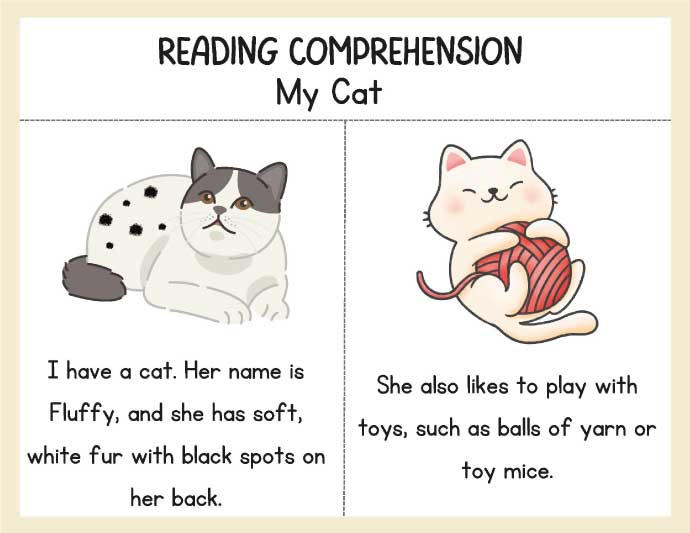
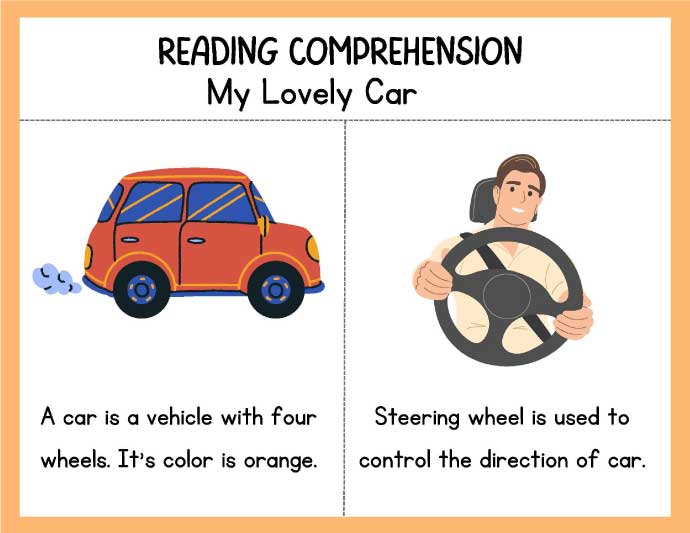
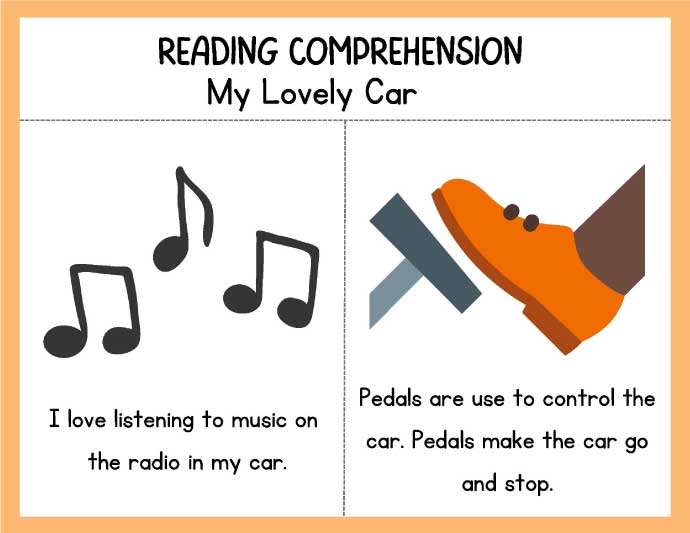
In many early literacy activities, children read short stories about familiar topics, such as animals, weather, food, nature, or everyday experiences, and then answer simple questions about the story. The activities often include colorful illustrations to support understanding and make reading more engaging.
These types of activities are especially helpful for kindergarten learners, homeschool families, and parents who want to support reading development at home.
What This Activity Teaches Children
Reading comprehension activities help children develop several essential learning skills. Even simple passages can support a wide range of cognitive and language development.
1. Early Reading Skills
Children practice reading short, clear sentences. This strengthens their ability to recognize words and understand sentence structure. As they repeat reading activities regularly, their reading fluency improves.
2. Understanding Story Details
After reading a passage, children answer questions such as:
- Who is in the story?
- What happened?
- What color or object was mentioned?
These questions help children focus on key details and improve their ability to remember information.
3. Vocabulary Development
Stories about everyday topics, like pets, fruits, nature, and seasons, introduce children to new words in a natural context. Seeing the words alongside illustrations helps children understand their meaning more easily.
4. Logical Thinking
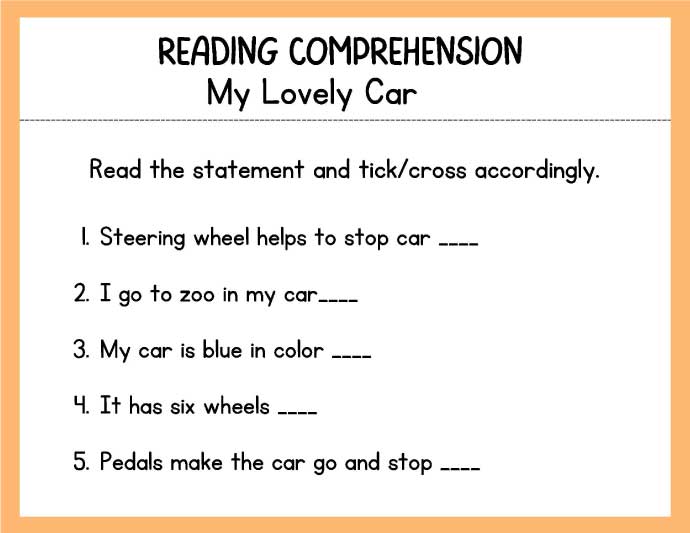
Many activities include true-or-false questions or simple comprehension prompts. These questions encourage children to think carefully about what they read and decide whether statements are correct.
5. Observation and Visual Learning
Illustrations in reading activities play an important role. When children look at pictures related to the story, they connect visual information with written language, which strengthens understanding.
How Parents Can Use This Activity With Their Child
Parents and caregivers can easily turn reading comprehension activities into a fun learning experience at home. The key is to keep the process relaxed and interactive.
Step 1: Read the Passage Together
Begin by reading the short passage aloud. If your child is already learning to read, encourage them to read some of the words or sentences.
Read slowly and clearly so your child can follow along.
Step 2: Talk About the Pictures
Before or after reading, ask your child questions about the pictures.
For example:
- What do you see in this picture?
- What is the character doing?
- What color is the object?
These simple conversations prepare children to understand the story.
Step 3: Read the Story Again
Re-reading helps children catch details they may have missed the first time. Encourage your child to follow along or point to words as you read.
Step 4: Answer the Questions
Once the story is finished, ask the comprehension questions provided in the activity. Give your child time to think and answer.
If your child struggles, guide them back to the part of the story where the answer appears.
Step 5: Encourage and Celebrate
Positive reinforcement makes learning enjoyable. Praise your child for their effort and curiosity rather than focusing only on correct answers.
Tips to Make This Activity Fun
Children learn best when activities feel like play rather than work. Here are some ways to keep reading comprehension activities engaging.
Use Different Voices
While reading a story, change your voice for different characters or emotions. This makes the story more exciting and helps children stay interested.
Turn It Into a Game
You can turn comprehension questions into a small game or challenge. For example, give your child a sticker or star for each answer they try.
Encourage Storytelling
After reading, ask your child to retell the story in their own words. This helps strengthen memory and comprehension skills.
Use Drawing
Invite your child to draw their favorite part of the story. Drawing encourages creativity and reinforces what they learned.
Learning Letters Activities to Build Early Literacy Skills
Ways to Extend the Activity
Once your child becomes comfortable with reading comprehension exercises, you can expand the learning experience in creative ways.
Create Your Own Questions
Ask additional questions about the story, such as:
- What do you think will happen next?
- Why did the character do that?
These questions encourage deeper thinking.
Act Out the Story
Children enjoy acting. You can turn the story into a mini role-play activity where your child pretends to be a character.
Write a New Ending
Ask your child to imagine a different ending for the story. This builds creativity and storytelling skills.
Connect the Story to Real Life
If the story talks about animals, food, or weather, ask your child if they have seen something similar in real life.
These connections help children understand the world around them.
Activity Preview
In these reading comprehension activities, children read short passages about everyday topics. The stories are simple, engaging, and designed for early readers.
For example, one activity describes children building a snowman using three snowballs, a carrot nose, and a warm scarf. After reading the passage, children answer questions about the story details.
Other passages introduce topics such as:
- winter weather
- pets like cats and dogs
- fruits such as apples
- birds and animals
- natural elements like mountains, oceans, and rainbows
Each activity typically includes:
- A short reading passage written in simple sentences
- Colorful illustrations that support the story
- A set of comprehension questions
- Simple true-or-false statements to test understanding
This structure helps children read, observe, think, and respond. all essential parts of early literacy development.
Simple Ways to Try This Activity Today
You can begin using reading comprehension activities with your child right away. Here are a few easy steps:
- Choose a short story suitable for your child’s reading level.
- Read the passage together slowly and clearly.
- Discuss the pictures and story details.
- Ask simple comprehension questions.
- Encourage your child to retell the story or draw a scene from it.
Even spending just ten minutes a day on reading practice can make a meaningful difference.
Conclusion
Helping children develop strong reading comprehension skills does not require complicated lessons or expensive materials. Often, the most effective learning happens through simple reading comprehension activities for kids.
When children read short passages, explore pictures, and answer thoughtful questions, they strengthen their language skills, curiosity, and confidence. These early reading experiences help children become more independent learners as they grow.
By spending a little time reading together each day, parents and caregivers can nurture a love of learning that lasts a lifetime.