Table of contents
Helping children understand how language works is one of the most valuable gifts a parent or teacher can offer. Among the foundational skills in early English learning is mastering past tense verbs, especially recognizing the difference between regular and irregular forms.
Activities focused on regular and irregular verbs give children the opportunity to practice real-life language in a structured yet engaging way. Instead of memorizing rules in isolation, children learn through context, repetition, and playful problem-solving.
The learning material presented here introduces children to verb forms in a clear and interactive format, encouraging them to choose the correct past tense verb in sentences. This kind of activity not only builds grammar skills but also strengthens confidence in using English naturally.
What This Activity Teaches Children
This regular and irregular verbs worksheet supports several key developmental and educational areas:
1. Understanding Past Tense Forms
Children learn how verbs change when describing actions that already happened. They begin to recognize patterns such as:
- Regular verbs ending in -ed (cook → cooked)
- Irregular verbs changing form completely (eat → ate, go → went)
2. Grammar Awareness
Through repeated exposure, children develop a deeper understanding of sentence structure and correct verb usage. This strengthens their ability to form grammatically accurate sentences.
3. Vocabulary Expansion
By working with a variety of verbs like came, sent, drove, built, and caught, children expand their everyday vocabulary in meaningful ways.
4. Reading Comprehension
Each sentence provides context clues that help children choose the correct verb. This encourages careful reading and interpretation.
5. Critical Thinking and Decision-Making
Instead of simply recalling answers, children must evaluate multiple options and select the correct one, improving reasoning skills.
How Parents Can Use This Activity With Their Child
This activity is simple to implement at home and can easily become part of your child’s daily learning routine.
Step 1: Start With a Quick Explanation
Before beginning, briefly explain the difference between regular and irregular verbs. Keep it simple:
- Regular verbs usually end in -ed
- Irregular verbs change in different ways and must be remembered
Step 2: Read Each Sentence Together
Go through each sentence slowly. Encourage your child to read it aloud. This helps reinforce comprehension and pronunciation.
Step 3: Look at the Options
Ask your child to consider all the answer choices before selecting one. Guide them with questions like:
- “Does this sound right?”
- “Is this talking about the past?”
Step 4: Choose the Correct Answer
Let your child make the final decision. Even if they make mistakes, the learning happens through correction and discussion.
Step 5: Review and Discuss
After completing a few sentences, review the answers together. Talk about why one option is correct and the others are not.
Hot Air Balloon Story Activity for Kids: Fun Early Science Learning
Ways to Extend the Activity
Once your child becomes comfortable with the basics, you can expand the learning in creative ways:
Create Your Own Sentences
Ask your child to write their own sentences using past tense verbs. For example:
“I played football yesterday.”
Verb Sorting Game
Write verbs on small pieces of paper and ask your child to sort them into regular and irregular categories.
Storytelling Practice
Encourage your child to tell a short story about their day using past tense verbs.
Verb Transformation Challenge
Give your child a present tense verb and ask them to change it into past tense.
Example:
- go → went
- play → played
Daily Conversation Practice
Use past tense verbs naturally in conversations:
“What did you learn today?”
“What did you play after school?”
Activity Preview
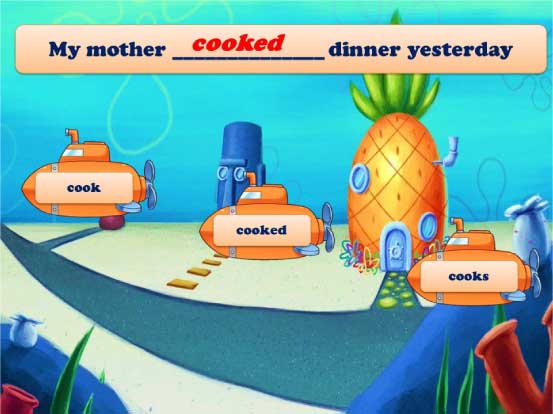
In this activity, children are presented with sentences that describe actions in the past. Each sentence includes a blank space and multiple verb options.
For example, a sentence like:
“My mother ______ dinner yesterday”
is followed by choices such as cook, cooked, cooks.
Children must carefully read the sentence, recognize that it refers to the past, and select the correct verb form (cooked).
Other examples include:
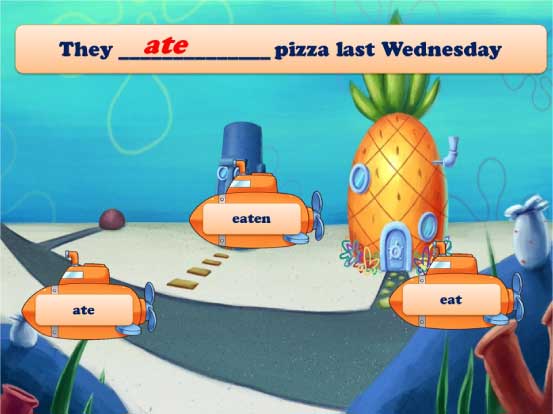
- Choosing between ate, eaten, eat
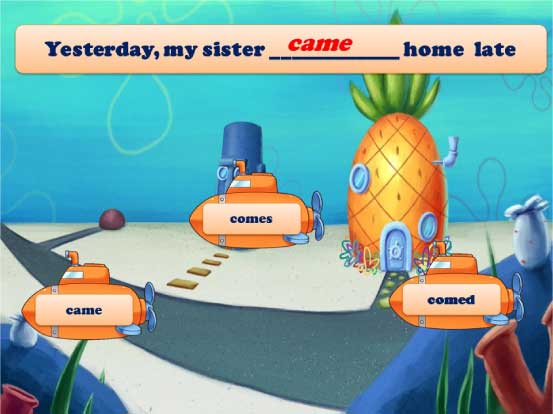
- Identifying correct irregular forms like came, went, drove
- Completing sentences with context clues such as time markers (yesterday, last week, two days ago)
The activity gradually introduces a variety of verbs, helping children become more confident with both regular and irregular forms.
Conclusion
Learning grammar doesn’t have to feel complicated or overwhelming. With simple, well-designed activities like this regular and irregular verbs exercise, children can build essential language skills in a natural and enjoyable way.
By practicing a little each day, children begin to recognize patterns, understand sentence structure, and express themselves more clearly. Most importantly, they gain confidence in their ability to use language—one sentence at a time.
Small moments of learning like these truly add up, helping your child grow into a strong and capable communicator.