Monday, April 6 2026 - Good Day!
باچي كيدز
  • Home
  • Arabic
    • Arabic Alphabet
    • Arabic letters with vowel sounds
    • Arabic letter shapes
    • Arabic Activity Sheets
    • Arabic Flashcards
    • Arabic Math
  • English
    • English Alphabet
    • English Worksheets
    • Flash cards
    • Developing childrens skills
    • Math
باچي كيدز
  • Activities
    • Coloring Pages
    • Stories For Kindergarten
    • Puzzles and Games
    • PowerPoint & Canva Template
  • MoreLook
    • Free ebooks & Articles
  • العربية
Home Puzzles and Games
Puzzles and Games

50+ Fun Riddles for Kids: A Brain-Boosting Activity to Build Thinking Skills

04/05/2026 20 Views
Share: 0FacebookTwitterPinterestTumblrWhatsappTelegramCopy LinkEmail
20

Table of contents

  • What This Activity Teaches Children
    • 1. Critical Thinking and Reasoning
    • 2. Problem-Solving Skills
    • 3. Language and Vocabulary Development
    • 4. Memory and Focus
    • 5. Creativity and Imagination
  • How Parents Can Use This Activity With Their Child
    • Step 1: Introduce One Riddle at a Time
    • Step 2: Encourage Thinking Time
    • Step 3: Ask Guiding Questions
    • Step 4: Reveal the Answer
    • Step 5: Discuss the Logic
  • Tips to Make This Activity Fun
    • Turn It Into a Game
    • Use Funny Voices
    • Take Turns
    • Celebrate Effort, Not Just Correct Answers
    • Keep Sessions Short
  • Activity Preview
  • Conclusion

Helping children develop strong thinking skills doesn’t always require complicated lessons or structured worksheets. Sometimes, the most powerful learning happens through simple, playful challenges—like riddles. Riddles for kids are a wonderful way to spark curiosity, encourage problem-solving, and build confidence in young learners.

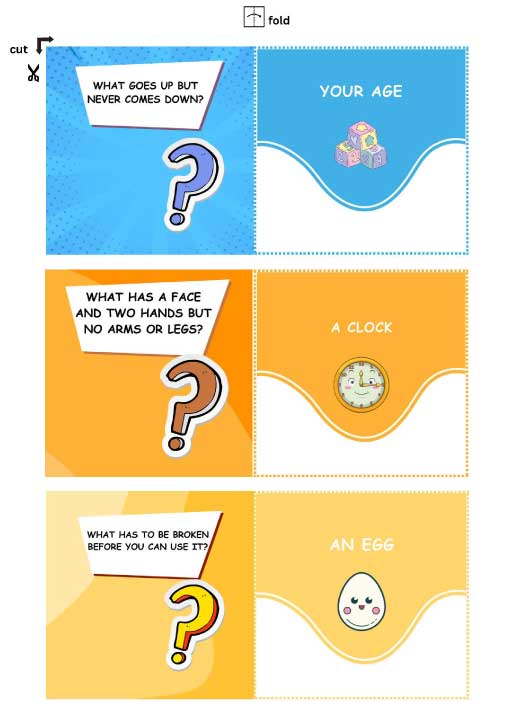
The materials provided showcase a delightful collection of visual riddles paired with answers, designed in a fold-and-reveal format. Each riddle invites children to think carefully before discovering the answer, turning learning into an engaging game.

Whether you’re a parent, homeschooler, or teacher, this type of activity offers an easy and effective way to nurture your child’s cognitive development while keeping them entertained.
brain teasers for children

What This Activity Teaches Children

Riddle-based activities may seem simple, but they support a wide range of essential developmental skills.

1. Critical Thinking and Reasoning

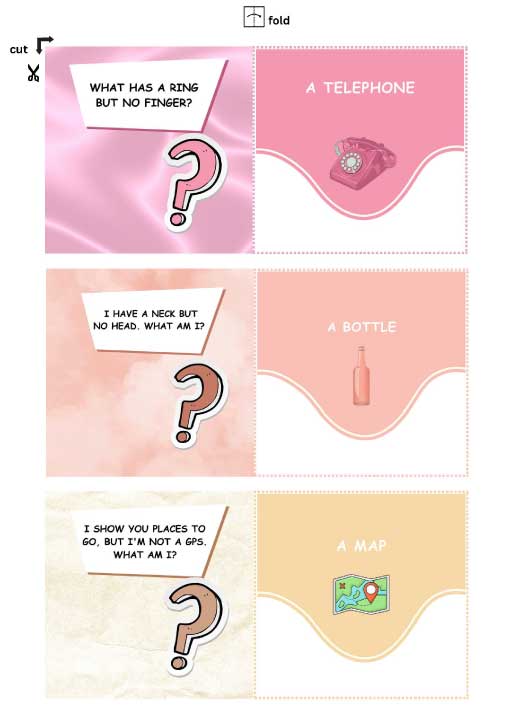
Children must analyze clues and think beyond literal meanings. For example, a riddle like “What has a ring but no finger?” encourages children to move past assumptions and consider alternative interpretations.

2. Problem-Solving Skills

Each riddle presents a small challenge. Children learn to test ideas, eliminate incorrect answers, and arrive at a solution through reasoning.

3. Language and Vocabulary Development

Riddles introduce new words and phrases in context. They also help children understand figurative language, which is a key literacy skill.

4. Memory and Focus

Children must hold clues in their mind while thinking through possible answers. This strengthens working memory and attention span.

5. Creativity and Imagination

Riddles often require “thinking outside the box.” This helps children become more flexible thinkers and encourages creative exploration.
printable riddles activity

How Parents Can Use This Activity With Their Child

Using this riddle activity at home is simple and flexible. Here’s a step-by-step approach to make the most of it:

Step 1: Introduce One Riddle at a Time

Start with a single riddle. Read it aloud slowly and clearly so your child can process the clues.

Step 2: Encourage Thinking Time

Give your child time to think before revealing the answer. Avoid rushing—this is where the learning happens.

Step 3: Ask Guiding Questions

If your child gets stuck, gently guide them:

  • “What do you think it could be?”
  • “What has something like that in real life?”

Step 4: Reveal the Answer

Once your child has guessed or is ready reveal the answer. The fold-and-reveal format adds excitement and anticipation.

Step 5: Discuss the Logic

Talk briefly about why the answer makes sense. This reinforces understanding and helps children learn how to approach future riddles.
critical thinking activities for kids

Tips to Make This Activity Fun

Keeping children engaged is key. Here are some simple ways to make riddle time even more enjoyable:

Turn It Into a Game

Create a “riddle challenge” where your child earns points or stickers for each correct answer.

Use Funny Voices

Read riddles in silly voices to add humor and keep attention high.

Take Turns

Let your child read or present riddles to you. This builds confidence and communication skills.

200 Riddles for Kids: Boost Critical Thinking Through Playful Learning

Celebrate Effort, Not Just Correct Answers

Even if your child guesses incorrectly, praise their thinking process.

Keep Sessions Short

Young children benefit from short, focused activities 5 to 10 minutes is often enough.
fun learning games for kids

Activity Preview

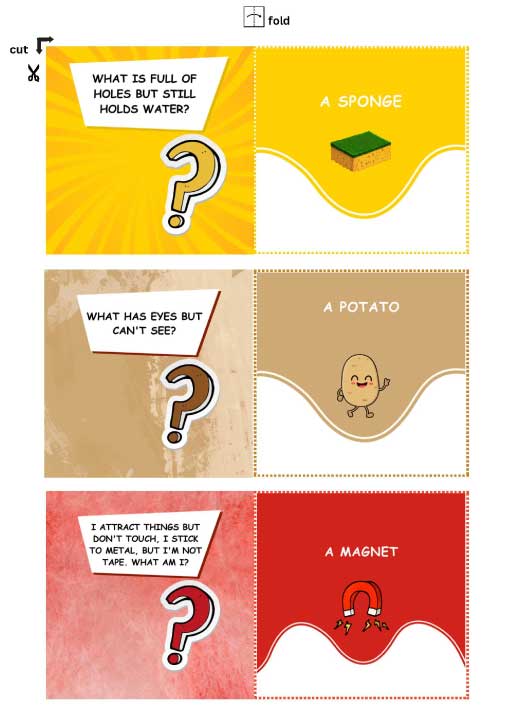
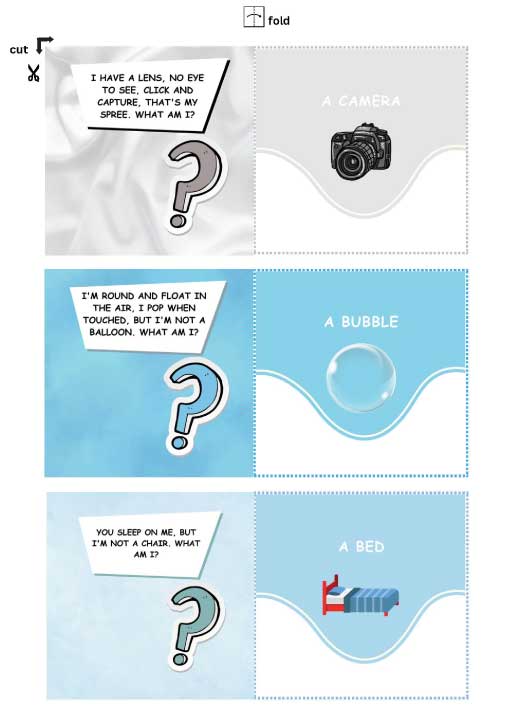
The materials present a series of colorful, child-friendly riddle cards arranged in a foldable format. On one side, children see a question paired with a large question mark illustration. On the other side, the answer is revealed with a matching image.

For example:

  • A riddle asks, “What has a neck but no head?” and reveals a bottle.
  • Another says, “What gets wetter as it dries?” with the answer being a towel.
  • Children encounter fun and familiar objects like a clock, rainbow, pencil, spider, and bicycle.

Each page features multiple riddles with bright backgrounds and simple illustrations, making them visually appealing and easy for young learners to understand. The fold-and-cut design adds an interactive element, allowing children to guess before checking their answers.

This combination of visual cues and wordplay makes the activity accessible even for early readers while still challenging enough to promote deeper thinking.

Conclusion

Riddles are a simple yet powerful way to support your child’s learning journey. They encourage curiosity, build confidence, and develop essential thinking skills all while feeling like a game. Activities like these remind us that meaningful learning doesn’t have to be complicated. With just a few minutes a day, you can create joyful moments that nurture your child’s mind and imagination.

pajy kids
Don't miss this
  • Fun Daily Puzzles for Kids: Boost Learning While Having a Blast!
  • 200 Riddles for Kids: Boost Critical Thinking Through Playful Learning
  • Top 100 Printable Mazes for Kindergarten Classrooms
  • Printable Maze Puzzel Pack: 100 Free Pages to Enjoy
ActivitiesDevelopmental Skills
Share: 0 FacebookTwitterPinterestTumblrWhatsappTelegramCopy LinkEmail
Previous
Easy History Quiz for Kids: Fun Questions to Boost Learning
Next
Easy Financial Literacy Quiz for Kids to Learn Money Management

Don't miss this

Fun Daily Puzzles for Kids: Boost Learning While Having a Blast!

11/09/2025

Puzzle of Solutions: Developing Critical Thinking and Perseverance in the Early Years

10/02/2025

Printable Maze Puzzel Pack: 100 Free Pages to Enjoy

11/03/2025

200 Riddles for Kids: Boost Critical Thinking Through Playful Learning

04/02/2026

100 Maze Puzzle Worksheets to Sharpen Kids’ Minds

05/14/2025

Fine Motor Skill Activities: Boosting Logical Thinking and Visual-Motor Coordination

10/02/2025

200 Free Puzzles to Print: Fun Maze Games for All Ages

11/02/2025

Colorful Jigsaw Puzzles for Kids: Learn, Laugh & Play!

11/09/2025

Free Maze Puzzle Games: Get 100 Printable Pages Now

11/03/2025

Printable Mazes: Fun Educational Activities to Enhance Children’s Focus

10/04/2025

Follow us

Youtube Facebook Twitter Instagram Pinterest Email

Popular Posts

  • 1

    The Arabic Letter Ṣād (ص) and Its Forms...

    07/14/2025 4.9K Views
  • 2

    The Arabic Letter Seen (س): Forms and Positions...

    07/14/2025 3.4K Views
  • 3

    Alif Alphabet Arabic Worksheets for Short Vowel Learning

    06/12/2025 3K Views
  • 4

    Teaching Children the yaa arabic letter Through Creative...

    06/01/2025 2.8K Views
  • 5

    Arabic Alphabet Noon Activities: Recognize, Write, and Color

    06/01/2025 2.6K Views

Categories

  • Arabic Activity Sheets (46)
  • Arabic Alphabet (28)
  • Arabic Flashcards (26)
  • Arabic letter shapes (28)
  • Arabic letters with vowel sounds (28)
  • Arabic Math (16)
  • Arabic Names worksheets (22)
  • Articles & Books (16)
  • Coloring Pages (29)
  • Developing childrens skills (23)
  • English Alphabet (55)
  • English Letters activities (28)
  • English Worksheets (47)
  • Flash cards (42)
  • Kindergarten Poems (17)
  • Math (37)
  • PowerPoint & Canva Template (36)
  • Puzzles and Games (14)
  • Stories For Kindergarten (57)
  • Word Search (11)

Our educational channel

1 Thumbnail youtube تعليم الحروف العربية لأطفال الروضة - بوربوينت للاطفال 05:01 2 Thumbnail youtube لوحة الحروف الابجدية العربية للروضة - بوربوينت اطفال تفاعلي 01:35 3 Thumbnail youtube حروف اللغة العربية للاطفال تمارين الصوت الأول والأخير للكلمة -... 07:55 4 Thumbnail youtube تعلم الحروف الانجليزية الكبيرة والصغيرة لمرحلة رياض الأطفال والمبتدئين 03:48 5 Thumbnail youtube تعليم الأرقام باللغة العربية من 1 الى 10 - Learning... 03:42 6 Thumbnail youtube تدريبات الارقام بالانجليزي للاطفال | Numbers Exercises From 1 to... 05:39
  • Youtube
  • Facebook
  • Twitter
  • Pinterest
  • About Us
  • Contact
  • Terms of use
  • FAQs
  • Privacy Policy

All Rights Reserved - Pajy Kids - © 2025

باچي كيدز
  • Home
  • Arabic
    • Arabic Alphabet
    • Arabic letters with vowel sounds
    • Arabic letter shapes
    • Arabic Activity Sheets
    • Arabic Flashcards
    • Arabic Math
  • English
    • English Alphabet
    • English Worksheets
    • Flash cards
    • Developing childrens skills
    • Math
باچي كيدز
  • Activities
    • Coloring Pages
    • Stories For Kindergarten
    • Puzzles and Games
    • PowerPoint & Canva Template
  • MoreLook
    • Free ebooks & Articles
  • العربية