Table of contents
Helping children develop strong thinking skills doesn’t have to feel like a lesson. In fact, some of the most powerful learning happens during moments of laughter, curiosity, and play. One of the simplest yet most effective tools for this is riddles for kids.
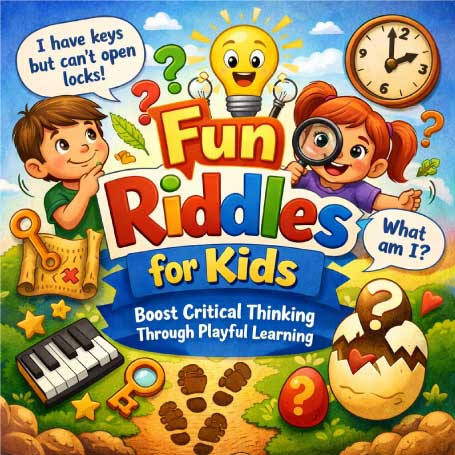
Riddles invite children to pause, think, and explore possibilities. Instead of giving direct answers, they encourage kids to analyze clues, make connections, and test their ideas. Whether it’s a question about something that “has keys but can’t open locks” or “gets wetter the more it dries,” children are naturally drawn into the challenge.
This type of playful thinking activity builds important cognitive skills while keeping children engaged and entertained. It’s a perfect addition to daily routines at home or in the classroom.
What This Activity Teaches Children
Riddle-based activities are much more than simple entertainment. They are powerful tools that support multiple areas of child development.
1. Critical Thinking and Problem Solving
Riddles require children to think beyond the obvious. They must interpret clues, eliminate unlikely answers, and arrive at a logical conclusion. This strengthens their ability to approach problems thoughtfully.
2. Language and Vocabulary Development
Many riddles use wordplay, double meanings, and descriptive language. As children listen and respond, they expand their vocabulary and improve comprehension skills.
3. Creative Thinking
Riddles often have unexpected answers. This encourages children to think creatively and consider different perspectives instead of relying on straightforward logic.
4. Memory and Focus
Listening carefully to a riddle and remembering its clues helps improve attention span and memory. Children learn to focus on details to find the correct answer.
5. Confidence Building
When children solve a riddle, they experience a sense of achievement. Even attempting answers helps build confidence and encourages participation.
6. Social Interaction Skills
Riddles are often shared in groups. Taking turns, listening to others, and discussing answers promote communication and collaboration.
How Parents Can Use This Activity With Their Child
Using riddles at home is simple and flexible. You don’t need special materials just a willingness to play and think together.
Step 1: Choose Age-Appropriate Riddles
Start with simple riddles that match your child’s age and understanding. For younger children, use shorter and more concrete clues.
Step 2: Read the Riddle Slowly
Read the riddle clearly and give your child time to process it. Avoid rushing—thinking is the most important part.
Step 3: Encourage Thinking Aloud
Ask your child what they think and why. Even if the answer isn’t correct, the reasoning process is valuable.
Step 4: Give Gentle Hints
If your child struggles, offer small clues instead of revealing the answer. This keeps them engaged and motivated.
Step 5: Celebrate Effort and Success
Praise both correct answers and thoughtful attempts. This builds confidence and keeps the activity enjoyable.
Step 6: Take Turns
Let your child ask riddles too. This role reversal strengthens understanding and boosts communication skills.
Colorful Jigsaw Puzzles for Kids: Learn, Laugh & Play!
Activity Preview
The activity consists of a large collection of playful riddles, each followed by an answer.
Children are presented with short, engaging questions such as:
- “What has keys but can’t open locks?”
- “What gets wetter the more it dries?”
- “What has a face and two hands but no arms or legs?”
Each riddle encourages children to think beyond literal meanings. For example, a child might initially think of physical keys before realizing the answer relates to a musical instrument.
The structure is simple:
- A question that sparks curiosity
- A pause for thinking
- A satisfying and often surprising answer
This format keeps children engaged while gradually improving their reasoning skills. The wide variety of riddles ensures that children stay interested and continuously challenged.
Conclusion
Simple activities can have a powerful impact on a child’s development, and riddles are a perfect example. They combine fun, learning, and meaningful interaction in a way that feels natural and enjoyable.
By spending just a few minutes each day exploring riddles with your child, you’re helping them build critical thinking skills, expand their language, and grow in confidence. Most importantly, you’re creating moments of connection and shared joy something every child benefits from.