Table of contents
Children are naturally curious about the world, and the universe, around them. Stories about space, stars, and exploration spark wonder while helping children develop language, imagination, and emotional understanding. A gentle space-themed story can turn reading time into a meaningful learning experience where children dream big, ask questions, and explore new ideas.
The illustrated story shown in the learning material follows a young child named Sam who loves looking at the stars and imagining faraway worlds. One night, Sam’s curiosity leads to a magical dream adventure through space.
For parents and educators, stories like this are much more than entertainment. They are powerful tools that build literacy skills, encourage creativity, and strengthen the parent-child bond during shared reading time.
In this guide, we’ll explore how to use this type of space adventure story as a learning activity that supports your child’s development while making reading time exciting and memorable.
What This Activity Teaches Children
Reading a space adventure story with your child supports several key developmental skills. Even a short, simple narrative can provide rich opportunities for learning.
1. Language and Vocabulary Development
When children listen to stories, they are exposed to new words, sentence patterns, and expressions. In this story, children hear words related to space such as stars, planets, explorer, universe, and adventure.
Parents can pause during reading and ask questions like:
- “What do you think a planet looks like?”
- “Why do you think Sam wants to explore space?”
These conversations naturally expand a child’s vocabulary.
2. Imagination and Creative Thinking
Stories about space encourage children to imagine things beyond everyday life.
In the story:
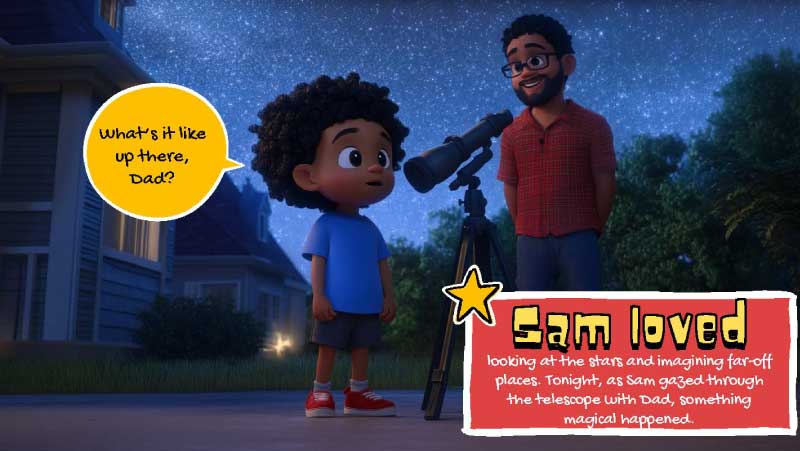
- Sam looks through a telescope
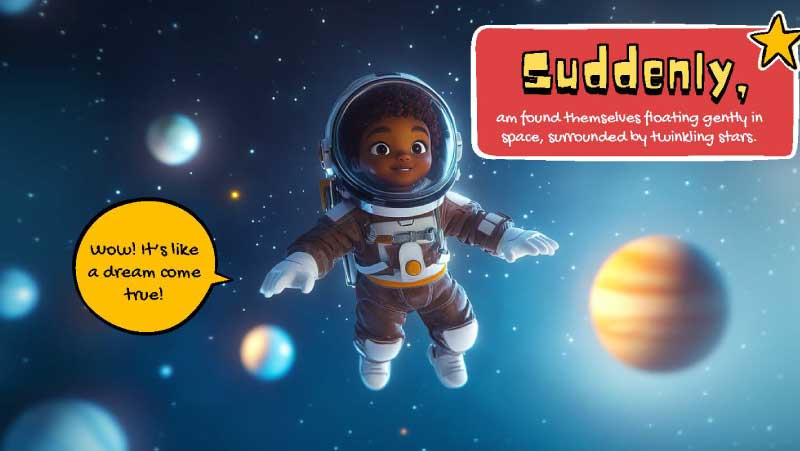
- Dreams about floating in space
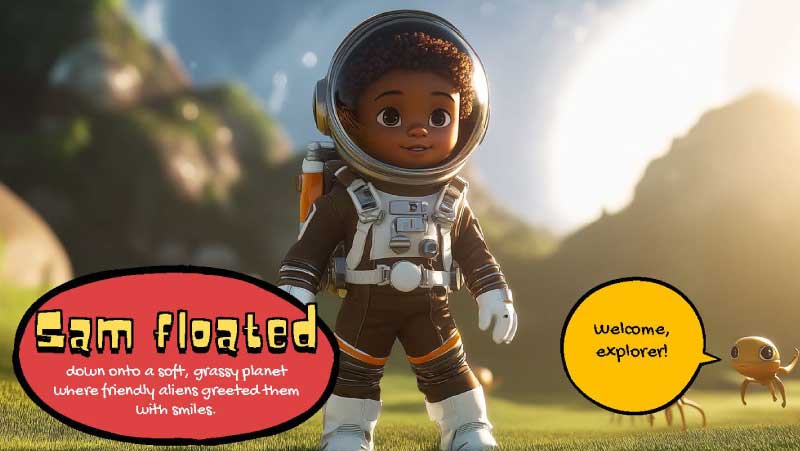
- Meets friendly alien creatures
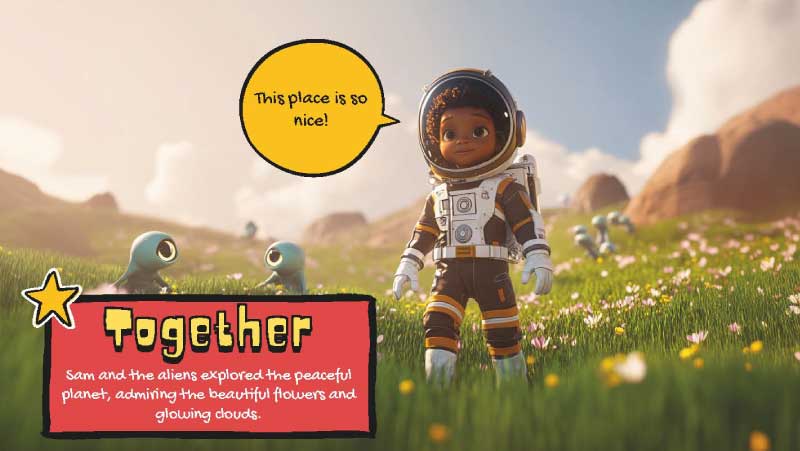
- Visits a beautiful alien planet
These imaginative scenes help children practice creative thinking and storytelling skills.
3. Curiosity About Science
Space stories often introduce basic scientific ideas in a gentle and approachable way.
Children begin to wonder:
- What are stars?
- How many planets are there?
- Could life exist on other planets?
This curiosity lays the foundation for future interest in science and exploration.
4. Emotional Development
The story also models emotional expression.
Sam feels:
- Wonder when looking at the stars
- Excitement during the dream adventure
- Happiness when sharing the story with Dad
These moments help children understand and express their own emotions.
5. Listening and Comprehension Skills
When children follow a story from beginning to end, they practice:
- remembering events
- understanding cause and effect
- predicting what might happen next
These skills are essential for early reading comprehension.
How Parents Can Use This Activity With Their Child
Turning a simple story into a meaningful learning activity only takes a few easy steps.
Step 1: Create a Calm Reading Environment
Choose a quiet place where your child can focus. Bedtime is an ideal moment for a calm storytelling activity.
Dim lighting or a small lamp can create a cozy atmosphere that makes the story feel special.
Step 2: Introduce the Theme
Before reading, ask your child a simple question:
“Have you ever looked at the stars and wondered what’s out there?”
This activates their curiosity before the story begins.
Step 3: Read the Story Slowly
As you read, show the illustrations and allow your child to observe details.
For example:
- On the opening scene, Sam stands outside looking through a telescope with Dad while gazing at the stars.
- Later, Sam floats through space wearing an astronaut suit.
- Friendly alien creatures welcome Sam to a peaceful planet filled with flowers and glowing clouds.
These visuals help children connect words with images.
Step 4: Ask Questions During the Story
Interactive reading improves comprehension.
Try asking:
- “What do you think Sam sees in space?”
- “How do you think Sam feels meeting the aliens?”
- “Do you think the adventure is real or a dream?”
Step 5: Talk About the Ending
At the end of the story, Sam wakes up and realizes the space journey was a dream, then excitedly shares the experience with Dad.
Ask your child:
“What kind of adventure would you dream about?”
This encourages reflection and imagination.
Tips to Make This Activity Fun
A storytelling activity becomes even more engaging when parents add playful elements.
Use Different Voices
Create unique voices for characters:
- Sam
- Dad
- Friendly aliens
Children love dramatic storytelling.
Add Sound Effects
Try making simple sounds:
- “Whoosh!” for flying through space
- “Twinkle!” for stars
- “Zoom!” for traveling between planets
These sounds make the story lively and interactive.
Use Hand Motions
Act out parts of the story:
- Pretend to float in space
- Point to imaginary stars
- Wave hello to alien friends
Movement helps younger children stay engaged.
Turn Off the Lights
Before reading, dim the lights and imagine you’re looking at the night sky together.
This simple change makes the story feel magical.
Ways to Extend the Activity
You can expand this storytelling activity into several creative learning experiences.
Draw a New Planet
Ask your child to draw what Sam’s alien planet might look like.
Questions to guide them:
- What colors are the sky?
- What kind of plants grow there?
- What do the aliens look like?
Create Your Own Space Story
Encourage your child to invent another adventure.
Maybe Sam visits:
- a rainbow planet
- a robot world
- a star-shaped city
Children love building their own stories.
Stargazing Night
If possible, step outside together at night and look at the stars.
Ask:
“Which star do you think Sam visited?”
Build a Space Explorer Roleplay
Use simple household items:
- a box for a spaceship
- paper helmets
- star stickers
Pretend to travel through space together.
Activity Preview
The illustrated story shows a sequence of scenes that guide children through a gentle narrative adventure.
The story begins with Sam standing outside at night, looking through a telescope with Dad while asking about space. The sky is filled with stars, encouraging curiosity about the universe.
Next, Sam suddenly floats through space wearing an astronaut suit, surrounded by glowing planets and twinkling stars. This moment captures the excitement of exploration.
Sam then lands on a beautiful alien planet where small friendly creatures welcome the young explorer. The planet features colorful flowers and glowing clouds, creating a peaceful environment.
Together with the aliens, Sam explores the landscape and learns that many other worlds exist in the universe.
Eventually, Sam floats back through space and wakes up in bed, realizing the journey was a dream. Excited, Sam shares the adventure with Dad while they look at the stars together again.
The story ends with a sense of wonder, reminding children that curiosity and imagination can lead to endless adventures.
Simple Ways to Try This Activity Today
- Choose a quiet moment, such as bedtime, to read the story together.
- Show each illustration and ask your child what they notice.
- Encourage your child to imagine what other planets might look like.
- Ask your child to invent a new space adventure after the story ends.
- Finish the activity by looking at the night sky and talking about the stars.
Conclusion
Simple storytelling activities can have a powerful impact on a child’s learning and development. A space adventure story encourages curiosity, imagination, and meaningful conversations between parents and children. By sharing stories together, parents help children build language skills, emotional understanding, and a lifelong love of learning.
Sometimes the most magical learning moments happen during the quietest times, like sitting together, looking at the stars, and wondering what amazing adventures might be waiting out there.