Learning how to write letters is a key milestone in early childhood education, and structured tracing activities play a major role in this process. Tracing letter Q worksheets are designed to help kindergarten children recognize the shape of the letter, understand its sound, and practice proper handwriting strokes. By combining visual cues with guided practice, tracing letter q activities support fine motor development and build a strong foundation for early literacy skills.
Recognizing and Tracing Uppercase and Lowercase Q
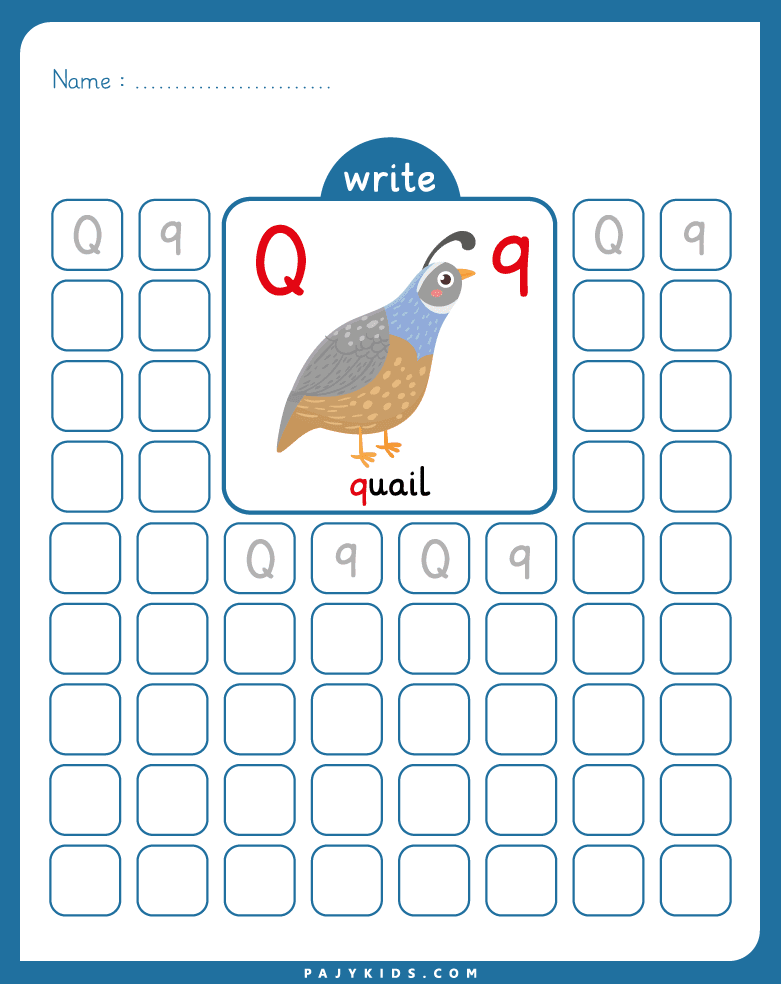
This worksheet focuses on introducing children to both uppercase and lowercase Q through clear visuals and dotted tracing lines. As children practice tracing letter q in a controlled format, they learn correct letter formation while strengthening hand–eye coordination. This worksheet is especially important for kindergarten learners because the letter Q has a unique shape, and repeated tracing helps children distinguish it from similar letters while building confidence in their writing abilities.
Repeated Tracing and Writing Practice for Letter Q
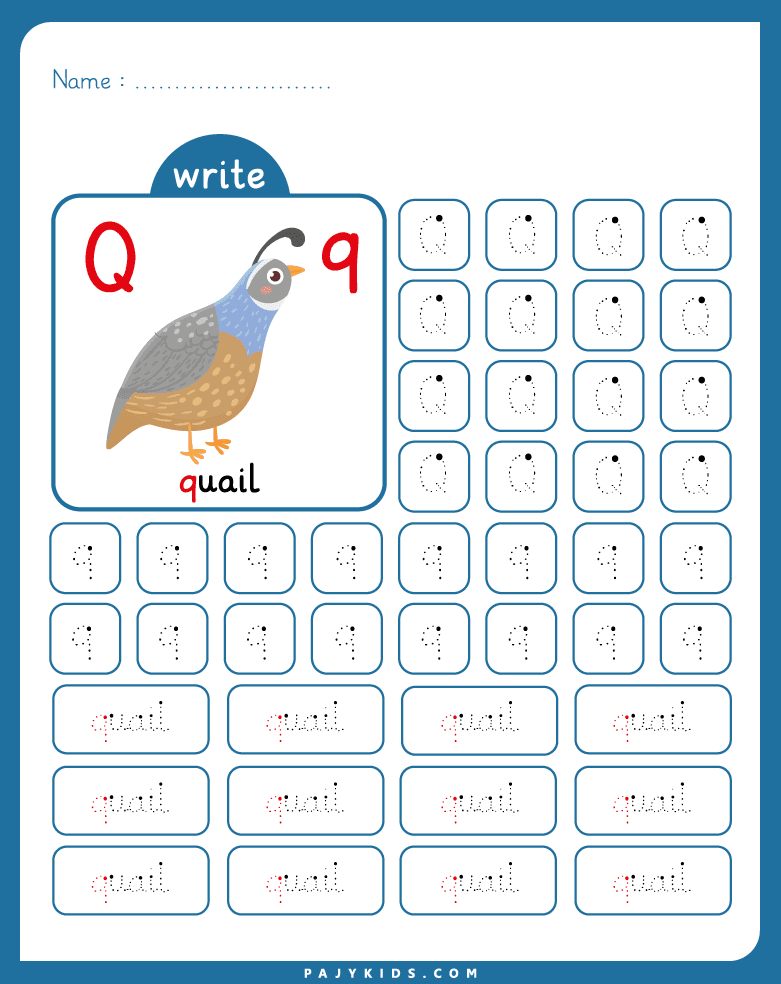
The second worksheet provides extended practice by allowing children to trace the letter multiple times and gradually move toward independent writing. Through repeated tracing letter q exercises, children develop muscle memory and improve pencil control. This worksheet supports kindergarten readiness by reinforcing consistency, accuracy, and focus, all of which are essential skills for successful handwriting and future reading development.
Poem for Kindergarten Students: Celebrating Light and Joy Through Simple Rhymes
In conclusion, consistent practice with tracing letter q worksheets helps kindergarten children develop essential handwriting and literacy skills. These worksheets support letter recognition, fine motor control, and writing confidence, making them an effective tool for early learning. When tracing letter q activities are used regularly, children gain the skills they need to progress smoothly in their reading and writing journey.